The ongoing Special Intensive Revision (SIR) of electoral roll in Bihar has created a huge political and legal controversy. The Election Commission of India (ECI) is insisting that it is a much-needed exercise to overhaul the integrity of the electoral roll and the exercise will be undertaken not just in Bihar but eventually across India. The opposition is arguing that the documentary burden in the exercise will end up disenfranchising a very large part of the population, especially the less privileged. The Supreme Court, while hearing a bunch of petitions against the SIR on Thursday, refused to stay the exercise but has asked some probing questions to the ECI. What is one to make of this entire controversy? There are three ways to look at it.
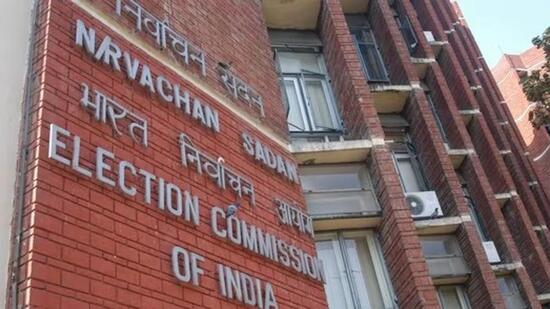
The Election Commission of India (ECI) is insisting that it is a much-needed exercise to overhaul the integrity of the electoral roll and the exercise will be undertaken not just in Bihar but eventually across India. (File Photo)
The first is a purely legal/constitutional approach to the matter which will perhaps take its own course in the Supreme Court. Questions of eligibility for being a part of the electoral roll, what constitutes proof of citizenship and whether the burden of proof of citizenship ought to be put on the individual or the state are all issues which have some previous jurisprudence but can very well evolve if the matter lands up with a constitution bench.
Because a lot of pre-existing jurisprudence on this issue pertains to states such as Assam which have had a troubled history with migration, things could take an entirely new course while discussing the matter for the country at large. When clubbed with the fact that there has already been one round of precipitation on issues such as the National Register of Citizens and even the National Population Register along with the conduct of the next census, things could get even more complicated. The short point is, there is no point trying to predict what the courts will eventually say on this matter, including diluting the documentary proof criteria (such as accepting Aadhar numbers) so much so that the entire exercise becomes pointless.
The second perspective one can take is the political side of the entire drama from the perspective of the Bharatiya Janata Party (BJP) and the larger Hindu-right ecosystem. Allegations about “infiltrators” (read Muslims) becoming a part of the electoral roll to “influence elections” is a rhetoric which is often deployed by the BJP during elections. It is a trope which is often magnified disproportionately . We have witnessed eviction drives and their political weaponization against Bangladeshi immigrants in the 2025 Delhi assembly elections, even though the final number of such people hardly crossed the three-digit mark in a city with about 16 million voters. There was a similar attempt during the 2024 Jharkhand assembly elections especially in the Santhal Pargana region where the BJP alleged a demographic takeover by Muslims in what used to be a Scheduled Tribe (ST) dominated region to argue its case against the Jharkhand Mukti Morcha. There is no reason to believe that this specific tactic has any significant impact on the BJP’s electoral performance although it could well be an integral part of its larger strategy.
To be sure, there are two things which have helped the BJP in preserving the narrative of the infiltrator. The first is the inordinate delay in conducting the new census which would give us updated religion-wise demographics at a reasonable level of granularity. Hopefully, this will not be the case in a couple of years. The second is the regional differentiation in the traction for such rhetoric. It is one thing to argue that a Bengali Muslim has crossed over into India illegally from Bangladesh. Most non-Bengali Indians will not be able to differentiate between a Muslim from say south (West) Bengal and Bangladesh by even basic markers such as their dialect. The differentiation could be far more difficult and almost impossible without documentary proof in regions such as Barak valley in Assam and parts of West Bengal. However, portraying a Bhojpuri, Kannada or Hindi speaking Muslim as an illegal infiltrator from Bangladesh is going to take a complete absence of common sense. While this puts a limit of the BJP’s othering abilities by using the trope of the illegal Muslim infiltrator , one could very well argue that these limitations have been diluted by acts of (well-minded) commission rather than omission on part of politicians and the civil society at large. To play the devil’s advocate one could argue that Muslim led mobilization in movements such as the anti-CAA one in 2019-20 outside places like Assam and West Bengal actually helped the BJP in creating counter polarization among Hindus. To say this is not to vilify the movements per se but to state an unpalatable political truth about how religious, ethnic and linguistic fault lines and their intersections operate in India’s realpolitik today. To surmise one could argue that the communalization of the illegal infiltrator rhetoric for the BJP is, even in the worst-case scenario, a low-cost nuisance value creation tactic.
The third perspective one can take is the political analysis of the entire thing from the opposition’s vantage point. It should ask itself a simple question to decide its strategy about the entire SIR drama. Is there a possibility that a strict enforcement of the documentary proof leads to disenfranchisement of a significant part of the population, mostly poor, from the electoral rolls? If there is no large-scale disenfranchisement at all because of the SIR, then the entire thing will turn out to be a much ado about nothing. Sure, even one case of wrongful rejection is worthy of a constitutional case in the Supreme Court, but it is not politics. Lenin described it best when he said politics begins where the masses are, not where there are thousands, but where there are millions; that is where serious politics begins. If the answer to the earlier question is a yes, then it needs to be asked whether there is any in-built religious differentiator in the incidence of burden of documentary proof. As of now there is nothing to suggest that this is the case. In this case, even a lot of BJP voters, especially those who are poor and least likely to have the required documents, are bound to get struck off from the voter rolls.
If indeed there is a large-scale disenfranchisement, the attribution of it will be to the ECI, and by extension, the Narendra Modi government. The popular anger which follows will be enough to discredit any electoral exercise which is done on the basis of the new electoral roll. India’s post-independence history has enough instances where actually or even perceived to be rigged elections of various varieties have never enjoyed popular sanctity and actually hurt the winner more than the loser in the not-so-distant future. Sometimes, democracy is best preserved by a conviction in its organic appeal in the future than worrying about a doomsday scenario in the present. To paraphrase Fidel Castro, who said it about the Cuban revolution, a democracy is not worth it if it cannot defend itself.
This is exactly where the opposition seems to have got its act wrong in the recent past. After the BJP stopped short of the majority mark in the 2024 Lok Sabha elections, there were many who declared a premature ideological victory against the Hindu-right in Indian politics. The results of subsequently held assembly elections, especially in Maharashtra have shattered these theoretical proclamations and only underlined the fact that Hindutva is only one among the many variables and perhaps not even the most important one which the Hindu right or BJP can exploit to capture power in India. However, instead of appreciating these political nuances, the opposition, led by its most important leaders has put all its eggs in the ‘elections were rigged’ theory to cover for their own political inadequacies.
It is not too much of a leap of imagination to argue that the entire SIR drama is being orchestrated to deflate the criticism of fraudulent voter rolls in Maharashtra. The opposition having to change gears from demanding more scrutiny of voter rolls to no scrutiny at all definitely makes it look bad and makes the ECI look better.
None of this is to say that the ECI does not have problems of its own including on the credibility front or that SIR is a completely flawless exercise. But there is no guarantee that politics is necessarily driven by concerns of institutional propriety alone. This is the most important lesson the opposition needs to learn in today’s India. For what it is worth, at least a lot of western commentators who were obsessed with this point and shedding tears about democratic backsliding in India during a period when the BJP cemented its dominance in Indian politics should have learnt this lesson by now in the aftermath of Donald Trump’s second presidency. India’s opposition should reinvent both its theory and praxis to pose a better challenge to the BJP.
Roshan Kishore, HT’s Data and Political Economy Editor, writes a weekly column on the state of the country’s economy and its political fall out, and vice-versa.
Get the latest India News, breaking headlines and real-time updates from across the country. Stay informed about politics, government policies, crime, weather and major national developments.
Home/India News/Terms Of Trade: A Contrarian Take On The SIR Controversy In Bihar

 E-Paper