
 E-Paper



The curious case of an ATS in K’taka; no case, no investigation
Bengaluru: Sixteen years after the first terror attack on the Indian Institute of Science (IISc), the first terrorist attack in Bengaluru, Karnataka now has three different anti-terrorism squads with the third being added last year


Bengaluru: Sixteen years after the first terror attack on the Indian Institute of Science (IISc), the first terrorist attack in Bengaluru, Karnataka now has three different anti-terrorism squads with the third being added last year. Even though Bengaluru has witnessed three major terror attacks since the IISc attack on December 28, 2005, one of the ATS units has a peculiar track record of not being part of any of the terror-related investigations.
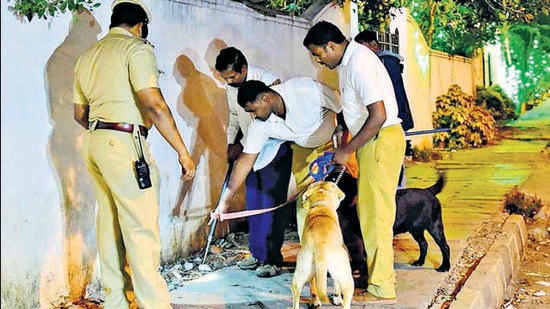
At present Karnataka Police operates three the Anti-Terror Squads (ATS) and it come under three different departments within the police force -- the Internal Security Division, State Intelligence Department and the Central Crime Branch. The third ATS unit under Central Crime Branch was added last year. .
The ATS which comes under the Internal Security Division -- has a unique track record. The unit has neither registered a single FIR nor has it investigated any terror case since its formation in 2009 following the 26/11 terror attacks in Mumbai. Similar units were raised by the Maharashtra and New Delhi Police as well.
Like their counterparts, ATS had the mandate of being the state police’s nodal agency for all counter-terror operations in the state. However, unlike Mumbai and New Delhi, ATS was not given any powers to register FIRs and investigate terror-related cases in Karnataka, officials, requesting anonymity said.
Since the formation of the ATS under the Internal Security Division, Bengaluru witnessed three major terror strikes – the 2010 Chinnaswamy stadium blast, the 2013 BJP headquarters blast and the 2014 Church Street blast. Even though ATS was the nodal agency for counter-terrorism, all three cases were investigated by the local police or Central Crime Branch.
According to the records of the National Investigation Agency (NIA), 15 people have been arrested in Karnataka since 2014 for their alleged connection with Islamic State (IS) agents. The state intelligence records show that 30 people have been arrested so far in the state, for radicalisation and having links with members of the IS.
The arrest of Mehdi Masroor Biswas, an engineer who allegedly ran a pro-Islamic State Twitter handle, in 2014, has been one of the biggest catches for the Bengaluru police. In its charge sheet, the police claimed that Biswas would monitor the developments of IS on the internet and television and assist his followers, who were willing to enter the IS territory.
Even in these cases, the investigations were carried out by local police and Central Crime Branch.
Two officers who served in the ISD’s ATS referred to the unit as a paper tiger. According to one officer, the job of the ATS, despite being the nodal agency for counter-terrorism, was to collect memos from central agencies and pass them to relevant units. “In my time in the unit, we have not done any investigation or any serious intelligence collection for that matter. We took inputs from different units and send them across. This job was done by the intelligence department also,” said one of the officers, who didn’t want to disclose his identity.
The second officer said that a posting in the unit could be perceived as a “punishment” or “soft posting”, depending on the officer. “How can ATS be a nodal agency, when the officers from different ATS units go directly to Bengaluru police or the CCB for inputs? This unit is certainly not doing the job its counterparts are doing,” said the officer who had worked briefly in the unit.
Karnataka police chief, DG&IGP Praveen Sood said that even though the state has three different ATS units their roles are well defined. “Last year we have started the ATS in the Bengaluru police since the city had witnessed multiple terror attacks in the past. This unit comes under the Central Crime Branch (CCB). For the other two agencies, their role is to provide intelligence and inputs. ATS (ISD) liaisons with NIA and IB (Intelligence Bureau),” said Sood.
Despite the police chief’s claim that the roles are well-defined, officers in the ISD’s ATS are still unclear about their role, as the intelligence on counter-terrorism is handled by state intelligence and investigations are handled by either Central Crime Branch or local police.
On Tuesday, newly appointed Karnataka home minister Araga Jnanendra told the top brass of the department to give more powers to the ISD. An officer who was part of the meeting however said that apart from the single instruction, no detailed propositions were made by the home minister.


