
 E-Paper



The Middle Kingdom’s rush of blood and the need for strong Indian deterrence
It was the supreme sacrifice of Col Santosh Babu and his men that woke up the Indian Army and Indian public against the Chinese aggression.

 Prefer HTon Google


Male power and its brutal projection is the central theme of what is colloquially defined as chopsticks culture. Submission to the powerful with all its frills can still be observed in East and South East Asian societies, particularly the middle kingdom ruled now by Emperor Xi Jinping. It is very important to understand this culture to contextualize China’s aggression against India in Aksai Chin area, where according to former Indian PM Jawaharlal Nehru’s famous 1961 statement “not a blade of grass grows.”
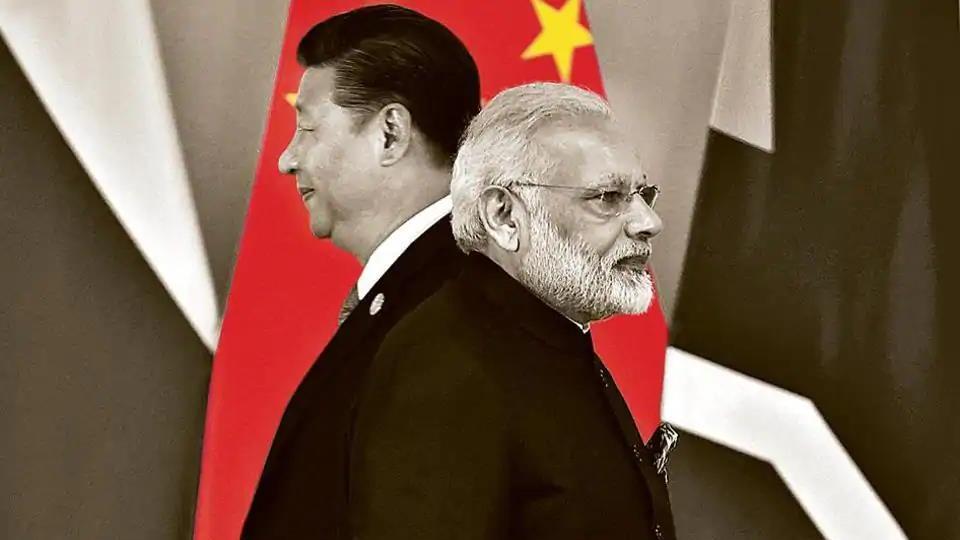
For the average man in the world’s largest democracy, it may be difficult to fathom why Commander-in-Chief Xi would order his western theatre commander to march PLA in full strength up to Line of Actual Control and lose 30 years of bilateral ties in one surge of testosterone. After all, majority of the “China boys” in the Ministry of External Affairs (MEA)’s East Asia Division were enamoured with paramount leader Mao Zedong’s rather inane slogans and the art of reading tea leaves. The Indian Army still carried the legacy of 1962 on its shoulder till such time Colonel Santosh Babu of 16 Bihar shattered the myth in Galwan on June 15 evening. The Chinese penetration in Indian government particularly the telecom sector was and is humongous with its New Delhi Embassy routinely getting its side of the story out in the media. Why would a country ruin a $100 billion dollar economic relationship with a neighbour that has never interfered in its internal matters or even challenged its quest for global domination? Fact is, India has chosen to keep quiet despite knowing all machinations of Beijing in Nepal (where the Chinese Ambassador to Kathmandu is a de facto Viceroy), Pakistan, Myanmar, Sri Lanka, Afghanistan and in the happy kingdom of Bhutan.
The answer to this question is rather complex and civilisational; Chinese Emperors were and even now want to be treated as divinity and above all wisdom. Japan did not raise a murmur when the Chinese Navy strolled in its waters citing Senkaku Island dispute; Vietnam kept quiet when its boat was sunk in South China Sea; other ASEAN countries sought help of the US, after PLA started exercising in their back-yard---the South China Sea. In short, barring an occasional exception, East Asian and South-East Asian economic powerhouses paid obeisance to the dominant power and its paramount leader. Sure, some would issue an anodyne statement of protest but that was it.
It is quite evident that President Xi and Gen Zhao Zongqi expected the same from India after PLA forces tried marching to Shyok river from Galwan River Valley and sought to remove the Indian Army from fingers in Pangong Tso. Maybe India would have also played it quiet like it did in The 2017 Doklam crisis but then Colonel Santosh Babu and his brave Biharis changed the game from Sun Tzu to Chanakya, from Chinese Go to Indian Shatranj. The Colonel refused to bow before the middle kingdom and showed that he belonged to another ancient culture of Indian sub-continent. It was the supreme sacrifice of Col Santosh Babu and his men that woke up the Indian Army and Indian public against the Chinese aggression. That Col Babu had the gall to draw Chinese blood at Galwan on June 15 was a game changer as the PLA for the first time lost men after 1967 Nathu La. While the fallen Indian soldiers were cremated with full honours with Indian public defying the coronavirus disease in huge numbers and attending the funerals. While the conservative figure of Chinese casualties at Galwan is around 17, the figure could be as high as 56 as per intelligence estimates. These deaths have remained unrecognized.
A politically astute Prime Minister Narendra Modi and Home Minister Amit Shah read the public mood and took urgent economic retaliatory steps against China. Flanked by Chief of Defence Staff General Bipin Rawat and Army Chief Gen Mukund Naravane, PM Modi signalled his resolve by personally landing up at Nimu, Ladakh and pumped up the troops for the worst-case scenario.
While National Security Advisor and Special Representative for Boundary Dialogue Ajit Doval and his wise counterpart Wang Yi have agreed on a withdrawal in Ladakh, India should watch the process carefully and ensure that status quo ante is restored. China should not be allowed to create a new normal on the LAC. India needs to build military and economic deterrence in next five years to ensure behavioural change in the Middle Kingdom. The Leopard cannot change his spots but must be made to think a thousand time before he attacks again.
The situation continues to be very complex on the 3,488 km LAC and an accident is possible. New Delhi should work with the certainty that PLA under Xi will return back to LAC to demand respect for the Emperor in Beijing in the near future.


