
 E-Paper



‘Too much politics in history’: Jairam Ramesh sparks storm in Rajya Sabha over Vande Mataram
Congress MP Jairam Ramesh criticised the government for "weaponising nationalism" and ignoring historical debates surrounding the national song Vande Mataram.

 Prefer HTon Google


NEW DELHI: Congress MP Jairam Ramesh on Wednesday accused the government of “weaponising nationalism” while ignoring the actual historical debates that shaped the national song, Vande Mataram.
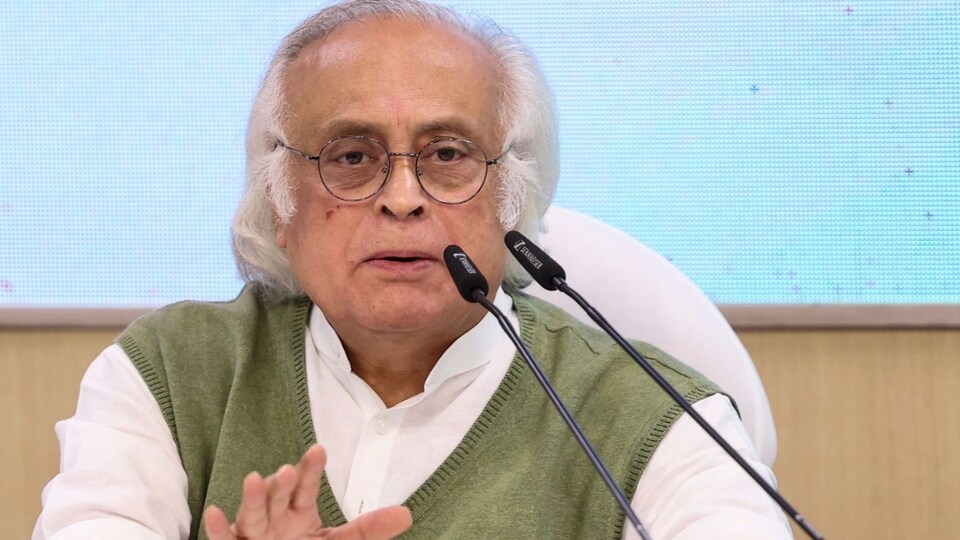
Participating in the debate on the 150 years of Vande Mataram in the Rajya Sabha, Ramesh said the ruling side was peddling selective narratives without acknowledging decades of discussion involving India’s foremost freedom icons.
“We have too little history in our politics and far too much politics in our history,” Ramesh remarked, as he opened his speech with a pointed jab at the Prime Minister and senior ministers “trying to become historians”.
Ramesh cited letters exchanged between some of India’s tallest leaders between 1937 and 1939 — including Rajendra Prasad, Subhas Chandra Bose, Rabindranath Tagore, Vallabhbhai Patel, Jawaharlal Nehru and Mahatma Gandhi — to show that Vande Mataram underwent scrutiny and debate between the top figures of the national movement.
He argued that the scrutiny was not “an insult to the song” but an effort to ensure it united the nation rather than alienate sections of it.
Reading from documents, Ramesh recounted that Rajendra Prasad had written to Patel raising concerns over the lyrics as early as September 1937; Bose then sought Tagore’s advice twice in October that year; followed by responses from both Tagore and Nehru. This culminated in a Congress Working Committee (CWC) resolution on 28 October 1937, attended by Gandhi, Bose, Nehru, Patel, Govind Ballabh Pant and Acharya Kripalani, Ramesh said.
“You are accusing the very leaders who shaped this country,” he said, challenging the ruling benches, who routinely claim Congress disrespected the song. “If you attack the CWC decision, you attack Gandhi, you attack Bose, you attack Nehru, you attack Patel.”
Ramesh also alleged that attempts to brand Vande Mataram as a communal flashpoint in the 1930s were fuelled not by the Congress, but by organisations “that are celebrating their 100th anniversary today,” in an apparent dig at the RSS. Without naming the group directly, he hinted that the same organisations that now claim ownership of nationalism had once “fanned communalism” during the era.
The Congress leader also praised Bankim Chandra Chattopadhyay for his contributions beyond literature, highlighting his role in founding the Indian Association for the Cultivation of Science — later home to Nobel laureate CV Raman. Ramesh accused the government of “pitting Bankim against Tagore, and Tagore against Nehru,” calling it a “political distortion of culture”.
As the ruling benches protested, Ramesh concluded: “Read history — do not rewrite it. Nationalism cannot be built on erasing truth.”


