
 E-Paper



Two-plus-two dialogue between India and US to begin in April
The countries will discuss the ramifications of UN designated global terrorist Hafiz Saeed’s entry into Pakistani politics despite a $10 million bounty on his head for orchestrating the 26/11 massacre in Mumbai.

 Prefer HTon Google


The first so-called two-plus-two dialogue between India and the US will be held in April, and Pakistan, Afghanistan, an alternative to China’s One Belt One Road (OBOR) plan, and arms purchases will be on the agenda, officials in Washington and New Delhi said.
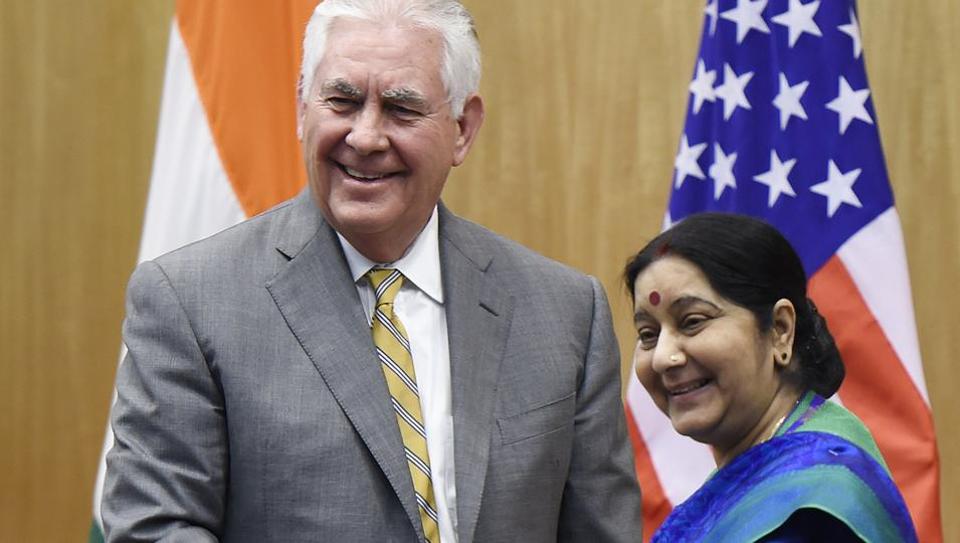
According to the officials, none of whom wished to be identified, external affairs minister Sushma Swaraj and defence minister Nirmala Sitharaman will meet for a day with their counterparts in the US, secretary of state Rex Tillerson and defence secretary James Mattis on April 18 or April 19.
Washington is expected to confirm the date this week.
The officials maintained that New Delhi wants a “full defence package” from Washington, not piecemeal purchases.
India is expected to buy 22 Guardian maritime surveillance unmanned aerial vehicles from US on the condition that they will be weaponised and upgraded at a later stage.
India is looking at the latest Avenger UAVs which are weaponised.
“The Pentagon seems amenable to this step-by-step weaponization and this will come up for discussion at the 2-plus-2 dialogue,” said one of the officials.
According to the officials, India will insist during the dialogue that the US should not release the remaining $255 million dollar military aid to Islamabad – to send a signal to the latter to stop harbouring terrorist groups which constantly target India and Afghanistan. Both the countries will also discuss the ramifications of UN designated global terrorist Hafiz Saeed’s entry into Pakistani politics despite a $10 million bounty on his head for orchestrating the 26/11 massacre in Mumbai.
The two countries are also expected to discuss alternatives to OBOR. The Chinese naval build-up in Indo-Pacific, particularly the South China sea, has been noticed by India-US-Japan-Australia (quad) group, which is committed to freedom of navigation and opposed to unilateral changes in positions as undertaken by Beijing. Beijing’s long-term interest in Afghanistan via Islamabad is also a matter of concern for both India and US and could come up during the dialogue, the officials said.
Apart from this, the two sides will discuss the instability in West Asia with two shoulders of Islam locked in conflict through proxies backed by either Iran or Saudi Arabia, the officials added. A strategy to counter the remnants of the Islamic State, now are acting mercenaries for various intelligence groups, will also be worked out during the meeting so that vulnerable states like Afghanistan, Bangladesh and Maldives are not threatened.


