
 E-Paper



‘Unavoidable’: Govt's fuel hike defence as Oppn terms it Modi's mistake, points to when crude fell but petrol didn't
The hike came 16 days after voting in assembly elections concluded; finance minister says criticism is "petty" and “shameful”

 Prefer HTon Google


The BJP-led NDA government on Friday defended its decision to raise petrol and diesel prices by ₹3 per litre — the first such hike in over four years — saying the move was financially unavoidable after state-owned oil companies absorbed massive losses for weeks amid a global crude price surge triggered by the US-Iran war and the wider West Asia conflict.
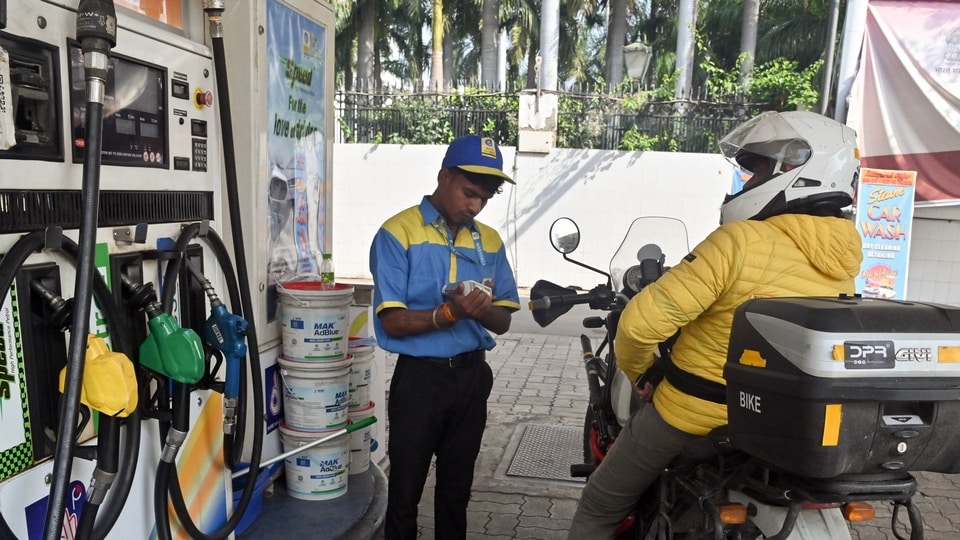
The Indian Oil Corporation (IOC), Bharat Petroleum (BPCL) and Hindustan Petroleum (HPCL) all raised prices by ₹3 per litre with effect from Friday. In Delhi, petrol now costs ₹97.77 per litre, and diesel ₹90.67; and will have different pricing across states as per local levies
' ₹1,000 crore a day': Govt says losses mounted
Union minister for petroleum and natural gas Hardeep Singh Puri had said already that the public-sector oil-marketing companies were incurring losses of ₹1,000 crore per day to insulate consumers from the spike in international crude prices. "At some stage, the government would have to take a call," Puri said at the CII annual business summit.
At the event, finance industry leader Uday Kotak also spoke of a “shock” that he said was “coming soon”.
The three companies absorbed these losses for 76 days before the hike was announced, officials told news agencies.
'India's hike lowest': BJP, govt's big defence
Union minister Kiren Rijiju shared a comparative infographic on X, showing fuel price increases across 25 countries since the West Asia conflict began in late February.
As per the graphic, Myanmar saw petrol prices rise 89.7% and diesel 112.7%; Malaysia reported a 56.3% hike in petrol and 71.2% in diesel. The United States saw petrol rise 44.5% and diesel 48.1%. China recorded increases of 21.7% in petrol and 23.7% in diesel. The United Kingdom saw petrol rise 19.2% and Germany 13.7%. Saudi Arabia, a massive producer of oil, was the only country on Riju's the list with no change.
India's increase of 3.2% in petrol and 3.4% in diesel was the lowest among all major market economies listed, Rijiju said.
The BJP-led NDA government on Friday defended its decision to raise petrol and diesel prices by ₹3 per litre — the first such hike in over four years — saying the move was financially unavoidable after state-owned oil companies absorbed massive losses for weeks amid a global crude price surge triggered by the US-Iran war and the wider West Asia conflict.
The Indian Oil Corporation (IOC), Bharat Petroleum (BPCL) and Hindustan Petroleum (HPCL) all raised prices by ₹3 per litre with effect from Friday. In Delhi, petrol now costs ₹97.77 per litre, and diesel ₹90.67; and will have different pricing across states as per local levies
' ₹1,000 crore a day': Govt says losses mounted
Union minister for petroleum and natural gas Hardeep Singh Puri had said already that the public-sector oil-marketing companies were incurring losses of ₹1,000 crore per day to insulate consumers from the spike in international crude prices. "At some stage, the government would have to take a call," Puri said at the CII annual business summit.
At the event, finance industry leader Uday Kotak also spoke of a “shock” that he said was “coming soon”.
The three companies absorbed these losses for 76 days before the hike was announced, officials told news agencies.
'India's hike lowest': BJP, govt's big defence
Union minister Kiren Rijiju shared a comparative infographic on X, showing fuel price increases across 25 countries since the West Asia conflict began in late February.
As per the graphic, Myanmar saw petrol prices rise 89.7% and diesel 112.7%; Malaysia reported a 56.3% hike in petrol and 71.2% in diesel. The United States saw petrol rise 44.5% and diesel 48.1%. China recorded increases of 21.7% in petrol and 23.7% in diesel. The United Kingdom saw petrol rise 19.2% and Germany 13.7%. Saudi Arabia, a massive producer of oil, was the only country on Riju's the list with no change.
India's increase of 3.2% in petrol and 3.4% in diesel was the lowest among all major market economies listed, Rijiju said.
BJP spokesperson Pradeep Bhandari said the Congress was “politicising a global crisis” by criticising PM Narendra Modi's measures, including austerity in gold-buying.
Brent crude oil, which was at $61 per barrel in January 2026, about a month before the war started with US-Israeli strikes on Iran, surged to $118 per barrel by end of Q1 2026.
This has been the largest inflation-adjusted quarterly price increase on record, according to the US Energy Information Administration. This came due to the closure of the Strait of Hormuz by Iran after the military strikes of February 28.
Opposition: 'Mistake of Modi govt, public will pay'
Congress MP and Leader of Opposition Rahul Gandhi posted on X: “The mistake is of the Modi government, the public will pay the price. A shock of ₹3 has already come, the rest will be collected in installments.”
Congress general secretary Jairam Ramesh called the hike “inevitable but politically timed”, saying it would worsen inflation, already projected close to 6% for the financial year, and would lead to a lowering of growth estimates.
Ramesh also raised the question of what happened when crude prices were low. "When global crude oil prices fell as they did on seven different occasions in the past 12 years, consumer prices in India were not reduced," he posted on X.
Petrol prices in countries like the US and UK are entirely market-driven, which means they can fall when crude prices do.
Congress leader Pawan Khera pointed to a specific comparison on this issue. In May 2014, crude oil was at $106.94 per barrel and petrol cost ₹71.71 per litre in Delhil just before the West Asia conflict, crude had fallen to around $70 per barrel, but petrol was selling at ₹94.72 per litre, he noted.
Khera noted that between 2014 and 2026, the government revised excise duty 21 times, increasing it on 12 occasions. He added that India's purchase of discounted Russian crude — a major flashpoint with Donald Trump's America — did not translate into relief for consumers.
‘Return to the cycle’
Samajwadi Party chief Akhilesh Yadav said after the hike, "Looks like people will now have to return to the cycle," referring to the SP's election symbol.
He called Modi's fuel-saving appeal an "admission of failure" and questioned why the call for economic restraint came only after elections were over.
The hike came 16 days after assembly elections concluded in Assam, Kerala, Tamil Nadu, West Bengal, and Puducherry.
Fuel prices had been held unchanged through the entire election period despite rising international crude rates.
Finance minister Nirmala Sitharaman, responding to the opposition's criticism, called it "petty" and "shameful" to “politicise” what she described as a public relief measure.
Industry observers have noted that the ₹3 increase represents approximately one-tenth of the full market-aligned correction needed to account for the crude price surge since the West Asia conflict began, leaving open the question of whether further hikes will follow.


