E-Paper



Unsung heroes of Chipko movement, women look to gain rightful place
A string of beads around her neck and a woollen jacket slung over the traditional Garhwali attire, Juthi Devi is surprisingly sprightly for her age.

 Prefer HTon Google


A string of beads around her neck and a woollen jacket slung over the traditional Garhwali attire, Juthi Devi is surprisingly sprightly for her age. The 70-year-old is one of the 135-odd surviving residents of the Raini village, perched on the steep mountain face 22km uphill from Joshimath in Uttarakhand.
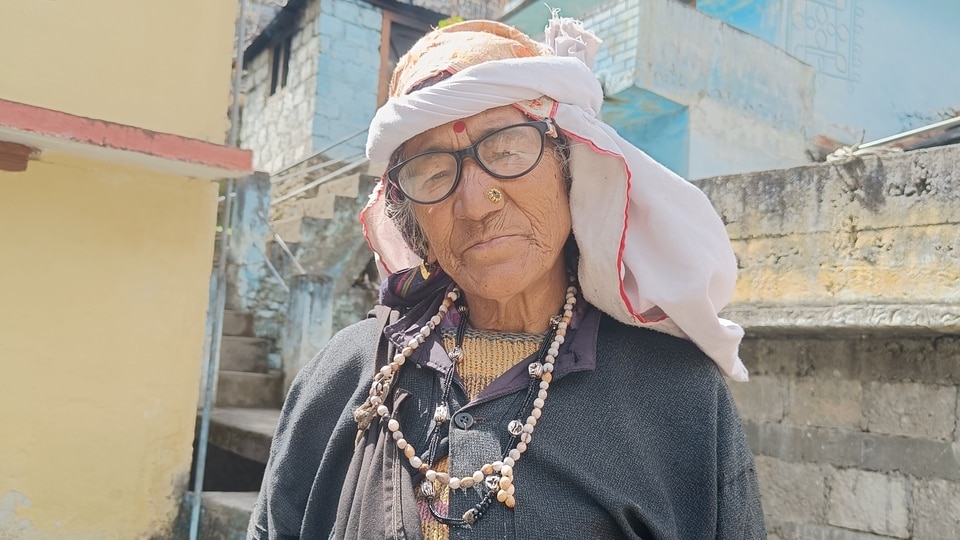
She speaks haltingly in Bhotia, the local language, and spends large chunks of her day navigating an array of strenuous tasks – rearing cattle, bringing firewood, gathering food, tending to the fields and taking care of her family. In this melee of arduous chores, days can sometimes stand still. Yet, the memories of one day are burned into Devi’s mind.
That spring Tuesday 50 years ago, Devi was woken up early in the morning by her mother-in-law Gaura Devi. Some local pastoralists had spotted men from the plains scoping the forests that ringed their village and alerted the locals. The men comprised forest officials, agents from the Allahabad-based sports company Symonds and labourers to saw off the trees; but the village was bereft of its own men, who had all travelled to a nearby city to collect compensation for another project. Waiting for them would have meant surrendering the forests that were not only sources of sustenance for the villagers, but also part of their extended family. To the women, there was only one choice.
“We did what had to be done. Our men folk were away. So I followed what Gaura Devi asked us to do since she was leading us,” said Devi.
Gaura Devi led Juthi Devi and 26 other women and girls from the Raini Mahila Mandal who marched to the forest. Eyeball-to-eyeball with the loggers, each woman hugged an ash tree even as the men jeered and hurled insults at them. Night fell, but they didn’t move. As the sun rose over the Garhwal, the men returned and joined the women. By then, news of their defiant stand had started trickling downhill to Dehradun and Lucknow, even Delhi. Four days later, the women won as the chief minister ordered an inquiry and the men retreated. “We stopped them from felling our forests,” said Devi.
From their determination, Chipko was born; and, as long as the movement ran, women formed its backbone. “Sudesha behen, Bachni Devi, Kalavati devi were important leaders but their names did not come up as much as those of the men,” said Vijay Jardhari, a Chipko leader.
On February 9 1978, women organised a protest in Narendranagar against the auction of trees. “Sudesha Devi took out a huge protest march, activists managed to break the gates where the auction was taking place. At night, we did not come out and we were later arrested including Sudesha Devi. Many of the women were still breastfeeding or taking care of cattle but they had to go to jail for 14 days,” he added.
In the 1980s, the leadership mantle was taken over by Kalavati Devi, who headed the Mahila Mandal. “These villages were not electrified then. The electricity department had left the electric poles here and did not take them to the villages. Led by Kalavati Devi, women decided to carry the electric poles themselves. These women would camp all night in the forests, keeping a watch on forest fires,” said S Rawat, a village leader.
Today, the region is very different. Framed by rugged peaks and bare stony mountain faces, Raini village appears deserted, save for a smattering of langurs and dogs. Most young people, including Juthi and her husband Chander Singh’s children and grandchildren, have left for the plains.
“Today this is a village of the old. Do you see any young person here? We are a family of 15 but only two of us are left in this house,” added Devi.
Many of the women left in Raini are legends in their own right, having found a place in history books and local folklore as part of the Chipko legacy. Stories of their bravery and perseverance abound in the hills, and have inspired similar ecofeminist movements around the globe.
But their everyday life is blighted by harsh conditions. There is no primary health centre nearby and the nearest school is threekilometers away, involving a steep hike. Plus, there is the constant gnawing feeling that the environmentalist foremothers didn’t get their due.
“Yes, Gaura Devi did a heroic deed. But all you hear are names of men in the Chipko movement. It’s because we are illiterate women who are not able to articulate our stories, our views. Women are still doing most of the work but I don’t think they are being recognised,” said Bina Devi, former head of the Mahila Mandal.
The village follows a patrilineal system of property transfer, where men inherit land, including agricultural land, from their fathers. “That’s the unspoken law everywhere that women have accepted long ago,” said Bina Devi.
The women toil on the lands of their men, grow food for the village, hike to dense forests behind their village and camp there for months, guarding the forests and also gathering various resources like herbs and firewood. “Women lift gas cylinders on their back and hike up to their homes. It’s routine. Until you are dead, you must do it,” said Jayma Devi, a local resident.
Yet, they are proud of the mark in history they left, and the lessons they taught their children. “Every time there is a crisis, an army is born…My mother, Gaura Devi created an army,” said her son, Chander Singh.
Jayma Devi smiled and agreed. “Yes, we saved our forests because the forest gave us so much,” she added. “There would be no life without it.”