
Sign in

Uttarakhand HC bans fatwas after panchayat asks rape victim to leave village

Fatwas violate “rights, dignity, status, honour” of individuals, says court.

Updated on: Aug 31, 2018, 07:45:50 IST
Hindustan Times, Nainital | By
Share
Share via
  • facebook
  • twitter
  • linkedin
  • whatsapp
Copy link
  • copy link

The Uttarakhand high court on Thursday banned fatwas in the state, stepping in after a media report that a panchayat in Haridwar district had asked a 15-year-old rape victim and her family to leave their village.
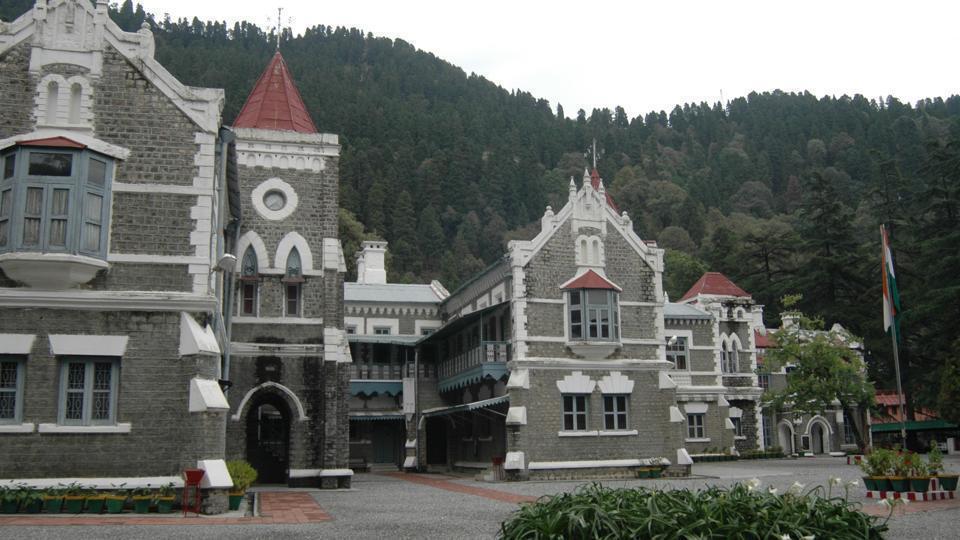
The Uttarakhand High Court in Nainital.

Fatwa are religious edict issued by Islamic clerics that have no legal force but are influential. A fatwa “infringes upon the statutory rights, fundamental rights, dignity, status, honour and obligation of individuals,” said the High Court as it ordered the Senior Superintendent of Police (SSP) of Haridwar to ensure security for the girl and her family in the village.

“The panchayat, instead of sympathising with the rape victim, had the audacity to extern the family from the village. Fatwa is nothing but extra-constitutional adventurism, not permissible under the Constitution”, the court said.

The court ordered criminal proceedings against the panchayat members and other people who issued the fatwa. A division bench of acting Chief Justice Rajiv Sharma and Justice Sharad Kumar Sharma ordered that the matter be registered as a public interest litigation (PIL).

Advocate Vivek Shukla, who brought a newspaper report about the fatwa to the court’s notice, was appointed amicus curiae (friend of the court) in the case.

Amar Chand Sharma, the officer in charge of the village police station, said the accused is absconding.
  • Neeraj Santoshi
    ABOUT THE AUTHOR
    Neeraj Santoshi

    Neeraj Santoshi is the Chief of Bureau for Hindustan Times in Uttarakhand, where he leads the state reporting team while covering government, politics, environment, wildlife, Uttarakhand High Court, and issues shaping the Himalayan region. With more than two decades in journalism across conflict zones, he has covered politically sensitive regions and environmentally fragile landscapes, and focused on stories that combine public interest with in-depth storytelling. An alumnus of Pune University with a Master’s in Communication Studies, he has reported extensively from Jammu & Kashmir (2003-2010), Madhya Pradesh (2010 to 2018 ) and Uttarakhand (Since 2018), covering subjects ranging from insurgency, elections and governance to wildlife conservation, mining, climate change, agriculture, human rights and social justice. He has covered politics and legislative assemblies of both Jammu & Kashmir and Madhya Pradesh over more than a decade. Before taking over as Chief of Bureau in Uttarakhand, he served as Special Correspondent with Hindustan Times in Madhya Pradesh and earlier reported for both Hindustan Times and The Indian Express in Jammu & Kashmir, where he covered state politics, environment and insurgency-related developments. Over the years, his stories have focused on environmental degradation, wildlife, illegal mining, governance and the changing social fabric of Himalayan states and Central India. He is particularly interested in long-form explanatory journalism, and stories that explore the intersection of ecology, conservation, governance and society. Outside the newsroom, Neeraj enjoys reading widely on neuroscience, consciousness studies, Artificial Intelligence and quantum physics, with a special interest in Kashmiri Tantric Shaivist traditions. He is also passionate about wildlife, mountaineering and the Himalayas, interests that continue to inform his reporting and deepen his understanding of the region he covers.Read More

Get the latest India News, breaking headlines and real-time updates from across the country. Stay informed about politics, government policies, crime, weather and major national developments.