E-Paper



Violates my right, says Goan’s plea to let him enter casino. Bombay HC rejects it
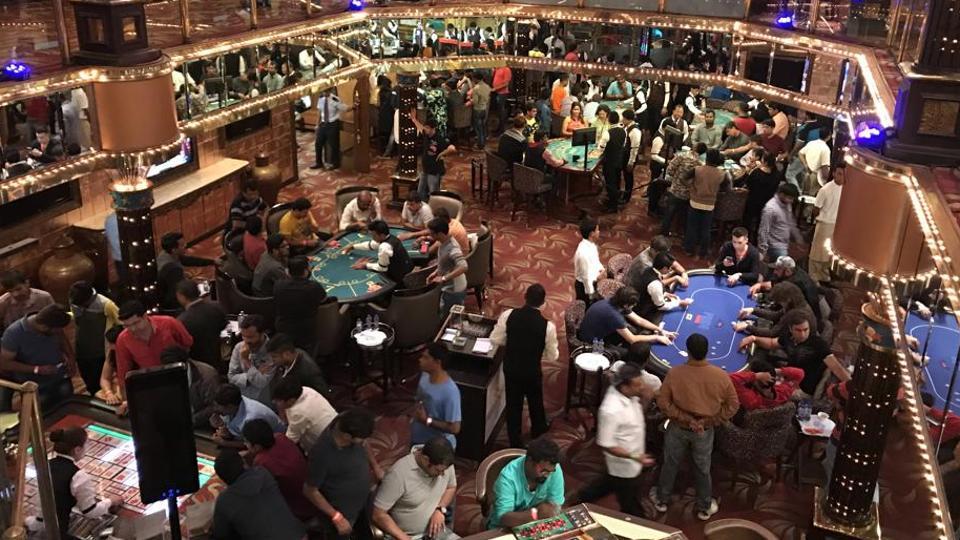
Goa has six offshore casinos operating out of boats anchored in the Mandovi river that flows past the capital city Panaji. The petition by a Goan asked the high court to let him enter too.

 Prefer HTon Google


PANAJI: The Bombay high court at Goa on Thursday rejected a petition by a local resident who insisted that the law barring Goans from gambling at the coastal state’s casinos violated his constitutional right to equality before the law.
Goa Public Gambling Act allows only adults with a valid “tourist permit” to enter a casino for gambling. Goa resident Shukr Sinai Usgaonkar said this provision discriminates against people domiciled in Goa and its permanent residents.
A two-judge bench of justices MS Sonak and MS Jawalkar rejected this argument, holding that the classification between tourists, who come to Goa for a few days to entertain themselves, and locals domiciled in Goa is based on “intelligible differentia”, and is well-founded.
“Gambling is totally prohibited but by way of some exceptions, a certain class of places and people are exempted from such prohibition. The object of the State is naturally to prevent the person domiciled in Goa to be lured into such chance games and to suffer poverty and mental trauma for their families. The classification is founded with the object of preventing the spread of gambling and transforming the exception into a rule,” the court said.
The judges noted that the locals will have much greater opportunities to access the casinos as compared to tourists who visit the state for a limited period.
“Therefore, there is nothing arbitrary or discriminatory in the object or the classification. The petitioner does not challenge the entry of tourists in casinos but insists on permitting him to enter in. Since the petitioner and the tourists belong to separate classes, no case of breach of Article 14 (equality before law) is made out,” the court ruled.
Goa, like other Indian states has outlawed public gambling for years, but later amended the law to allow adult visitors holding a tourist permit issued by the state’s Gaming Commissioner to go to casinos.
There are six offshore casinos in Goa, boats anchored in the Mandovi river that flows past the capital city.
Another amendment in February 2020 made it an offence for any person to enter such a place or area for gaming, without a valid tourist permit.
This, Usgaonkar, argued was violative of his personal rights, since he wanted to visit casinos that have started operating in the state.
“The impugned provisions contravene Article 14 of the Constitution of India by prohibiting access to persons, who are permanent residents of Goa. The distinction being made between tourists and non-tourists miserably fails the test of reasonable classification which must be fulfilled by any classification to withstand the rigours of Article 14. What is good for tourists cannot be bad for the Goans or non-tourists,” Ugaonkar said.
The state’s top law officer, advocate general Devidas Pangam, argued that gambling cannot be equated with any trade or commerce to assert any fundamental right to practise any profession or to carry on any occupation, trade, or business.
“There is no right vested where the business is dangerous or immoral; such a business may be absolutely prohibited or may be required to be licensed,” the law officer told the two-judge bench.
“The State also must see that youth of the state be protected and do not overindulge or get addicted to such activities involving chance or luck. The restriction on people domiciled in Goa is in the interest of the welfare of society. In the absence of such restrictions, the person domiciled in Goa may suffer poverty, which ultimately will hamper the economic and social development of the State,” he said.
The high court agreed, underlining that it is the discretion of the State to take a policy decision to restrict the entry of Goan domiciled or permanent residents to the casino. “It is in the public interest of residents of Goa so also in the interest of the State for the justifiable reasons. Thus, the decision to prohibit entry for persons other than the tourist, which excludes persons domiciled or permanent residents of Goa, is a conscious decision of the State, considering its evil consequences on its subject,” the high court verdict said.