
 E-Paper



Water supply crisis deepens nationwide, southern states still fare worse
The Central Water Commission's weekly bulletin shows that available storage for water keeps reducing nationwide, especially in Southern states

 Prefer HTon Google


The Central Water Commission (CWC), on Thursday, released its weekly bulletin, showing the reduction in storage available in billion cubic metres (BCM) across 150 reservoirs in India. It also highlighted that southern states were facing a more acute water shortage in terms of available capacity than northern states.
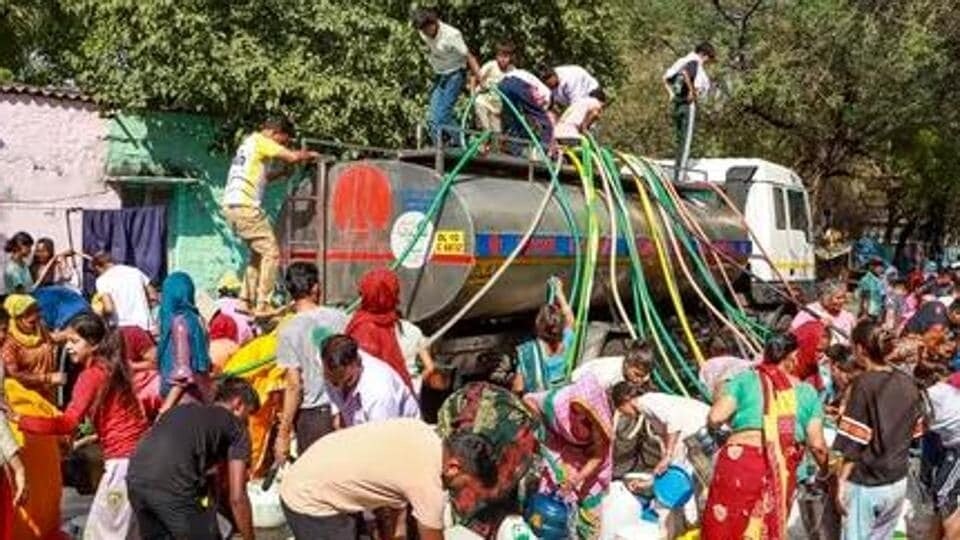
The water crisis in India has led to long queues for water, heat exhaustion and inter-state disputes.
Read more: A victory for people: Atishi on SC order asking HP to release water to Delhi
According to the CWC's weekly bulletin, the current capacity in river basins in northern states is more than the average capacity over the last 10 years.
In the Central Water Commission's weekly bulletin released on Thursday, the live storage available is 39.765 BCM, 22 per cent of the total capacity of these reservoirs. This is less than the storage available last year which was 50.549 BCM and less than a 10 year average of 42.727 BCM.
These numbers indicate that though rivers like the Ganga and its tributaries have more water storing capacity than average this year, reservoirs in the region have less capacity available to store water.
Read more: “World wars of the future will be fought over water”: Former IAS Alok Ranjan
In particular, the report identifies Himachal Pradesh as having better storage than in the last 10 years, in reservoirs and river basins.
On Thursday the Supreme Court ordered Himachal Pradesh to release water to Delhi.
One of the reasons for the water crisis in Delhi, which is dependent on Himachal Pradesh and Haryana for water, is the lack of use of surface water bodies like lakes and ponds. According to a 2023 report by the Ministry of Jal Shakti, 73.5 per cent of surface water bodies in Delhi were not usable due to effluents, waste and drying up.
While northern states deal with low reservoir levels, southern states are also facing drying up rivers and deficient basin capacity in rivers like Cauvery and Krishna.
Southern states also struggle due to inter-state water sharing agreements such as the issue of the Cauvery dam and claims on its water by Karnataka and Tamil Nadu.
Read more: Bengaluru braces for water supply disruption; Check dates, timings: Report
In Southern states, the current storage available in reservoirs has come down to 13 per cent after last year's 23 per cent. Cities like Bengaluru are facing a two day water supply cut to deal with the shortage.


