
 E-Paper



‘Water terrorism’: Atishi accuses Haryana of contaminating Delhi's water to influence elections, seeks ECI intervention
Atishi called Haryana’s sewage dumping into Delhi’s water “water terrorism,” causing toxic ammonia levels and threatening public health.


Delhi chief minister Atishi on Tuesday wrote to the Election Commission of India, accusing Haryana of engaging in “water terrorism” by deliberately contaminating the water supply to Delhi.
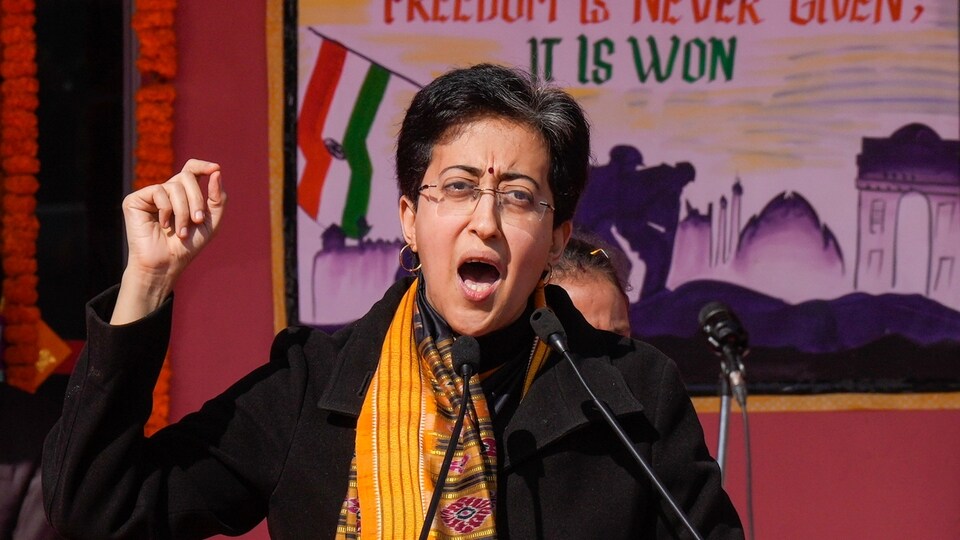
Atishi said this deliberate pollution is creating a public health crisis and disrupting water supply for millions in the city. She urged the Election Commission to intervene to ensure the upcoming elections are not affected.
“In continuation of my letter dated 27 January 2025 highlighting the deliberate attempt by the Government of Haryana to sabotage the water supply of the people of Delhi in an attempt to influence the conduct of free and fair elections in Delhi, I am enclosing a note submitted yesterday i.e. 27 January 2025 by the CEO of Delhi Jal Board to Delhi Chief Secretary on this matter. The facts enlisted in the note of the CEO of Delhi Jal Board make it clear that the DJB Water Treatment Plants are designed to treat ammonia only upto 1 ppm level,” wrote Atishi.
In her letter, Atishi has raised alarms about the rising ammonia levels in Delhi's water supply. She attributed the contamination to untreated sewage and industrial waste from Haryana, which has allegedly caused Delhi's water treatment plants to struggle.
Read: ‘Factually incorrect, without basis’: Delhi Jal Board CEO dismisses Arvind Kejriwal's ‘poison in Yamuna’ claim
“The note also points to the fact that the ammonia levels have steadily increased in the water coming from Haryana to Delhi via River Yamuna due to mixing of untreated sewage or industrial waste from Haryana, with levels rising over 7 ppm in the last two days i.e. 700% beyond the treatable limit. These toxic levels of ammonia in water coming from Haryana have rendered Delhi's water treatment plants almost incapable of treating the water effectively, resulting in curtailment of water supply by 15 to 20% i.e. for approximately 34 lakhs people of Delhi. It is a known fact that high ammonia levels in drinking water can lead to a public health crisis causing ailments such as kidney damage, respiratory distress and even long-term organ damage.”
Atishi called the situation a deliberate act of “water terrorism,” saying that the toxic ammonia levels in Delhi's water supply are a result of Haryana's unchecked dumping of untreated sewage and industrial waste.
“Despite knowing the toxic effects of releasing ammonia in raw water supply, the note of CEO of Delhi Jal Board leaves no doubt that it is due to the indiscriminate and deliberate dumping of untreated sewage and industrial waste from Haryana that is causing the present water supply crisis in Delhi. This is not an act of negligence; it is an act of water terrorism to deliberately impact the conduct of free and fair elections in Delhi,” the letter reads.


