
 E-Paper



West looking at India’s collaborative research equipment model: Experts
I-STEM saves the researchers, industry, and start-ups the prohibitive capital expenditure of purchasing advanced equipment, and at the national level, prevents duplication of resources

 Prefer HTon Google


Bengaluru: The developed west is watching India’s experiment to extensively use costly research equipment bought by government higher educational and research centres by any researcher located anywhere in the country, experts said.
Mooted at the instance of the Office of the Principal Scientific Advisor to the Government of India, I-STEM (Indian Science, Technology, and Engineering facilities Map) was launched five years ago by Prime Minister Narendra Modi. It has notched up success with 2350 research institutions and 27,730 researchers (users) registered on the platform that allows individual researchers access the most difficult to get research equipment for use, at a user fee.
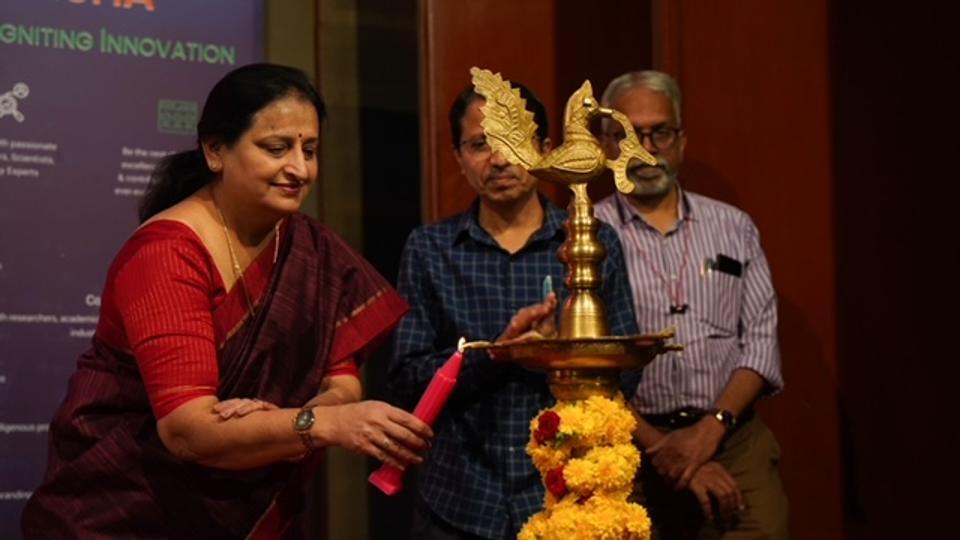
I-STEM launched Samavesha at Indian Institute of Science, an event to further popularize the concept of collaborative research across the country. .
“The biggest success is in persuading the countless research bodies to lend their costly research equipment for use by the needy students and academicians across the country, to make more than optimal use of the equipment bought at huge costs,” said Prof Navakanta Bhat, Dean, Division of Interdisciplinary Research, I.I.Sc. Bangalore and chief investigator of I-STEM. “Now, European Union is keenly watching our experiment, the first of its kind in the world, and is keen to have a similar collaborative program in Europe too, to pool their research equipment and capabilities, he told Hindustan Times. He added, “Even the United States of America has expressed keen interest in this and is keeping a close watch on the progress.”
I-STEM, a portal, provided a platform to provide research infrastructure and labs that can be availed by users across India. It targets connecting researchers with scientific institutes through an online portal.
“Only when we have a large number of institutions and researchers join the fold of I-STEM and subscribe to the idea that we need shared resources and create this culture of collaboration, we will be able to do research at the highest level, innovate and translate. That is the idea of I-STEM,” Prof Bhat added.
I-STEM saves the researchers, industry, and start-ups the prohibitive capital expenditure of purchasing advanced equipment, and at the national level, prevents duplication of resources.
The I-STEM network already has 27,730 users such as researchers, industry, and start-ups, alongside 2,350 research and academic Institutes across India that lend their scientific infrastructure, such as labs, to the users.
Inaugurating Samavesha, Dr. Parvinder Maini, Scientific Secretary in the Office of Principal Scientific Adviser to the Government of India, said, “I-STEM plays a crucial role in fostering innovation and economic growth. Today, everyone is stressing inclusive growth for a sustainable society. A more equitable distribution of resources will contribute to social stability. The resources we share will also cause a lot of social stability among the entire community.”
The country has seen rapid growth of R&D organizations in the public sector. “Most of the R&D in our country is publicly funded. The Researchers who have public-funded projects are custodians of the equipment and Government is the owner. To ensure that all researchers in the country get an equal opportunity to work and have access to the equipment and facilities, the idea of I-STEM was originated,” Dr Maini said.
Now the focus is to ensure that I-STEM reaches all strata of researchers. Dr Maini urged I-STEM to see that researchers from the economically weaker sections get an edge. “We must try and reserve 10 to 15% of funds for the economically weaker sections and give them free of cost. Regardless of gender, ethnicity or other characteristics, equal opportunities ensure that most qualified and capable individuals contribute to the economy of the country,” she added.
I-STEM should think of getting the international community engaged on the I-STEM portal on projects with Indian Collaborators. We must give first and foremost emphasis on Indian collaborators, she said. But, given the huge population of researchers and students who pursue higher education, research and science in regional languages, I-STEM should also think of connecting with them through portals like BHASHINI or the National Language Translation Mission, she added.
The vision of I-STEM is to create a future where one million New-Age researchers, brimming with ideas, are seamlessly connected to a network of 10,000 cutting-edge labs across India. By 2024, I-STEM aims not only to connect individuals to equipment but also to ignite a collaborative ecosystem where start-ups, industries, and academia co-create the next wave of innovation.
Highlighting the role of I-STEM in boosting the Science and Technology sector in India, its Chief Operating Officer and National Coordinator Dr. Harilal Bhaskar said, “Samavesha is not just an event but a movement propelling the Nation into an era in which collaboration is the currency of progress. Let us unlock its power, breaking barriers, fostering connections, and creating an environment in which ideas flourish. As we embark on this transformative journey, I am sure Samavesha will become a beacon, lighting the path to a future where innovation knows no bounds. With Samavesha, any publicly funded lab will become available the fingertips of researchers, creating awareness and access like never before.”
The immediate benefits for the society from Samavesha include, increased indigenous product innovations as collaborative synergy is expected to boost innovations, that ultimately benefit the man on the street. The strengthening of the Knowledge Exchange Ecosystem will break down access barriers and make the country a hub for groundbreaking discoveries and scientific advancements.


