
 E-Paper



What makes your onions so expensive at this time of the year | Analysis
Since onions are a common base ingredient of most Indian dishes and therefore widely consumed, consumers behaviourally are quite sensitive to a rise in onion prices, relative to many other commodities.

 Prefer HTon Google


Markets have run low on onions again. Prices have doubled in many cities within a fortnight, prompting the government to take a familiar step of curbing exports in the hope of augmenting domestic supplies to cool prices.
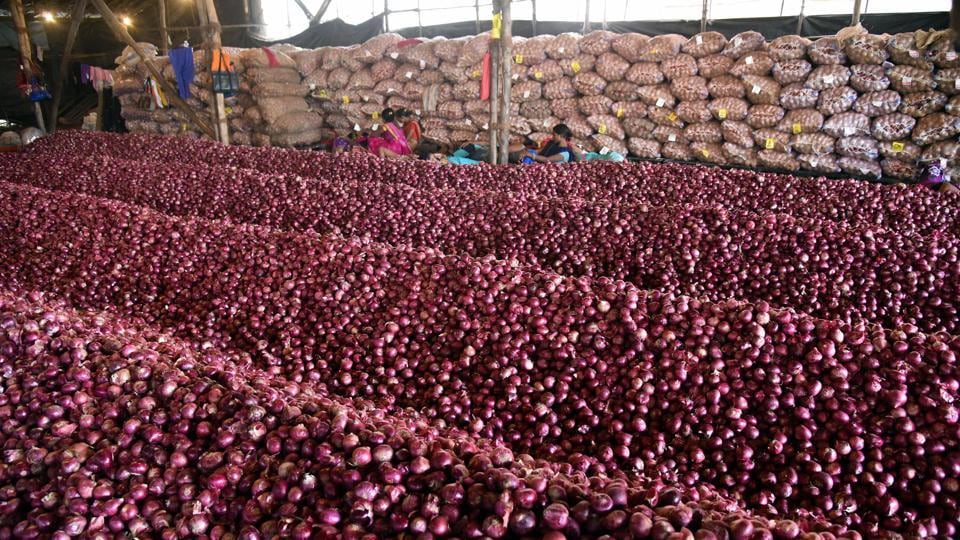
Since the bulb is a common base ingredient of most Indian dishes and therefore widely consumed, consumers behaviourally are quite sensitive to a rise in onion prices, relative to many other commodities. The extremely poor often bite into raw onion, along with rotis, to deliver a pungent punch to their spartan meals.
The urban middle-class tends to raise a stink at the slightest hint of onion prices rising. In 1998, the incumbent Bharatiya Janata Party-led state government in Delhi is said to have lost that year’s Assembly election because of an onion price shock.
Also read: Delhi CM Kejriwal promises to bring down onion prices to Rs 24 per kg within ten days
Market watchers, however, point to a familiar pattern in India’s onion-price spirals. Retail rates soar every alternate year or so, usually at this time of the year. It’s not uncommon for prices to crash either.
In the first half of 2017, wholesale onion prices plunged, leading to widespread protests by farmers in Maharashtra and Madhya Pradesh, where agitating cultivators were fatally shot by police. Then, in the second half of that year, when the government intervened in the markets to buy out excess stocks, prices began rising.
In short, onion trade in the country suffers from classic price volatility, a term used for regular patterns of wild swings in prices. It is caused mainly because of supply-disrupting factors like extreme weather, high losses from inadequate or improper storage or frequently shifting production levels, all of which can cause supplies to go from surplus to scanty in a matter of weeks.
The reasons for the current spell of high prices are not very different from those during earlier inflationary periods. While existing stocks from this year’s winter crop have been nearly exhausted—as they are usually are, at this time of the year— fresh harvests are at least a month away.
To tide over this seasonal lean period, India usually relies on stocks set aside and preserved in refrigerated warehouses. However, excess rains during August and September have disrupted supply, as onion-growing states, such as Maharashtra, Karnataka and Andhra Pradesh, face widespread flooding.
The monsoon this year turned hyperactive at a time when it should be winding down. By mid-September, the rains were 4% higher than average. As a result, flooding has hampered steady movement of shipments from one state to another. Trucks have been stranded on inundated highways or are unable to get going from big wholesale centres, choking off supplies. Such weather-related disruptions, however, aren’t uncommon.
To better understand why prices tend to rise during August-September, one needs to know the harvest cycle of onions in the country.
A majority of the onion crop—about 80%—is grown in the winter or rabi season and sown during the two months of December and January every year. This crop is ready for harvest during April-May, which is the main harvest that meets most of our annual demand. A chunk of it is also exported.
The summer or kharif onion crop is sown during May-June and is reaped during October-November. It is when this harvest reaches markets—in about a month’s time—that prices will adequately cool.
A relatively smaller, second summer crop, known as late kharif crop, is sown during August-September and harvested in January-February.
The government usually tries to check a rise in prices by imposing a temporary minimum export price on onion, as it did on September 13. The minimum export price – set currently at US$ 850 a tonne (about Rs 60,300 a tonne)—refers to a floor price the government sets for exports. No Indian exporter of onions can export below this price level. This is a policy tool designed to curb exports by making Indian commodities expensive for foreign buyers in the hope that domestic supplies will improve.
At the same time, the government also resorts to imports. Both these options aren’t very effective in promptly bringing down prices. That’s because most commonly consumed varieties of onion aren’t usually exported in the first place, while export-quality onions don’t usually have very high domestic demand.
The government also tries to augment supplies by releasing onions from federally held stocks (of around 50000-55000 tonne), which is the only realistic option of showing quick results in stabilising prices. If extreme weather or flooding is the main cause of supply disruption, then government-owned shipments too will be sluggish.
The government needs better policy responses, such as creating more refrigerated storage facilities so that surplus onions can be stored longer. Apart from that, it needs to increase the rate of processing of onions through incentives, so that consumers can quickly substitute onions for onion paste and dehydrated varieties in times of crunch.
Imports don’t work to cool prices promptly unless they have been signed up much in advance. Policymakers therefore need to put together a comprehensive picture of supply-side situations by connecting production data and weather forecasts much in advance, so that a stitch in time saves nine.


