
 E-Paper



What was the epicentre of earthquake that jolted Kolkata, killed 6 in Bangladesh?
The earthquake that originated in Bangladesh triggered panic as people rushed out of their homes and offices.

 Prefer HTon Google


An earthquake of Magnitude 5.7 jolted Bangladesh and killed at least six people there on Friday morning, with the tremors lasted for 26 seconds and spreading to parts of eastern and northeastern India.
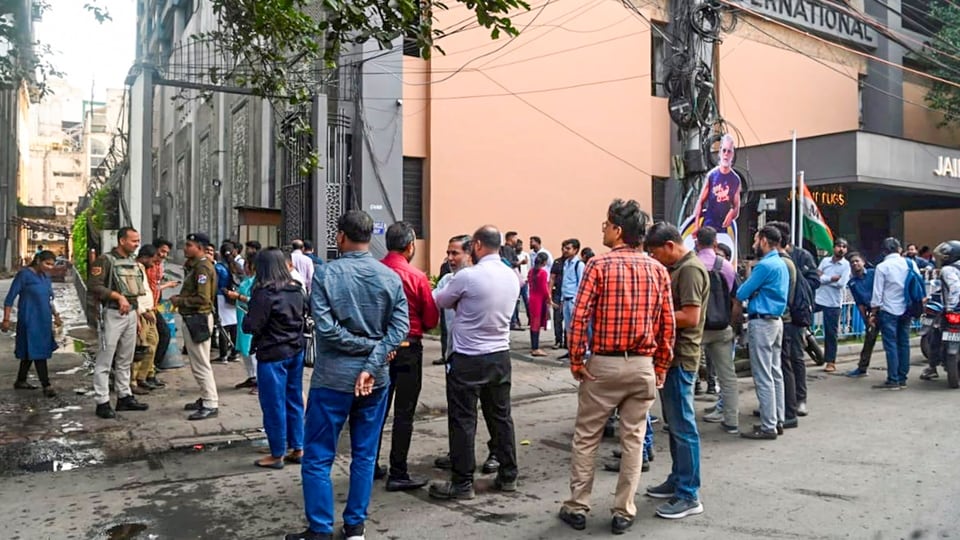
The earthquake was felt in parts of West Bengal - including Kolkata - and Assam, sending people out in panic. However, no casualties were reported in India.
Also read: 'Dawood's nephew, Orry, B'wood actors attended lavish parties in Dubai, Mumbai', claims drug trafficker
The Bangladesh Meteorological Department and India's National Centre for Seismology measured the intensity of the earthquake at 5.7, while the United States Geological Survey (USGS) said its magnitude was 5.5.
Epicenter of the earthquake
The United States Geological Survey said the earthquake's epicentre was in the city of Narsingdi, about 40 km (25 miles) east of Dhaka.
The National Center for Seismology (NCS) also said the earthquake's epicenter was located in Bangladesh's Narsingdi, but 10 km east-southeast (ESE) of Dhaka and at a depth of 10 kilometres as well.
Panic in Bangladesh and West Bengal
The earthquake caused panic as reports from the Indian side said that people in Kolkata and other adjoining areas rushed out of their homes and offices.
Also read: ‘Emotionally exhausting’: Al Falah University students' kin unsure of next steps amid terror probe
While initial reports from Bangladesh said three people had died, Dhaka-based DBC Television later said six people had died in Dhaka alone, including three people killed after portions of a building roof and wall collapsed, and three pedestrians crushed by falling railings.
Dozens more were injured in panic-driven incidents across Dhaka, where buildings swayed sharply during the tremor. Residents poured out of homes, offices, and high-rises, gathering in open spaces as aftershocks were feared.
Also read: Demolition notice to founder as scrutiny grows on Al-Falah University
Although northern and southeastern Bangladesh are known earthquake-prone zones due to the collision of the India and Eurasia tectonic plates, the central region - where Friday’s quake struck - is typically less active, according to the USGS.
"We felt a strong jolt and buildings were shaking like trees," Reuters quoted Dhaka resident Suman Rahman as saying. “Staircases were jammed as people rushed down. Everyone was terrified, children were crying.”


