E-Paper



Demolition notice to founder as scrutiny grows on Al-Falah University
Cantonment chief executive officer Vikas Kumar Vishnoi said the property was originally held under a British-era grant that permitted only residential use.

 Prefer HTon Google


On the day first-year MBBS students returned to Al-Falah Medical College, the university found itself under deeper scrutiny as authorities in Madhya Pradesh issued a demolition notice for the ancestral house of Al-Falah University founder Jawad Ahmed Siddiqui – adding another layer of pressure to an institution already under scrutiny for terror and financial irregularities.
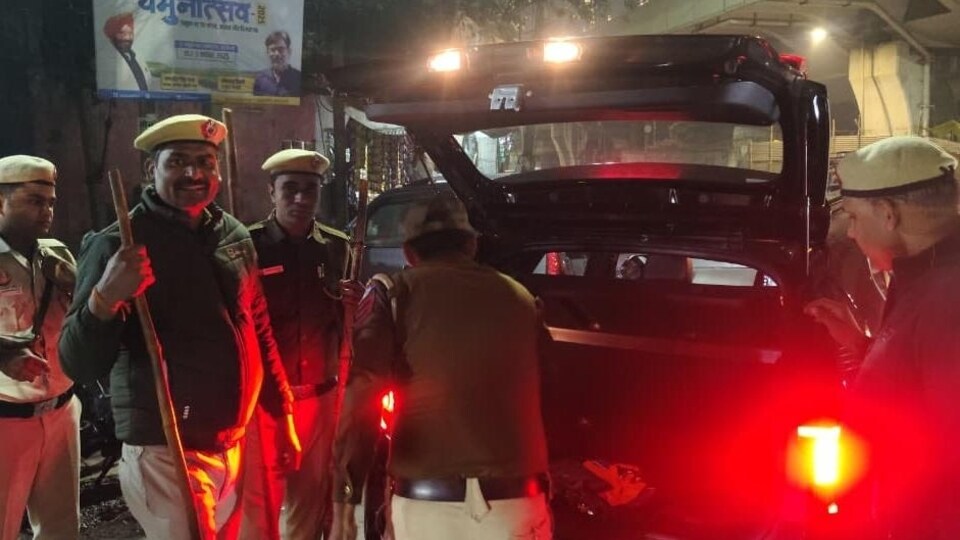
The Military Headquarters of War (MHOW) Cantonment Board in Indore on Thursday pasted a notice ordering Siddiqui’s family to vacate their ancestral home within three days, after which demolition will begin. The house, located in Mhow and registered in the name of Siddiqui’s father, the late Hamad Ahmed Siddiqui – who served as the town’s Shahar Qazi for nearly 20 years – had been declared illegal nearly three decades ago, officials said.
Also read: Pre-emptive only in name: Why GRAP in Delhi falls short despite updates
Cantonment chief executive officer Vikas Kumar Vishnoi said the property was originally held under a British-era grant that permitted only residential use. After reconstruction in 1995-96, Jawad Siddiqui sought registration and transfer of ownership, but authorities ruled that the four-storey structure violated provisions of the Cantonment Act. “Three notices were issued between 1996 and 1997 for removal of unauthorised construction,” Vishnoi said, adding that the latest action follows a recent review confirming the building’s illegal status.
The demolition notice arrives at a moment when Siddiqui and the university he founded are already facing national scrutiny.
Also read: Four school teachers suspended amid protest over Delhi teen suicide at metro station
The Red Fort blast of November 10 – in which at least 12 people were killed – has led investigators to three doctors from Al-Falah University: the alleged suicide bombed Dr Umar un-Nabi, his accomplices Dr Muzammil Shakeel Ganaie and Dr Shaheen Shahid.
On the financial front, the Enforcement Directorate (ED) on Tuesday arrested Siddiqui after raids at over 25 locations in Delhi and Faridabad. On Wednesday, he was remanded to 13 days’ custody after the agency alleged that Al-Falah University enriched itself “at the cost of students’ trust, future and legitimate expectations,” accumulating ₹415.1 crore in non-donation income that ED claims is “proceeds of crime.”
Also read: Pre-emptive only in name: Why GRAP in Delhi falls short despite updates
Meanwhile, in MP, Indore Police intensified their actions, arresting Jawad’s brother, Hamood Ahmed Siddiqui, three days ago in connection with five pending cases of fraud and rioting.
Classes resume in F’bad
Meanwhile, at the university’s campus in Faridabad, first-year medical students resumed classes on Thursday under heavy police presence, with parents arriving from cities across north India. Many said the decision to send their children back was fraught with fear.
Also read: ‘Had suicidal thoughts, bullied by teachers’: 5 revelations in Delhi teen suicide
“We panicked last week and asked our daughter to return home immediately,” said Manoj Kumar from Agra. “Even now, we aren’t sure if keeping her here is the right decision. But pulling her out will ruin her year.”
Sushil Mehta, who accompanied his son from Lucknow, said: “Our fear was real. The college needs to rebuild trust. All we want is safety and transparency.”
Students said the vice-chancellor and faculty held counselling sessions earlier this week, asking them to stay calm and ignore rumours. The administration also instructed students not to interact with outsiders and avoid sharing unverified information online.
Also read: India-based trader among 17 entities sanctioned by US over oil trade with Iran
For many freshers, Thursday was their first actual classroom experience after Foundation Week, held just before the Red Fort blast. “We were excited last week, looking forward to college life,” said a student from Delhi. “Now everything feels tense. It’s like we’re constantly being watched.”
A fresher from Haldwani said the environment had become “emotionally exhausting.” “My parents kept calling, panicking after watching the news. Even I’m unsure — should I stay or go? But leaving now means losing a year.”
Around 900 students are enrolled in the MBBS programme. While classes for seniors were not disrupted, campus life has been visibly transformed. Investigative teams have visited several times this week, questioning students who interacted with the accused doctors. “Anyone who attended Dr Umar’s classes had to give statements,” said a senior student.