
 E-Paper



Who was doctor Umar Un Nabi? 5 key facts on the Delhi blast’s prime suspect
The Faridabad seizures are believed to have triggered a frantic attempt to evade surveillance, with Umar reportedly abandoning his routine and going into hiding

 Prefer HTon Google


Investigators on Thursday identified Dr Umar un-Nabi, a 35-year-old physician from Pulwama, as the man behind the wheel of the Hyundai i20 that exploded near Red Fort on November 10 and on Friday the doctor's home in Pulwama's Koli village was demolished.
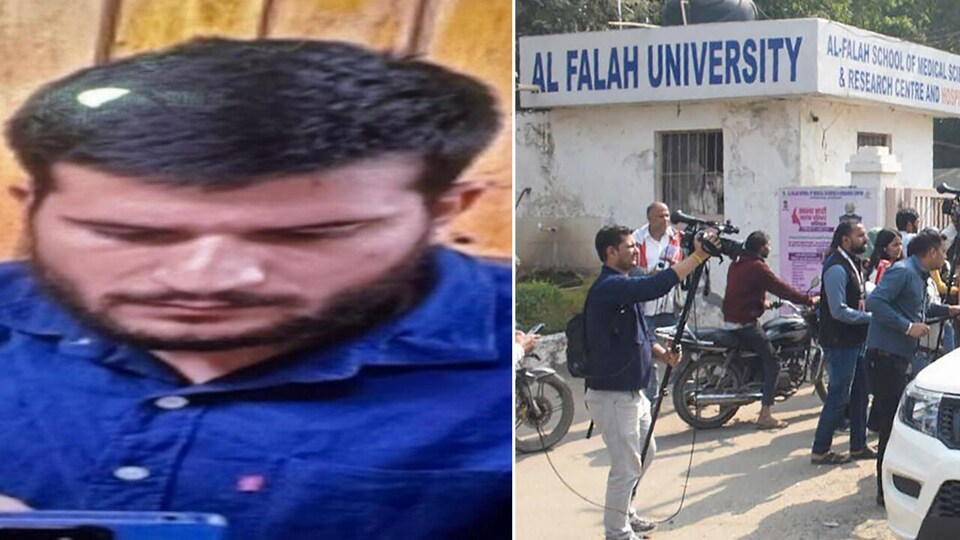
The action follows the tragic Delhi blast that killed at least 10 people and left several others injured, prompting a multi-state investigation into what agencies describe as a "white-collar” terror module run largely by medical professionals.
Fresh details continue to surface in the investigation that began on October 18 with Jaish posters found in Nowgam, J&K, and is now believed to have culminated in the seizure of 29,000 kg of ammonium nitrate in Faridabad, followed just hours later by a deadly blast near Old Delhi’s historic monument.
Here are five key facts about doctor Umar un-Nabi and what investigators describe as his “panicked reaction” to the police crackdown.
1. Srinagar, Anantnag and Faridabad
Umar graduated from Government Medical College (GMC), Srinagar, in 2017 and secured medical registration the following year.
He went on to work in hospitals across Srinagar and Anantnag before shifting to Faridabad, where he served as an assistant professor at Al-Falah Medical College and Hospital. Officers said he had been living in a small rented room near the institute for the past three years.
2. Umar panicked after massive seizures
According to officials familiar with the case, Umar appears to have “panicked” after raids in Faridabad recovered nearly 3,000 kg of ammonium nitrate, detonators and timers and AK47s from premises linked to his alleged associates.
The seizures, made on November 9, are believed to have triggered a frantic attempt to evade surveillance, with Umar reportedly abandoning his routine, shutting off his phones and going into hiding in Dhauj village, around 15 km away.
“He was under pressure and knew the circle was closing in,” a senior officer said. “When the ammonium nitrate seizures became public, he fled toward Delhi with ammonium nitrate fuel oil and a detonator.”
3. Linked to ‘white-collar’ network tied to JeM
Police said Umar had close ties with two other Kashmiri doctors, Adeel Rather and Muzammil Ganaia, both arrested recently.
Investigators allege the trio, along with a handful of associates, ran a logistics chain from Pulwama to the NCR, using their academic backgrounds and access to chemicals to assemble explosive devices. Officers estimate the module had at least 10 members, “five or six of them doctors”.
4. Final movements traced to Red Fort
Dr Umar, who had stopped attending classes and duties after October 30 and had switched off five mobile numbers he used, drove the i20 into Delhi on November 10, police said.
According to CCTV footage, the vehicle was spotted near Red Fort Metro Station shortly before the explosion tore through the area, damaging nearby cars.
Forensic teams later found traces of ammonium nitrate fuel oil, matching the chemical compound seized from Faridabad from the Delhi incident site.
5. Pulwama family had 'no idea’
According to an earlier report in HT, back home in Pulwama, Umar’s family said they were unaware of any illegal activity. His sister-in-law, Muzamila, said the last conversation with him took place just two days before the blast.
“We spoke to Umar on Friday. He said he would come home soon,” she recalled. “He was so attached to my children, always playing cricket with them. He wasn’t a social person. He only studied and worked.”
Relatives said they had urged him to return, concerned about “some tensions” he mentioned. “We thought it was stress from work or exams,” she added. Another Special Cell officer said, “They don’t know what he was doing. He had only told them that he was stressed due to exams (of students) and his work.”
The Delhi Police Special Cell has filed an FIR under UAPA, the Explosives Act and sections of the Bharatiya Nyaya Sanhita related to murder and attempt to murder.


