
 E-Paper



Why are farmers sticking to stand?
On Wednesday, the farm ministry sent out a lengthy set of proposal to farm unions protesting at Delhi’s borders to address their concerns.


Farm unions have stuck to their demand of scrapping three pro-market agricultural laws they say will hurt their livelihoods, dealing a blow to the Union government’s offer to bring changes to the laws to end weeks of agitation by farmers.
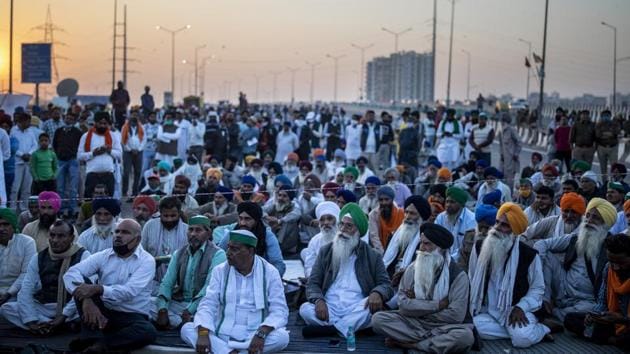
On Wednesday, the farm ministry sent out a lengthy set of proposal to farm unions protesting at Delhi’s borders to address their concerns. Farmers fear losing out to big corporations if private traders get a free in deregulated markets. The government says the changes will give farmers greater market access and spur investments.
The agriculture sector employs half of all Indians, but adds only 16% to the country’s gross domestic product (GDP), meaning far too many people are engaged in agriculture than is required to generate the same levels of farm incomes. The new laws allow businesses to freely trade farm produce outside, permit private traders to stockpile large quantities of essential commodities for future sales and set new rules for contract farming.
Concessions offered by the government provide for more oversight of private markets. Farmers, however, say they want nothing short of a full repeal of the laws. Farmers have come to trust decades-old regulated markets despite studies that show these markets are run by trader cartels who rig prices and lend money to farmers, limiting their bargaining power.
Yet, these markets also offer farmers assured minimum prices for staples, providing a sense of security. The new reforms allow corporations to operate with minimal regulations.
“The core concerns [are] about removing regulation on traders and companies and thereby removing all protections to farmers offered by the regulation system,” said Kirankumar Vissa of the Rythu Swarajya Vedika, a farm activist.
The government on Wednesday said its concessions will protect farmers’ bargaining power. Farmers say the very objective of the laws is wrong. “The crux of the matter is that the government’s laws are centered around large corporations which are against the interest of farmers and consumers. Why can’t markets be farmer-led?” said Kavitha Kuruganti of the Alliance for Sustainable and Holistic Agriculture, a farm activist who took part in the recent talks with the government.
Economists attribute India’s impressive economic growth over the years to reforms in industry, currency markets and manufacturing. The burst of reforms initiated in 1991 sidestepped the farm sector altogether.


