
 E-Paper



Why Punjabi singer Sidhu Moosewala's parents sat on dharna 4 years after his death: Royalty dispute, explained
Sidhu Moosewala's father Balkaur Singh says company holding marketing rights to the songs has not shared financial audits and royalty payments for over a year

 Prefer HTon Google


Punjabi singer Shubhdeep Singh, popularly known as Sidhu Moosewala, died in 2022 while his songs continue to be released to millions of plays and views, but his parents have now alleged that they are being cheated of the earnings.
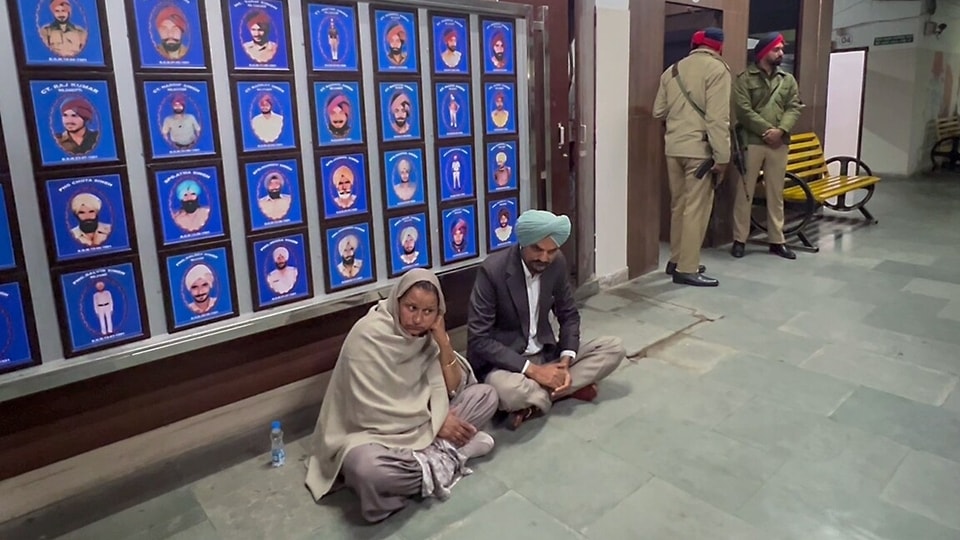
Moosewala’s father Balkaur Singh and mother Charan Kaur, both also leaders of the Congress, brought with them their two-year-old son, named Shubhdeep after their late son, and staged a sit-in protest at the office of the Mansa district police chief on Wednesday (Feb 11, 2026), alleging apathy by cops in resolving their complaint.
What is the complaint by Sidhu Moosewala's parents?
Their complaint, yet to constitute an FIR, names three digital marketing promoters over an unresolved financial dispute, HT has reported.
Balkaur Singh said a company holding the marketing rights to the late writer-rapper’s tracks failed to share financial audits and royalty payments for over a year.
“We are being deprived of the income generated by our son’s work. On June 8, 2025, I submitted a complaint against Bunty Bains, Gurpreet Singh Bhasin, and Shabbir Momin to the DGP. It was forwarded to the Mansa SSP for investigation, yet nothing has moved,” Balkaur Singh told reporters.
The couple declined to disclose the exact amount of the alleged misappropriation. “That is detail of my account which I am not comfortable sharing,” Balkaur Singh said. “But even if it's just ten rupees, we deserve to get the money from our late son's hard work,” he said, speaking in Punjabi.
“I don't have anything in my account. I have only 100 rupees,” he added in response to a question, "We are very unfortunate. We have lost everything."
Balkaur Singh said he provided the police with evidence vetted by chartered accountants and legal experts. “The police are biased, under pressure from the Aam Aadmi Party (AAP) government," he alleged.
He said he has repeatedly been visiting the office of the senior superintendent of police (SSP) demanding action, but nothing has been done. Later, deputy inspector general of police (Bathinda range) Harjit Singh called the couple for a meeting, news agency PTI reported. Police and the government were yet to respond to the allegations in the media.
Artistes who've come out to support Moosewala's parents include singer Amar Sajaalpuria. “Only his parents have the right to the earnings of Sidhu's songs. He was an independent singer. Whoever is taking illegal advantage of his earnings, God will not forgive you! The worst and most corrupt Punjabi music industry — the new generation is doing a good job. but the old ones are thieves,” he posted on Facebook.
Punjab Congress chief Amrinder Singh Raja Warring also posted on X in the parents' support, terming the episode a reflection of the “sad state of affairs” in the state. He requested CM Bhagwant Mann to have the police act immediately. No reaction was yet available from the CM.
What have accused said, and how much money?
While there was no latest response from the men named by Balkaur Singh, one of them, producer Bunty Bains, had responded to the allegations in August 2025. Speaking with a Facebook channel, he estimated a monthly earning from Spotify and YouTube at “about ₹30 crore”. The number could not be independently verified.
He said he had been coordinating with Moosewala's parents, using WhatsApp groups that also had the others named by them, who are reportedly based in Canada and other countries. The contention of the others, as per Bunty Bains, is that they have a limit to how much money they can transfer internationally in each transaction. He denied any wrongdoing on his part.
As for One Digital Entertainment and Shabir Momin, the company and its owner named by Moosewala's father Balkaur Singh, they have since denied the allegations. Expressing “deepest respect” for Sidhu Moosewala in a press statement shared with HT, a company representative said in an email on February 26 that it had remitted “aggregate amount exceeding USD 9.5 million” (around ₹85 crore as per Feb 2026 rates) to Moosewala and his family or authorised representatives into bank accounts.
“These payments are fully documented and supported by complete financial records,” Shalini, the company rep, wrote in the email.
“The Company has consciously maintained restraint in the face of recent allegations circulating across certain platforms. However, it is categorically denied that any payments lawfully due have been withheld. The allegations suggesting financial impropriety are entirely false and misleading,” the statement added.
It claimed that Balkaur Singh “remained incommunicado for a considerable period”.
“Notwithstanding this, the Company has been continuously in touch with the family’s Chartered Accountant and legal team, who were duly authorised at the relevant point of time, and has been making consistent efforts to reconcile accounts and address any outstanding issues, if any, transparently and in good faith,” it added. The statement noted that Momin and the company “will extend full cooperation to the appropriate investigating authorities/jurisdictions” and thus present relevant agreements and payment records.
Moosewala's songs released after death
Sidhu Moosewala was shot dead on May 29, 2022, near his cillage Moosa Mansa district. The 28-year-old singer was attacked by assailants who fired more than 30 rounds at him. Police have accused the gang of Lawrence Bishnoi, currently lodged in a Gujarat jail, of the crime.
Almost two years after the death of the singer, the parents welcomed a baby boy.
Moosewala's songs, which he recorded before his death, continue to be released on YouTube on the channel in his name. Balkaur Singh alleges that the marketing company that controls the data is not sharing it with him for almost a year now.
The posthumous releases, often featuring unreleased vocals and AI-generated visuals, have dominated global charts and broken viewership records.
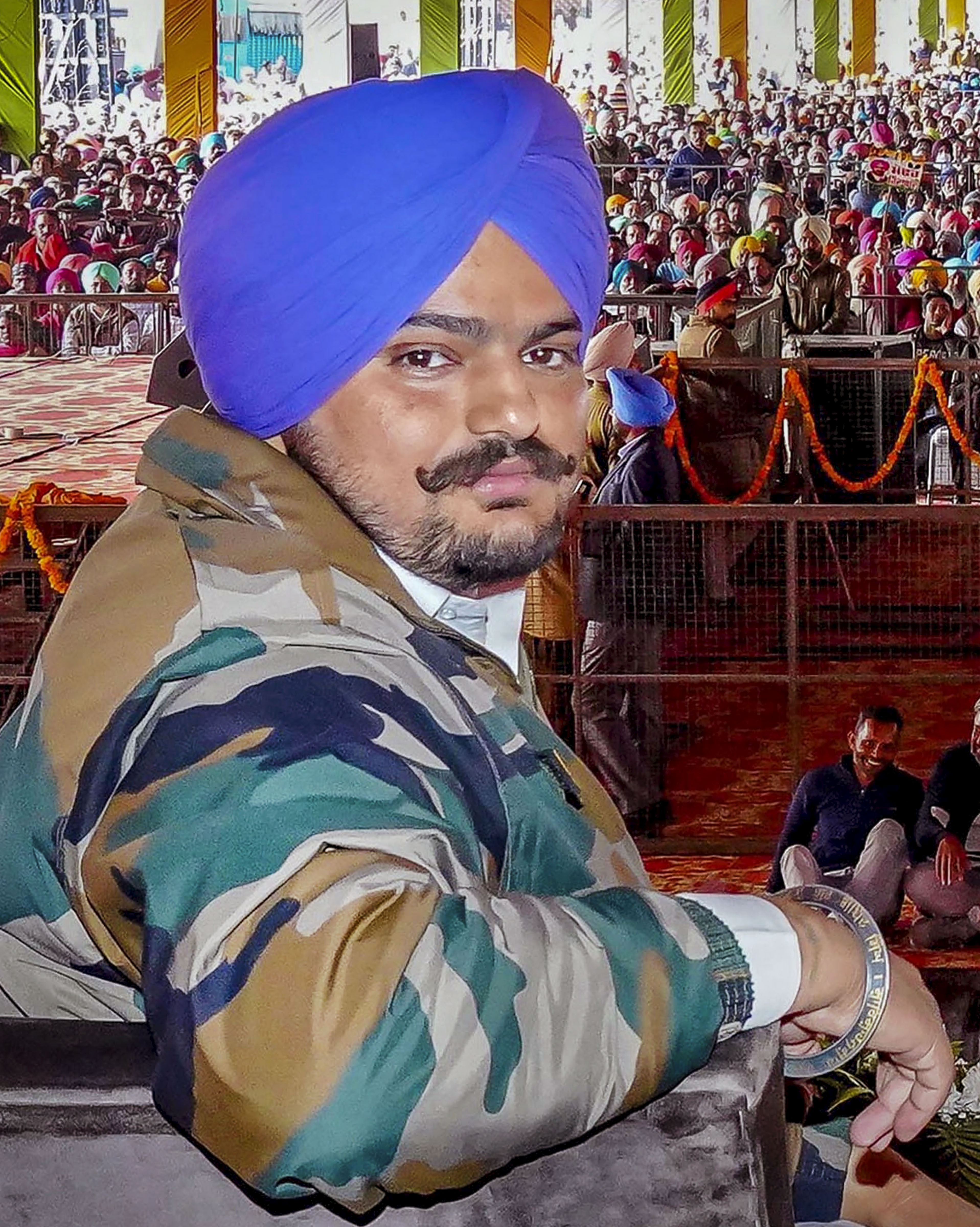
The first of these, ‘SYL’, released in June 2022, touched upon the sensitive Sutlej-Yamuna Link canal project, and gained millions of views in just two days before being legally restricted in India.
Subsequent releases like ‘Vaar’, a tribute to the Sikh warrior Hari Singh Nalwa, and ‘Mera Na’, a collab with Burna Boy and Steel Banglez, surpassed 100 million views.
A 2024 track ‘Drippy’, featuring AR Paisley, was a landmark as it used AI-generated imagery to blend archival footage with new environments.
While the internet is flooded with unofficial AI covers that synthesise Moosewala's voice, his family-sanctioned official releases are at the heart of the royalty dispute now. The official channel of the singer has over 6 billion total views, and counting.


