
 E-Paper



Will continue to raise tribals’ plight: Bastar journalist after 17 months in jail
Santosh Yadav, a Bastar-based journalist, who was released after 17 months in prison, said he will continue to raise the plight of tribals of Bastar through journalism.


Santosh Yadav, a Bastar-based journalist who was arrested for his alleged links with the Maoist in 2015 and released from jail after 17 months, said on Thursday he will continue to raise the plight of tribals in the area.
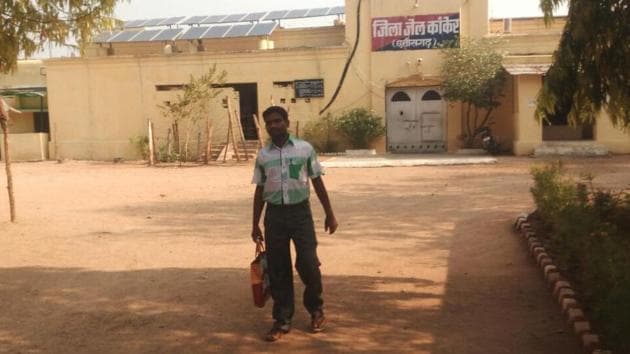
Yadav was arrested by the state police in October 2015 on suspicion that he had links with Maoist leader Shankar in Darbha area of Chhattisgarh’s Bastar. He was booked on charges of rioting, criminal conspiracy and associating with a terrorist organisation.
The Supreme Court granted bail to Yadav on February 28.
“I want to devote my life to social service for the tribals of Bastar. Journalism is my passion and I will continue it until the end. Working in Bastar as a journalist is very difficult and dangerous but the voice of the tribals should reach to the world,” Yadav told Hindustan Times.
“Patrakaaron ko Naxalion ka pratinidhi mana jaa raha, ye sharmindigi valee baat hai (Journalists are being treated as representatives of Maoists which is shameful),” Yadav said.
“Innocent tribals are killed and jailed branding them as Maoists which should be stopped.”
He was lodged in Jagdalpur jail but was later shifted to Kanker jail after he reportedly protested against the substandard food given to the inmates.
“We demanded reading material and good food and started a satyagraha in Bastar jail. It was a 14-points demand list and I was leading the satyagraha for which I was badly beaten up and shifted to Kanker jail. In Kanker jail also, a constable had badly beaten me. In Bastar jail, the condition of the inmates is very bad,” he said.
Yadav’s arrest led to a protest by journalists who organised a march to the chief minister’s house in Raipur.
Journalists, especially women, have been under fire in Bastar region. In 2016, Malini Subramaniam of Scroll was allegedly attacked by unidentified people and had to leave Bastar later. In the same year, Alok Prakash Putul of BBC was also forced to leave Bastar, where he had gone to report on a story.
The police also arrested Sai Reddy in 2008 and Samaru Nag in 2015 under the Chhattisgarh Special Security Act. In addition, there have been reports of journalists facing threat from groups backed by the police.
Critics say the ruling Bharatiya Janata Party government has used these charges to clamp down on free speech and independent political reporting from the mineral-rich region that has seen several local and Maoist uprisings.
But the BJP has refused to back down, saying journalists in Chhattisgarh were safer than anywhere else.
-kW0H-U20214218012MgB-250x250%40HT-Web.jpg)


