
 E-Paper



Win Kashmiri hearts the way we have in Swat, Balochistan: Pakistan NSA to India
The development comes during a meeting between Pakistan NSA Naseer Khan Janjua and Indian High Commissioner Ajay Bisaria at the Pakistan Prime Minister’s Office two days after India gunned down 13 extremists in Kashmir.

 Prefer HTon Google


Pakistan’s National Security Advisor Naseer Khan Janjua advised Indian High Commissioner to Pakistan Ajay Bisaria that the Narendra Modi government should win the hearts of Kashmiris much like Pakistan has done in the Swat Valley in Khyber Pakhtunkhwa province and in restive Balochistan province. He proffered this counsel to Bisaria in a meeting at the Pakistan Prime Minister’s Office (PMO) two days after Indian security forces gunned down 13 extremists in Kashmir, according to senior Indian officials familiar with the matter.
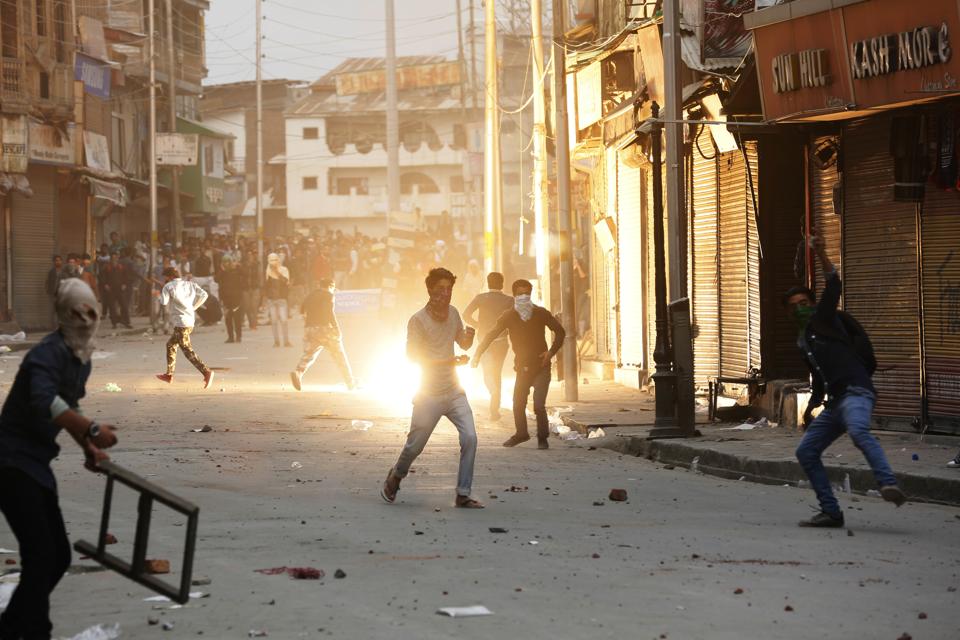
The officials, who asked not to be named, said Bisaria politely replied to the Pakistan NSA on April 3 that it was not Indian security forces but Pakistani infiltrators who were vitiating the atmosphere in the Kashmir Valley through mayhem and violence. What he left unsaid was that thousands lost their lives and millions were displaced during Pakistan’s military operations against the Taliban and Tehreek-e-Nafaz-e-Shariat-e-Mohammadi (TNSM) militants in Swat over the past decade, and the Balochistan Liberation Army (BLA) and Jundallah extremists in Balochistan since 1948.
The Pakistani deep state is unhappy at Janjua engaging Bisaria after the counter-terror operations in Kashmir, with foreign minister Khawaja Asif and former interior minister Nisar Ahmed Chaudhry taking strong exception to the meeting at a time when, according to them, Kashmiris are facing “state terrorism”.
However, the two countries decided to take incremental steps on the humanitarian front to remove deep-seated negativity among the populace on both sides of the border. Among the suggested steps was a proposal to revive the joint judicial committee, defunct since 2008, to exchange mentally unsound prisoners and fishermen who find their way to jails in the other country. This was first proposed by external affairs minister Sushma Swaraj to the Pakistan High Commissioner in October 2017 and Islamabad responded to it on March 7, 2018.
The April 3 meeting reiterated the commitment of both countries to move forward on this, apart from ending harassment of diplomats on both sides. The officials cited above said Bisaria has also been assured by Pakistan foreign secretary Tehmina Janjua of membership of the Islamabad Club.
Experts say Pakistan’s willingness to take steps to improve its relations with India is largely due to pressure from the Trump administration, which wants Islamabad to deliver on the terror front or else be prepared for hard steps from Washington. The grey-listing of Pakistan by Financial Action Task Force (FATF) followed by the US designation of Milli Muslim League, a party floated by 26/11 mastermind Hafiz Saeed, as a terrorist outfit on April 2 are indicators that Trump administration is mulling additional steps to ensure that terror factories are closed by Islamabad. An official statement issued in Islamabad after Bisaria’s meeting with Janjua said they discussed ways to improve bilateral relations and the “recent worsening situation” in Kashmir. Janjua expressed “serious concerns” over alleged rights violations and said the “use of force alone can lead us nowhere”, the statement said.
The statement said Bisaria acknowledged the two countries need to improve their relations and suggested working on “small steps” such as the exchange of prisoners, visits of medical teams and trade initiatives. The envoy and Janjua agreed to explore possibilities for cooperation and improving relations to move towards a “comprehensive process of dialogue”.


