
 E-Paper



Women should be allowed permanent commission in Indian Army, rules Supreme Court
The court noted that despite its own policy of 2019, the Centre had submitted a note to the court which perpetuates gender stereotypes.

 Prefer HTon Google


The Supreme Court on Monday ruled that Short Service Commissioned (SSC) women officers in the Indian Army are entitled to permanent commission and they have to be considered irrespective of their service length.
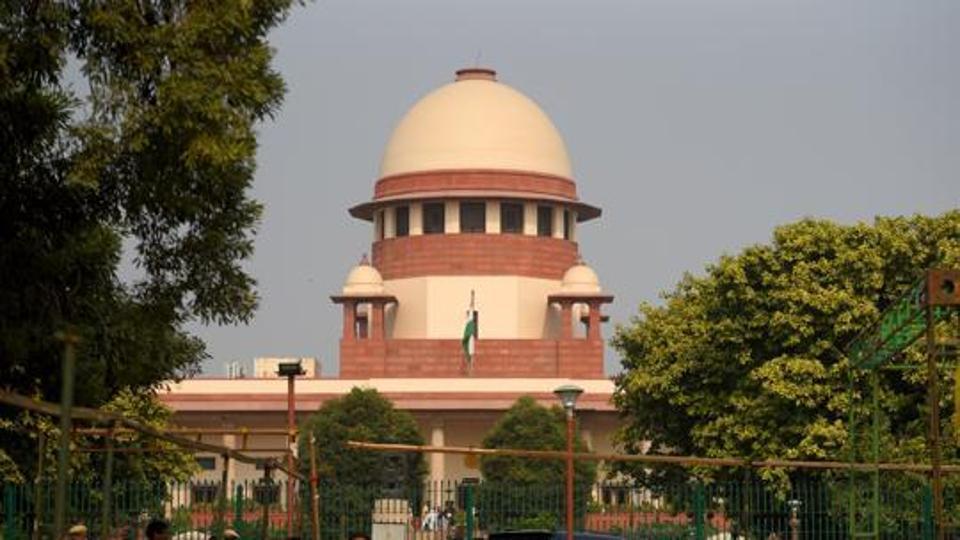
The policy of the Centre in this regard to restrict permanent commission to SSC women officers with less than 14 years of service was held to be violative of right to equality.
Further, a bench of justices DY Chandrachud and Ajay Rastogi also held that there cannot be an absolute bar on women being considered for command appointments.
The judgement was delivered on a petition by the defence ministry challenging a 2010 judgment of the Delhi high court which had ruled that short service commissioned women officers (SSCWO) in Army and Air Force should be granted permanent commission at par with male short service commissioned officers.
The central government had issued notification in this regard in February 2019 granting permanent commission to short service commissioned women officers of the Army.
However, as per its proposal, only short service commissioned women with upto 14 years of service were to be considered for permanent commission. Women with more than 14 years of service would be permitted to serve upto 20 years without consideration for permanent commission and then released subject to pensionary benefits and women above 20 years of service would be released with pensionary benefits immediately upon the completion of the case in Supreme Court.
The court observed that Centre’s policy of 2019 in allowing SSC women officers permanent commission in 10 streams was in furtherance of the mandate of Constitution.
However, the court also noted that despite its own policy of 2019, the Centre had submitted a note to the court which perpetuates gender stereotypes.
Arguments by the Centre which were founded on difference in physical features of men and women and on motherhood and family obligations of women perpetuates stereotypes on woman’s role in the society and are disturbing, the court noted.
Listing out some achievements of women in Army, the court stated that casting aspersions on ability of women and their role and achievements in Army is an insult not only to women but also to Indian Army, the court held.
The respondent/women officers had pointed out that this notification did not grant permanent commission to women with over 14 years of service and was hence discriminatory. Moreover, the 2019 policy granted permanent commission only for staff appointments and not command appointments.
The Centre had justified the same stating that units in Army are composed entirely of male soldiers drawn predominantly from rural background. Such units, a note submitted by the Army said, are not “mentally schooled to accept women officers in command of units”.
Further, the Centre also submitted that lower physical capacity of women officers will be a challenge for them to command units wherein officers are expected to lead the men from the front and need to be in prime physical condition to undertake combat tasks.
As per the note, adverse conditions including two unsettled borders and internal security situation in the north-east and Jammu and Kashmir have a major bearing on employment of women officers in the light of their physiological limitations accentuated by challenges of confinement, motherhood and childcare.
The justification by the Centre had been subject to intense criticism.
In response to the note, the respondent women officers had filed their written submissions in which they had countered the stance of the defence ministry as “regressive” and contrary to records and statistics.
“It is submitted that the justification/reasons stated in the Note handed over on behalf of the Union of India with regard to denying Women Officers command appointments is not highly regressive but also completely contrary to the demonstrated record and statistics,” the women officers had argued.


