E-Paper



Yellow alert in Capital as mercury dips below 4°C
Day temperatures in Delhi on Monday will likely be around 19 degrees Celsius since wind speeds are falling. Night temperatures in the Capital are expected to hover around 4 degrees, according to the forecast.


Cold wave conditions were recorded in parts of the National Capital Region, with the temperature falling below 4 degrees Celsius in some areas of the city on Sunday for the first time this winter, according to the India Meteorological Department (IMD).
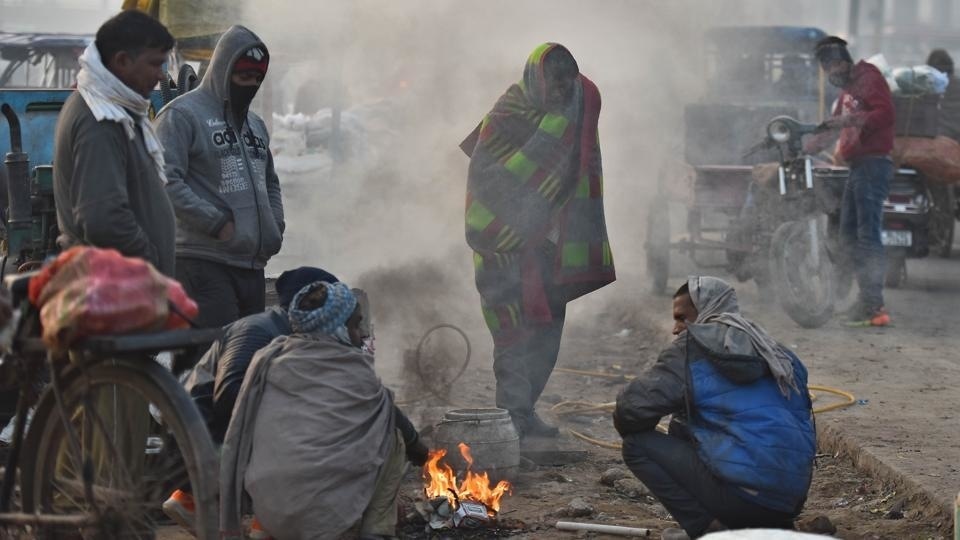
Although Safdarjung, Delhi’s base station, recorded the season’s minimum of 4.6 degrees, which was three notches below normal, the temperature fell to 3.3 degrees at Jafarpur and 3.6 degrees at Lodhi Road, IMD said. A yellow alert is issued to ask the people in an area to remain vigilant about the weather conditions.
Several parts of northwest India recorded subzero temperatures. Both the day’s high and low were several notches below normal in Rajasthan, Punjab, Haryana and Jammu & Kashmir. The cold wave is likely to remain till Wednesday, the weather office said, and conditions may improve slightly after that.
Day temperatures in Delhi on Monday will likely be around 19 degrees Celsius since wind speeds are falling. Night temperatures in the Capital are expected to hover around 4 degrees, according to the forecast.
The Safdarjung observatory recorded a high of 19.2 degrees, three degrees below normal. The maximum temperature fell to just 16.2 degrees at Mayur Vihar and 16.5 degrees at Jafarpur on Sunday.

“We saw cold wave conditions at Lodhi Road and Jafarpur,” Met department scientist RK Jenamani said. “Similarly, we saw cold day conditions in some parts of Delhi, even though Safdarjung’s maximum was just three degrees below normal.”
The weather department declares a cold day if the maximum temperature is 4.5 degrees below normal. It announces a cold wave if the day’s low is either 4.5 degrees below normal, or is below 4 degrees.
Since the north wind is slowing, temperatures may rise slightly in the coming days. “Wind speed, which was around 30-40kmph on Saturday, dropped to 10-15kmph on Sunday, and will decline further on Monday,” Jenamani said. “This will make the day slightly more bearable.”
Sikar in east Rajasthan recorded minus 2.5 degrees, 8.5 degrees below normal. Churu in the western part of the desert state recorded minus 2.6 degrees, 8.4 degrees below normal. Amritsar in Punjab saw minus 0.5 degrees, 4.3 degrees below normal, and a maximum of 15.5 degrees, 5 degrees below normal. Bathinda recorded 0.1 degree, 3.5 degrees below normal and a maximum of 17.6, 4 degrees below normal.
“Very cold and dry northerly winds are blowing over the entire northwestern region, which is bringing down both night and day temperatures,” said DS Pai, head of climate research at the Met department’s Pune office. “This may abate after December 22.”
“Ground frost is expected in all areas recording subzero temperatures,” Jenamani said. “We have issued a warning for its impact on agriculture.”
Saturday was Delhi’s first cold day of the season, when the maximum fell to just 17.8 degrees at Safdarjung, five below notches normal. The minimum was 6 degrees.
Harsh conditions are expected on Monday but Delhi could get a respite between December 22 and 25, with a fresh western disturbance set to influence the region, according to Mahesh Palawat, vice president at private forecaster Skymet.
“From December 21, we will see a slight rise in temperature, and from December 22, there will be a change in wind direction to the southeast,” Palawat said. “Once the cold northwesterly winds stop blowing, we will automatically see both maximum and minimum rise by 2-3 degrees.”
The high winds in the past few days helped disperse some of Delhi’s pollutants, and air quality improved marginally. The Air Quality Index (AQI) on Sunday was 271, categorised as “poor”, the Central Pollution Control Board said in its daily bulletin at 4pm. It stood at 291 (“poor”) on Saturday as well.
Experts said the respite could be temporary. “Wind speed is dropping, and under the influence of a cold wave, the air is becoming heavier, and pollutants will find it harder to disperse,” said Gufran Beig, project director at the System of Air Quality and Weather Forecasting and Research.
High AQI values mean people could experience breathing discomfort and the pollution watchdog suggests limiting prolonged exposure by staying indoors.
No significant change in minimum temperatures is likely over most parts of northwest India, Gujarat and Maharashtra in the next two days, the weather office said. It may rise by 2-3 degrees from Wednesday. A gradual fall in minimum temperatures by 2-3 degree is likely over most parts of east and adjoining central India in the next three days.
Cold wave conditions are likely in some parts of Jammu & Kashmir, Himachal Pradesh, Uttarakhand, Uttar Pradesh and Chhattisgarh on Monday. Cold day conditions are likely in a few pockets in Uttarakhand, Madhya Pradesh and Uttar Pradesh.
Dense morning fog is likely over Uttarakhand in the next two days and over Punjab and Haryana on December 23 and 24. Ground frost in the morning is likely in some areas of Punjab, Haryana, Chandigarh, Rajasthan, Madhya Pradesh and the foothills of Himalayas in the next two days.