
 E-Paper



A year since Zubeen Garg's death: The trial, the 7 accused, and his lasting legacy
Zubeen Garg died in Singapore on September 19 last year.

 Prefer HTon Google


A year after Assam singer Zubeen Garg’s death in waters off Singapore, the circumstances remain contested, with Singapore authorities ruling it an accidental drowning and an ongoing murder trial in Assam. But as seven people face court proceedings, the Assamese singer’s legacy endures, with fans continuing to mourn him and his family seeking answers.
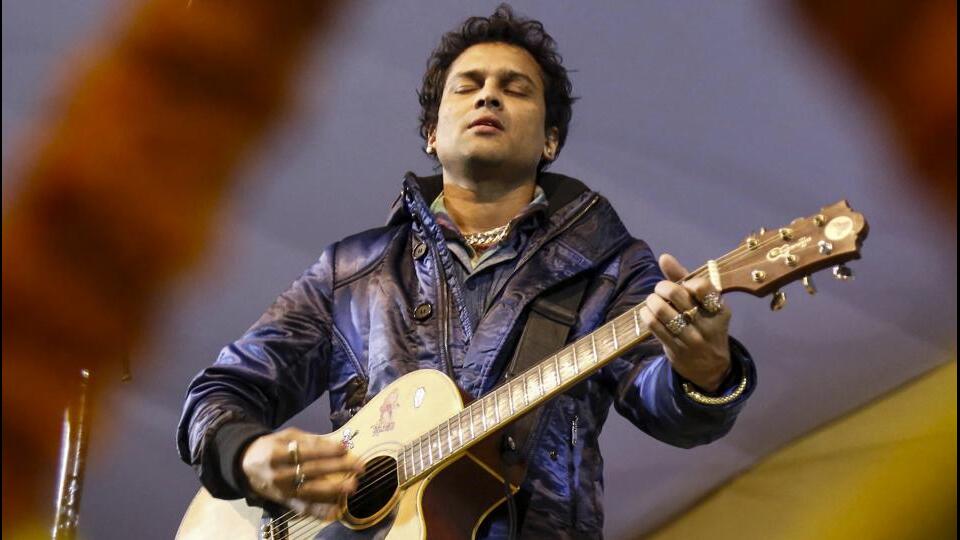
Zubeen died in Singapore on September 19 last year. According to investigations by Singapore authorities and the Assam government, Zubeen joined a private yacht outing near Singapore’s Lazarus Island a day before he was supposed to attend the North East India Festival.
He entered the water twice, becoming unresponsive during his second swim. Despite immediate rescue efforts and CPR, he was pronounced dead at Singapore General Hospital.
Deep Dive

The Singapore Police Force ruled out foul play, concluding that he had drowned after removing his life jacket. Toxicology tests revealed a high blood alcohol concentration (333 mg/100 ml), which authorities said was consistent with severe intoxication and impaired coordination.
Garg’s death shook all of Assam; more than 1.5 million people joined his final journey when his body was taken to the Kamarkuchi area of Sonapur near Guwahati on September 21 last year. His fans stood peacefully in queues at Kamarkuchi, where he was cremated with full state honours, for days to pay tribute.
This was compared to the final journey of pop star Michael Jackson and was praised on international platforms.
The grief soon gave way to suspicion as his fans started demanding justice. His wife, Garima Saikia Garg, also joined this campaign, and more than 60 First Information Reports (FIRs) were lodged across Assam.
The Assam government formed a Special Investigation Team (SIT) to probe the growing number of FIRs. Within weeks, the investigation officially pivoted to murder.
Between October 1 and 10, Assam Police arrested Singapore festival organiser Shyamkanu Mahanta, Garg’s manager Siddhartha Sharma, musicians Amritprabha Mahanta and Shekhar Jyoti Goswami, Garg’s cousin Sandipan Garg, and two personal security officers on various charges, including murder, culpable homicide, conspiracy and financial fraud.
Meanwhile, Garima received a copy of the postmortem report from Singapore, which she handed over to the Assam Police. A second autopsy was ordered in Guwahati, and viscera samples were dispatched to New Delhi.
The SIT filed a 2,500-page chargesheet in December, with total case documents exceeding 12,000 pages, based on statements from nearly 300 witnesses. A team headed by Assam CID chief Munna Prasad Gupta visited Singapore to collect more information before the chargesheet was formally submitted.
In the court proceedings, four of the arrested persons were charged with murder, Sandipan Garg was charged with culpable homicide, and the two PSOs faced charges including criminal conspiracy.
However, during questioning, Shekhar Jyoti Goswami claimed that Siddhartha Sharma and Shyamkanu Mahanta had poisoned Garg and that it was all pre-planned.
According to him, the event organisers deliberately chose Singapore to conceal the plot and suppress videos to make it look accidental.
However, chief minister Himanta Biswa Sarma weighed in, cautioning that Goswami was a co-accused and that this could be his attempt to escape.
At the same time, Singapore Police said that, according to their investigation, this was a clear case of drowning. But Himanta took a firm public stance; he repeatedly called the death a murder and demanded justice.
Garima Garg, who initially refused to believe that Zubeen’s friends, cousin and PSOs could plan a murder, later started demanding accountability. In October last year, she said, “If anyone is proven guilty of wrongdoing, they must face the ultimate punishment.”
In March 2026, Singapore State Coroner Adam Nakhoda officially ruled the death an accidental drowning, finding no evidence of foul play, coercion or poisoning. The Singapore Police Force formally closed its probe days later.
Despite the stark international divergence, the Assam trial pushed forward. The Gauhati High Court constituted an exclusive fast-track sessions court. In May, charges were formally framed against all seven accused, who pleaded not guilty. A separate judicial commission headed by Justice Soumitra Saikia also began its own inquiry.
While the legal machinery grinds on, Assam has cemented Garg’s legacy in stone and song. The government allotted 10 bighas in Kamarkuchi for ‘Zubeen Kshetra’, a permanent memorial. Another memorial was announced for Jorhat, and a 30-bigha park in Kokrajhar marked his 53rd birth anniversary with a 25,000-artist performance of Mayabini.
His influence resonated far beyond regional borders. Artists such as AR Rahman and Shreya Ghoshal paid tribute, and American singer Post Malone hailed him as a “legendary” figure during a Guwahati concert.
Honouring his environmental advocacy, Kaziranga National Park named a newborn elephant calf “Mayabini”. His cinematic legacy also continued; his final film, Roi Roi Binale, became a major box-office success, and the movie is returning to theatres on the eve of his death anniversary.
Beyond everything, Zubeen Kshetra slowly evolved into a site of pilgrimage. His fans, gentle, emotional, yet silent, started spending time there.
Manna Bhattacharjee, a businessman from Assam’s Silchar, said that he could not attend the final journey in Guwahati because he didn’t have that much courage.
“I still don’t believe that my Zubeen Da is not physically present. I didn’t have the courage to see his body, I know many won’t understand this but we Zubeen fans can,” he said, adding that September 19 was going to be one of the toughest days to face.
According to theatre artist Sayan Biswas, the admiration for Zubeen in Assam is organic and this was a creation of the artist Zubeen. “He was never far from his fans, he was reachable. He reached the heart by his lyrics, his music and his voice; that was the relationship,” Biswas said.
For months, admirers arrived with flowers, gamchas and silent prayers. A three-day ‘Zubeen Divas’ programme currently under way at the site features cultural performances and a concluding Bhaona, celebrating a voice that once soundtracked everyday Assamese life.
Composer Salim Merchant visited the memorial on Thursday, captured the prevailing sentiment and said, “His love, his humanity, and his music are always going to be with us.”
Garima Garg echoed this, noting that despite the gruelling trial, where over 100 witnesses have already been examined, her husband’s presence has only magnified. “Zubeen is now everywhere... He belongs to the entire Assamese community,” she said.
A year after his death, the exact circumstances in the waters off Singapore remain bitterly contested between two divergent legal realities: an international ruling of accidental drowning and a domestic trial alleging murder.
But what has happened in Assam is undisputed. The tragedy has not diminished his memory; rather, it has immortalised it.


