
 E-Paper



Delhi Vidhan Sabha was once British seat of power
The white, semi-circular Vidhan Sabha was once the seat of British India. It housed both the Central Legislative Council (today’s Parliament) and a temporary Central Secretariat when the Capital of British India was shifted from Kolkata (then Calcutta) to Delhi in December 1911. Manoj Sharma reports.

 Prefer HTon Google


The semi-circular, white building at Sham Nath Marg that houses the Vidhan Sabha was once the seat of British India.

The Vidhan Sabha building housed both the Central Legislative Council (today’s Parliament) and a temporary Central Secretariat when the Capital of British India was shifted from Kolkata (then Calcutta) to Delhi in December 1911.
Soon after the 1911 Delhi Durbar where King George V made the announcement, Viceroy Lord Hardinge shifted his base from Calcutta and set up a temporary Capital in north Delhi’s Civil Lines.
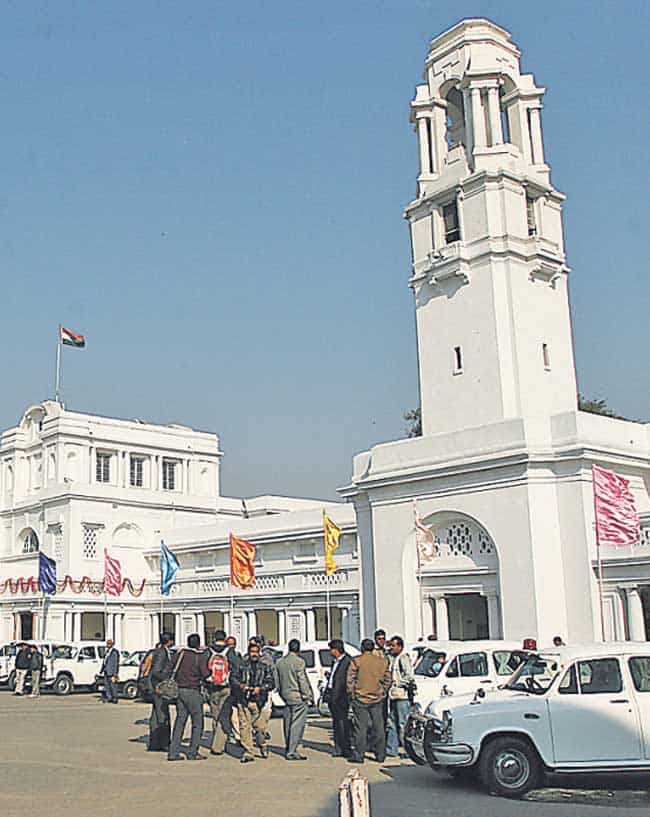
He made the Circuit House, a not-so-impressive building, north of the Ridge, his official residence and ordered the construction of a temporary central secretariat — the building that now houses the Delhi Vidhan Sabha.
Designed by E Montague Thomas, the building with a large assembly hall, was completed in a few months’ time in 1912 at the site of Old Chandrawal village.
It housed the Central Legislative Council from 1913 and 1926, with the legislators, including Moti Lal Nehru, Pt Madan Mohan Malviya and Lala Lajpat Rai taking part in discussions and debates that led to the creation of many of today’s Parliamentary procedures.
In 1926, the government allotted the central portion of the old secretariat, comprising the assembly hall and the adjacent rooms, to the Delhi University on rent after Central Legislative Council was shifted to its new building (the present Parliament House).
This building, which set a style for the bungalows in New Delhi, has been the seat of Delhi legislature since 1993.


