
Sign in

PM Narendra Modi to cut down foreign trips in 2016

Prime Minister Narendra Modi is set to cut down his foreign visits in 2016, travelling abroad only when it is absolutely necessary so that he can devote more time to issues of domestic importance.

Updated on: Dec 31, 2015, 22:57:21 IST
Hindustan Times | By , New Delhi
Share
Share via
  • facebook
  • twitter
  • linkedin
  • whatsapp
Copy link
  • copy link

Prime Minister Narendra Modi is set to cut down his foreign visits in 2016, travelling abroad only when it is absolutely necessary so that he can devote more time to issues of domestic importance.
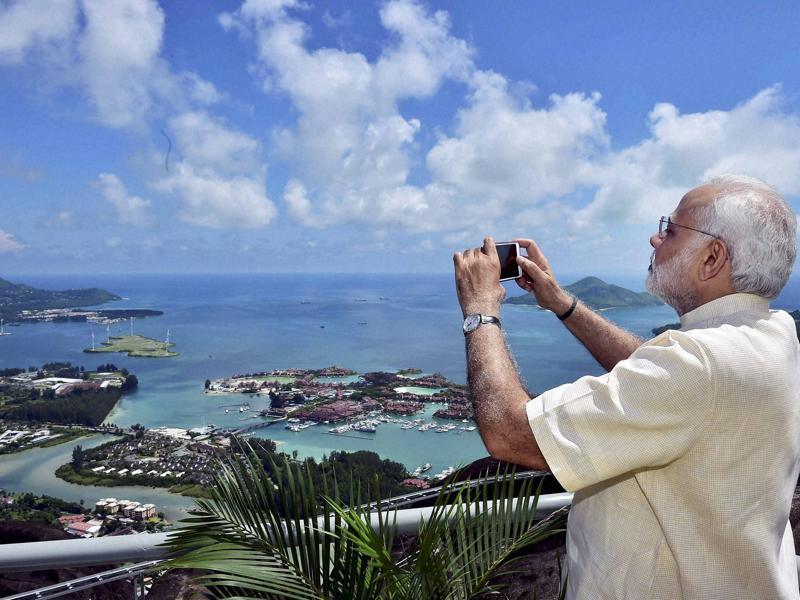
Prime Minister Narendra Modi clicks a picture during dedication of the India - Seychelles cooperation project 'Coastal Surveillance Radar System' in Mahe, Seychelles. (PTI)

He has asked the external affairs ministry to keep his foreign engagements in 2016 to the minimum and his travel plans, as of now, is restricted to a couple of visits abroad in the first half of the year and international summits in the latter.

In the past 19 months since he rode to power, Modi has visited 33 countries and interacted with two-thirds of world’s leaders — reinvigorating India’s foreign relations. At the same time, his frequent tours abroad had drawn ridicule from the Opposition that accuses him of ignoring domestic issues.
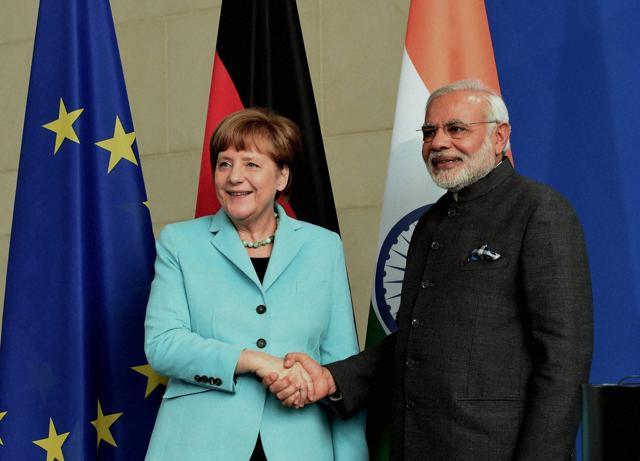
Prime Minister Narendra Modi shakes hands with German Chancellor Angela Merkel after their joint statement in Berlin, Germany on Tuesday. (PTI)

Limiting his tours will help Modi concentrate more on the home front, particularly his government’s third Union Budget that is likely to be presented in February as well as the looming farm crisis in the country.

“PM Modi’s hectic external engagements were to dispel the notion that a former chief minister with little diplomatic experience could not make it to the high table as well as counter a campaign by pro-Congress intellectuals to deny him a visa to travel to the West because of his so-called role in the 2002 Gujarat riots,” a top Indian diplomat said.

According to the senior official, who doesn’t want his name published, the foreign travels counteracted a belief that the Prime Minister cannot handle the Indian neighborhood as he was projected by his detractors as a right-wing leader.
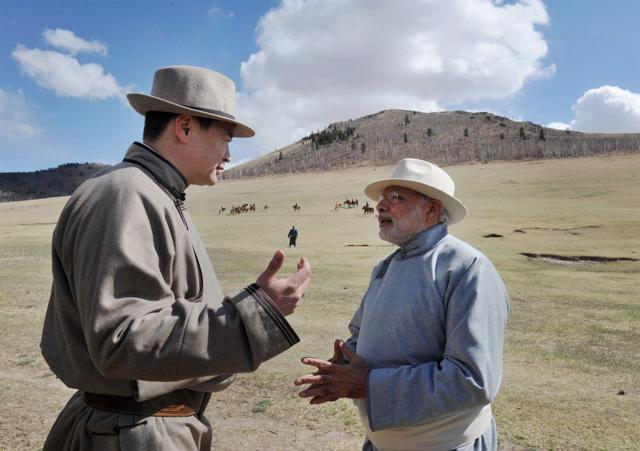
Prime Minister Narendra Modi talking with his Mongolian counterpart Chimed Saikhanbileg during the Mini Naadam festival in Ulan Bator, Mongolia. (PTI)

“From getting the SAARC leaders to attend his swearing-in on May 26, 2014, to his surprise Lahore visit on December 25, 2015, to meet Pakistani PM Nawaz Sharif, Modi has been able to overcome all negative perceptions,” the diplomat said.

As for his 2016 itinerary, Saudi Arabia had offered January 15-16 as possible dates for Modi’s visit but he may travel to Riyadh in February after new Indian ambassador Ahmed Javed settles down, government sources told Hindustan Times.

He will travel to Brussels for the India-EU summit en route to the nuclear security conference in Washington in end-March. Till then, a number of invites have been kept in abeyance.
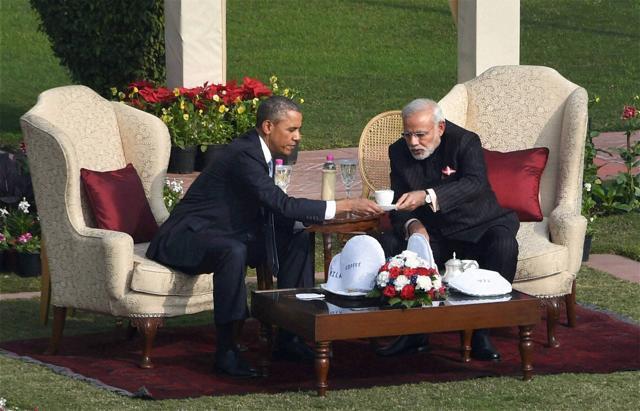
Prime Minister Narendra Modi offers tea to US President Barack Obama. (PTI)

Modi will travel to Pakistan for the SAARC summit, tentatively scheduled for the second half of 2016.

His diplomatic advisors will continue to have brisk external engagements, though. National security adviser Ajit Doval will travel to China on January 5 for informal talks, followed by a tour of France on January 12 for a strategic dialogue.

Foreign secretary S Jaishankar travels to Tokyo on January 5 for talks while counter-terrorism envoy Asif Ibrahim will be in Jordan later this month. Jaishankar will also be in Pakistan on January 15 for a foreign secretary-level dialogue between the two nations even as dates are being fixed for the second round of NSA-level talks with General Naseer Khan Janjhua in a third country.

Read More:

Rahul takes a dig at PM’s foreign tours, says no achhe din for people

3 things that make Narendra Modi tick on his foreign visits

  • Shishir Gupta
    ABOUT THE AUTHOR
    Shishir Gupta

    Shishir Gupta is Executive Editor at Hindustan Times and one of India's top journalists covering national security, strategic affairs, foreign policy and geopolitics. Over the past three decades, he has extensively reported on India's military, diplomatic and security landscape, covering every major conflict and national security challenge, from the 1999 Kargil War and the 2020 East Ladakh standoff to Operation Sindoor in 2025. He has also covered major terror attacks, including the IC-814 hijacking, the 26/11 Mumbai attacks and the 2025 Pahalgam terror strike, along with numerous Pakistan-backed terrorist incidents in the Kashmir Valley and across India. He has reported on national and state elections for more than three decades. A recognised authority on strategic affairs, Gupta has covered India's nuclear programme since the Pokhran-II (Shakti series) tests in May 1998 and has written extensively on global nuclear issues, Indian diplomacy and the country's expanding global outreach. He has also reported widely on international conflicts and terrorism, with a special focus on the Indian subcontinent. Gupta has interviewed Prime Minister Narendra Modi more than four times, including Modi's first interview with the print media after becoming Prime Minister in May 2014. His other interviews include three with the Dalai Lama, as well as conversations with Benjamin Netanyahu, Amit Shah, Yogi Adityanath, S. Jaishankar, Nirmala Sitharaman and Piyush Goyal. He is the author of Indian Mujahideen: The Enemy Within (Hachette, 2011) and Himalayan Face-off: Chinese Assertion and Indian Riposte (Hachette, 2014). He was awarded the Chevening-Wolfson Joint Scholarship at Wolfson College, University of Cambridge, UK, in 1998 and participated in the International Visitor Leadership Program (IVLP) of the US State Department in 2006. He received the Ben Gurion Prize from Israel in 2011 and the K. Subrahmanyam Prize for Strategic Studies in 2015 from the Manohar Parrikar Institute for Defence Studies and Analyses (MP-IDSA). Since 2024, he has hosted Point Blank, Hindustan Times' weekly YouTube show on global geopolitics.Read More