
 E-Paper



Paris climate deal: What the agreement means for India and the world
Envoys from 195 nations have cleared a historic accord in Paris to stop global warming. The agreement will have a lot in store for economies like India with over a trillion dollars in green investment set to be handed out in the next decade or so. Here is what the agreement means for India and the world:


Envoys from 195 nations have cleared a historic accord in Paris to stop global warming. The agreement will have a lot in store for economies like India with over a trillion dollars in green investment set to be handed out in the next decade or so. Here is what the agreement means for India and the world:
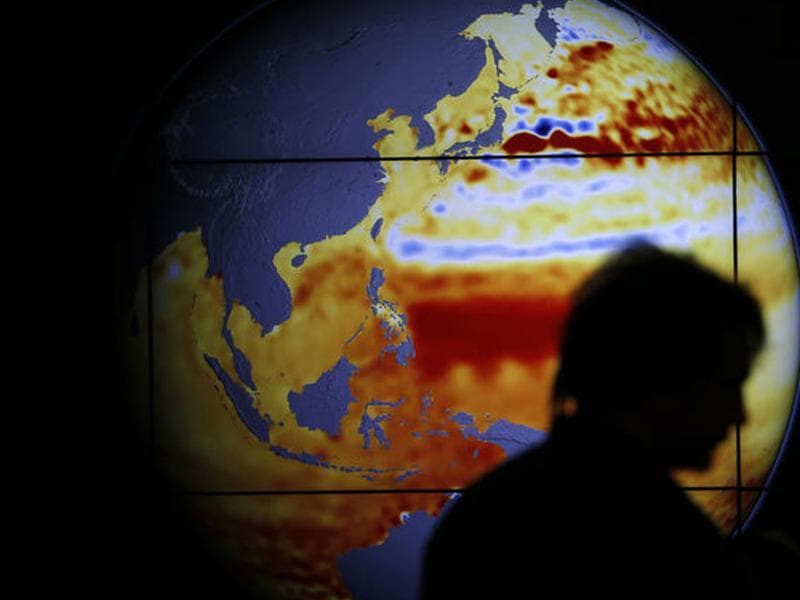
1) The 2 degree and 1.5 degree goals
World: The temperature goal to pre-industrial levels is set for end of the century and will mean that the world will have zero emission economies. The 2 degree goals will mean the shift will happen by end of the century but the ambitious 1.5 goal will push countries to decarbonise (a term not used in the agreement) between 2060 and 2080.
India: The 2 degree goal means that India will have to dramatically slow down its emissions with nonew coal fired power plants in the near future. India will have to draw a coal roadmap for the 2 degree scenario to reduce its dependence on coal for electricity generation. Around 60% of India’s electricity comes from coal-fired power plants. However, the 1.5 degree scenario could have been scary for India as it would have had shut down its coal-fired plants within a few years, with a quicker shift to renewable energy. But India has avoided this scenario as the goal is only aspirational.
Read: One word made the difference: How Paris climate pact was won
2) Differentiation: Role and responsibilities
World: The 1992 firewall between the rich and the developing world has largely been broken. The agreement has responsibilities for every nation, with a higher burden on rich economies and a lower burden on developing economies. The Paris agreement created a third layer of the most vulnerable countries, least developed countries and island nations and to include Africa into it discussions will start in Morocco next year.
India: Wanted the Common But Differentiated Responsibilities with Respective Capabilities (CBDR-RC) in all elements of the Paris agreement. Was able to get it in four aspects only — finance, technology transfer, capacity building and adaptation. On emission reduction, the danger is that the already diluted CBDR will further vanish in the future. As a whole, differentiation has gotten diluted further but for the time being, India has protected its interests.
3) Climate finance
World: Although the floor is $100 billion per year by 2020, the obligation of the rich countries to ratchet up the commitment has ended. Post 2020, rich nations will commit depending on their national circumstances and money from all sources — public and private — will be counted as climate finance.
India: Will not get much, as least developed and island nations have been identified as benefactors. May need more funds to buy clean technologies as copyright has not been addressed in the agreement. After the next review in 2023, emerging economies like India may have to become donors, which it managed to avert this time.
Read: All you need to know about Paris climate change deal
4) Climate mitigation
World: All countries will have to submit Intended Nationally Determined Contributions (INDC) once in five years and would have to enhance their commitments — emission reduction for rich and mitigation action for developing countries. The universal mechanism breaks the annex-1 and non-annex approach in 1997’s Kyoto Protocol. Basically a name and shame regime.
India: India will have two options in 2020 — the first will be to review its INDCs or to re-submit its 2015 INDC and give an enhanced one. The first option is highly unlikely as global moral pressure will be to increase commitment.
5) Transparency and accountability
World: For the first time, the world has a uniform assessment and verification rule for all countries. The rule will be slightly tougher for rich nations, requiring better periodicity of reports and higher verification as compared to the developing world. Rich nations will be required to assist the least development nations to report to the common framework.
India: Has agreed as the weak differentiation agreed in Cancun five years ago has been maintained. India has data generation mechanism to verify its 33-35% emission intensity reduction and 40% non-fossil by 2030, the two targets in its INDCs.


