
Sign in

US prez wants India on board for climate deal

Indo-US climate deal on track

Updated on: Jan 25, 2015, 13:43:00 IST
Hindustan Times | By , New Delhi
Share
Share via
  • facebook
  • twitter
  • linkedin
  • whatsapp
Copy link
  • copy link

US President Barack Obama wants the world to agree to a climate deal at Paris later this year and would like India to come on board during his visit starting from Sunday. A deal between India and United States is on track and would be part of the joint statement.

Official sources said India would agree to a commitment of generating certain amount of energy from zero emission sources — renewable and nuclear. But any agreement on a carbon emission peaking year — when the emissions will be highest — is yet to be worked out and sources said it would be on the discussion table when Obama and Prime Minister Narendra Modi meet in Hyderabad House on Sunday.

A government study had suggested that India’s emissions cannot peak before 2035 and the best period for the emissions to be at its maximum would be between 2045 and 2050. The study indicated that India’s per-capita carbon emissions in 2050 would be about 13 tonnes — the same as that of China in its peaking year in 2030.
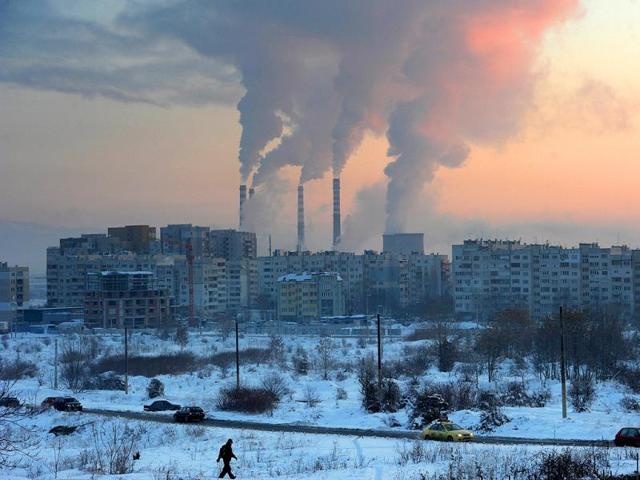
A-climate-deal-between-India-and-the-United-State-is-on-track-and-may-be-signed-during-Obama-s-visit-AFP-File-Photo

However, those opposing emission peaking year for India argue that the developing countries would seek more on the lines of the Chinese commitment and the move can prove to be counter-productive as India may not get anything in return.

Carbon emissions of a country grow till the peaking year, when levels are highest, and decrease thereafter. India is currently the world’s fourth-biggest polluter with China leading the pack, followed by the US and the European Union.

India wants to grow to China’s levels before capping off its carbon emissions, not possible before 2035. New Delhi’s decision will also depend on what Washington offers on climate finance – used to compensate developing nations for cutting emissions – and other issues.

“We should be allowed to grow to China’s levels in per-capita terms for arriving at the peaking year,” Kirit Parekh, former Planning Commission member in-charge of energy, who is studying the different scenarios to calculate the peaking year recently told HT.

One scenario sets the economic growth at 4-5% and pegs the peaking year at 2050, while another assumes a GDP growth of 7-8%, saying India will reach China’s emission levels between 2035 and 2040.

The sources said there are slew of proposals on the table for the peaking year or something similar that can slow down India’s emission growth. India is expected to be world’s second biggest carbon emitter after China and US by 2030.

For Obama, a climate deal is high on the priority as listed by US Secretary for State John Kerry during his visit to India earlier this month. A US diplomat told HT the Indo-US climate deal is important for Obama, who wants to end his presidency on a high note as a global “deal maker”.

Indian officials, however, say they want Washington to increase its ambition on climate finance so that the Green Climate Fund has an annual collection of $ 100 billion or more by 2020. In 2014, the GCF has received $9.7 billion from rich nations, lesser than the commitment of $10
billion a year from 2012 onwards.

“Providing money to the developing world for meeting the challenges of climate change is key for an Indo-US climate deal. We will be championing the cause of the developing world, not just India,” an official said, adding that PM Modi will like to showcase the deal as India emerging as a leader of the developing world.

  • Chetan Chauhan
    ABOUT THE AUTHOR
    Chetan Chauhan

    Chetan Chauhan is the National Affairs Editor looking into all aspects of news and features from across India. A Chevening scholar with over three decades of experience in reporting and news management, Chetan has extensively covered all important aspects of the social sector, political economy, environment and climate change nationally and internationally. He did a journalism course at the Reuters Institute of Journalism in Oxford and Digital Media training at Nanyang Technological University in Singapore. He started as a reporter with The Statesman in 1996 and joined the Hindustan Times in 2000 in the metro bureau covering environment, crime and Delhi politics. He covered hot local news, from the Jessica Lal murder case to the rebellion of Delhi Congress MLAs against then Chief Minister Sheila Dikshit, to the replacement of toxic vehicle fuel with cleaner compressed natural gas (CNG) in the national capital. Some of his stories on air pollution became part of the Supreme Court’s landmark MC Mehta versus Government of India case in the National Capital Region (NCR), forcing the government to take corrective measures. As part of the national political bureau since 2004, he covered important central sectors such as environment, education, social justice, labour, rural development, water resources, renewable energy, agriculture, broadcasting and the Planning Commission for more than a decade producing several exclusive and investigative breaking stories. His specialisation is the environment, having covered at least a dozen United Nations global conferences on climate change, biodiversity and wildlife including climate summits in Paris, Copenhagen and Bali. He also covered India’s two five-year plans ---11th and 12th and reported on drafting and execution of right based laws such as Right to Education, Right to Information and rural job guarantee law, MG-NREGA, now being introduced in new format as VG-RAM-G Act. He has in-depth knowledge of social sector issues. He was one of the first to report on tigers vanishing from Sariska and Panna wildlife reserves in 2004 and 2008, respectively, leading to the setting up of the National Tiger Conservation Authority (NTCA) and the introduction of stringent penal provisions for poaching. He has written extensively on the rising human-animal conflict in India and the degradation of India’s biodiversity hotspots because of mining and other activities. Since 2004, Chetan has covered Parliament comprehensively and participated in training on the nuanced coverage of Parliament proceedings. He has travelled extensively across India to cover national and provincial elections since 1998, especially in the Hindi heartland states, considered India’s road to power. He writes a regular column for Hindustan Times, Ecostani, on important national politics, economy, Himalayan ecology and environmental issues. His other responsibilities include providing inputs for edits and edit page articles for the publication, apart from managing news flow from across India.Read More

Follow India news real-time updates and the latest news covered on Hindustan Times, featuring today's critical updates on Sonam Wangchuk LIVE and more across India.