
 E-Paper



In this MP village, a green thought takes root
In Ratlam’s Karmadi village, a sapling is planted after each girl’s birth and every death since 2009.

 Prefer HTon Google


Rajkumar Rao, a resident of Karmadi village in Ratlam district, struggled for 48 hours to collect wood for his sister-in-law’s funeral pyre. The crisis that happened seven years ago prompted him to spread the idea of planting trees on the birth of a girl child and the death of every villager.
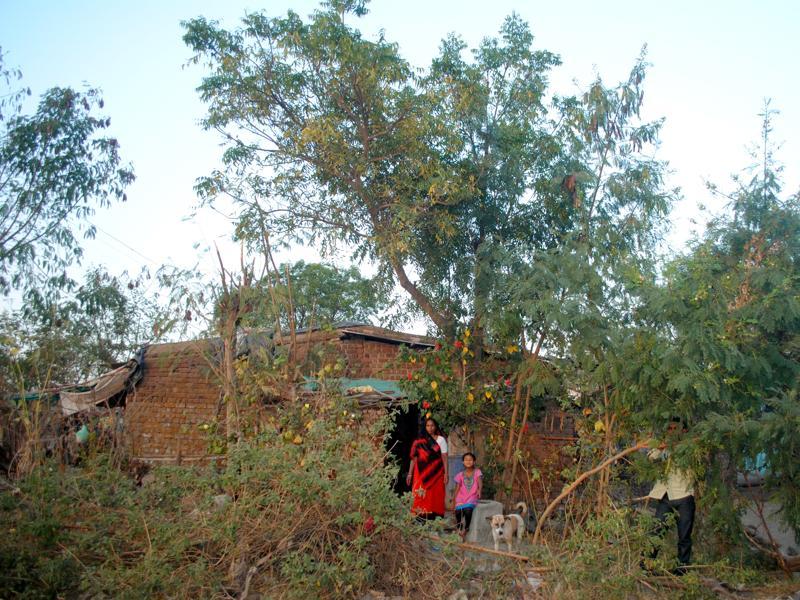
The villagers have now written to chief minister Shivraj Singh Chouhan, seeking to make the initiative compulsory for every village in the state.
As per the National Crime Records Bureau (NCRB) data of 2015, a total of 30% of total cases of female foeticide in the country were reported from Madhya Pradesh alone in 2014. Now, children take pride in their parents and call the trees their best gifts ever.
Till now, over 400 saplings have been planted in Karmadi. The idea to plant a fruit-bearing tree on the birth of a girl child is also gaining momentum in nearby villages. Karmadi is home to 2,800 people, most of whom are Bhil tribals and dalits.
“Our aim is to spread this idea to other villages of our state. Wherever we go, we discuss this idea with the sarpanch and other people. I have heard that some people have started implementing it,” said Vinod Verma, head of Karmadi village.
“A week after my sister-in-law died, senior residents of the villages and I passed the proposal with the help of the sarpanch. We are planting trees since then,” said Rao.
The villagers take care of every sapling planted and ensure that no tree is cut. “Everyone is responsible for everyone’s saplings. Sometime during the water crisis, a joint effort is taken to water these saplings,” said Ishwar Chauhan , a resident of the village.
“Karmadi village is a pride for Ratlam. We are planning to extend the idea to other villages of the district,” collector B Chandrashekhar told HT.
-kW0H-U20214218012MgB-250x250%40HT-Web.jpg)


