As India begins celebrations to mark its 75th year of independence, there is little doubt the story of India is as much the story of Indian politics over this period.
Politics has both unified the nation and divided it. It has determined who exercises power, for whom and to what end. It has both been governed by the Constitution, and shaped the everyday implementation of the Constitution. Politics has dictated the life of citizens and concerns of society, but has also been shaped by social structures and individual experiences. It has enabled freedom, but also curtailed liberties. It has made India more equal and more just, but also, often, failed to tackle inequality and injustice. And politics has helped achieve socioeconomic progress, but also slowed down India’s developmental journey.
But politics has evolved. And at the cost of oversimplifying a complex journey, this evolution of politics in India can be divided into four broad phases.
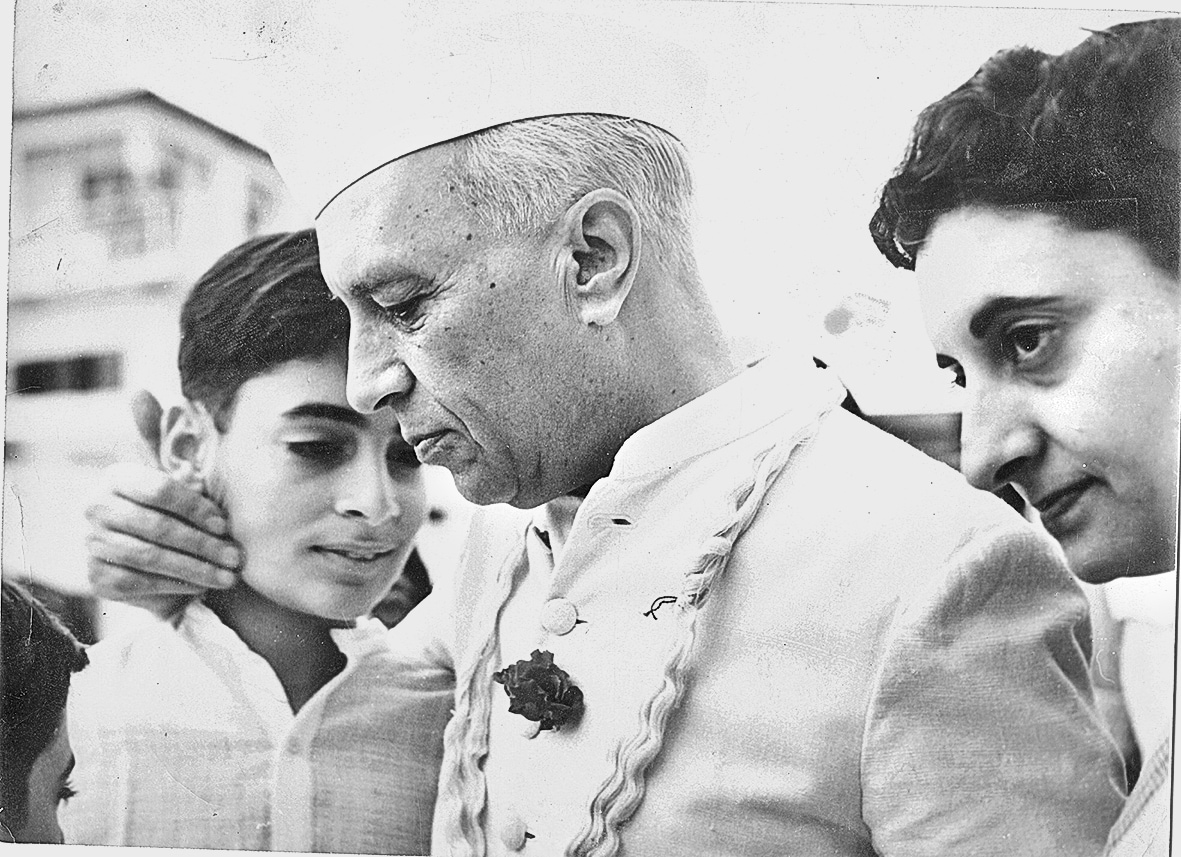
The first phase, between 1947 and 1977, was marked by the consolidation of democracy, but under what political scientist Rajni Kothari termed “the Congress system”. If a galaxy of stars across party and ideological lines helped draft the Constitution, the Congress and Jawaharlal Nehru institutionalised systems to give life to a constitutional democracy.
This period was marked by a personality cult built around Nehru, but also the ability of regional leaders within the Congress system to pose a challenge. The post-Nehru era saw an electoral tsunami in 1967, leading to the emergence of non-Congress alternatives across large parts of the country for the first time.
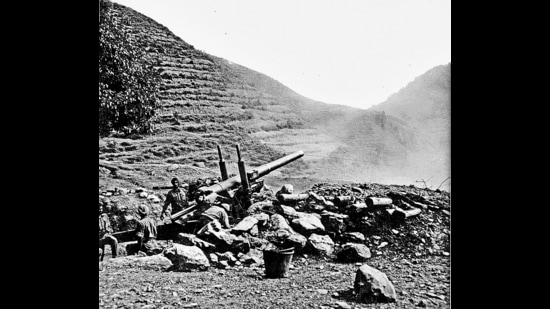
The first three decades after independence were characterised by a relatively centralised governance system, but one that had to take into account sub-national sentiments around the questions of federalism and language. It was a period when central planning dominated, but without the necessary investment (for instance, in the areas of primary education or land reform) which would have enabled India to lay strong foundations for growth and equity. It was also a period marked by four wars (1948, 1962, 1965, 1971), with mixed results. India stayed united, it achieved a decisive edge over Pakistan but, it also confronted what was to become its biggest geopolitical challenge in the future: China.
Finally, it was a period which showed that democracy required eternal vigilance, given Indira Gandhi’s turn towards authoritarianism, flatly rejected by citizens at the first opportunity they got, in the 1977 general election.
The second phase, between 1977 and 1991, was crucial in altering the political complexion, economic trajectory and foreign policy orientation of India.
It was marked by the emergence of a non-Congress pole in Indian politics (the Janata Party experiment between 1977 and 1980, and the National Front experiment in the late 1980s), even as Rajiv Gandhi succeeded in garnering the biggest mandate ever in India’s electoral history, in 1984. Under him, early seeds of change were planted — with an embrace of technology, tentative reforms, a rapprochement with China, and an outreach to the United States. This was a period when the Indian State confronted major internal security challenges, from Kashmir to Punjab to the north-east to anti-minority violence, but once again managed to stay united.
This was a period when corruption became a central electoral issue (remember Bofors?).
This decade-and-a-half also saw deeper political mobilisation: the Hindutva stream gained ascendance, symbolised in the Ram Janmabhoomi agitation; and the subaltern stream gained ascendance, symbolised in the assertion of backward communities in favour of the implementation of the Mandal Commission report. The emergence of regional parties and rise of coalition governments strengthened the role of states in the federal matrix. In all these respects, these 14 years laid the foundation for much of what was to come.
The third phase, between 1991 and 2014, was marked by an interesting paradox. Political competition intensified, and the country saw power shuffle between the Congress, the United Front, the Bharatiya Janata Party (BJP), and then back to the Congress for a decade. But it was also a period marked by an elite convergence on economic and foreign policy issues.
The 1991 reforms liberalised the economy, unleashed entrepreneurial energy, connected India with the world — and despite the fact that reforms happened by stealth, all governments continued to pursue, to varying degrees, the same economic paradigm. As it became clear that growth was not equitable, India also embarked on ambitious welfare schemes.
There was also political consensus across parties, barring the Left, about the need to both establish India’s nuclear credentials while further improving ties with the US. The main security challenge India faced in this period remained Pakistan-sponsored terrorism in Kashmir.
The final phase, from 2014 to now, has seen India move towards a new ideological framework. The Constitution remains the supreme document and all abide by it. But those who were long on the fringes of Indian politics finally see an opportunity to shape the national agenda.
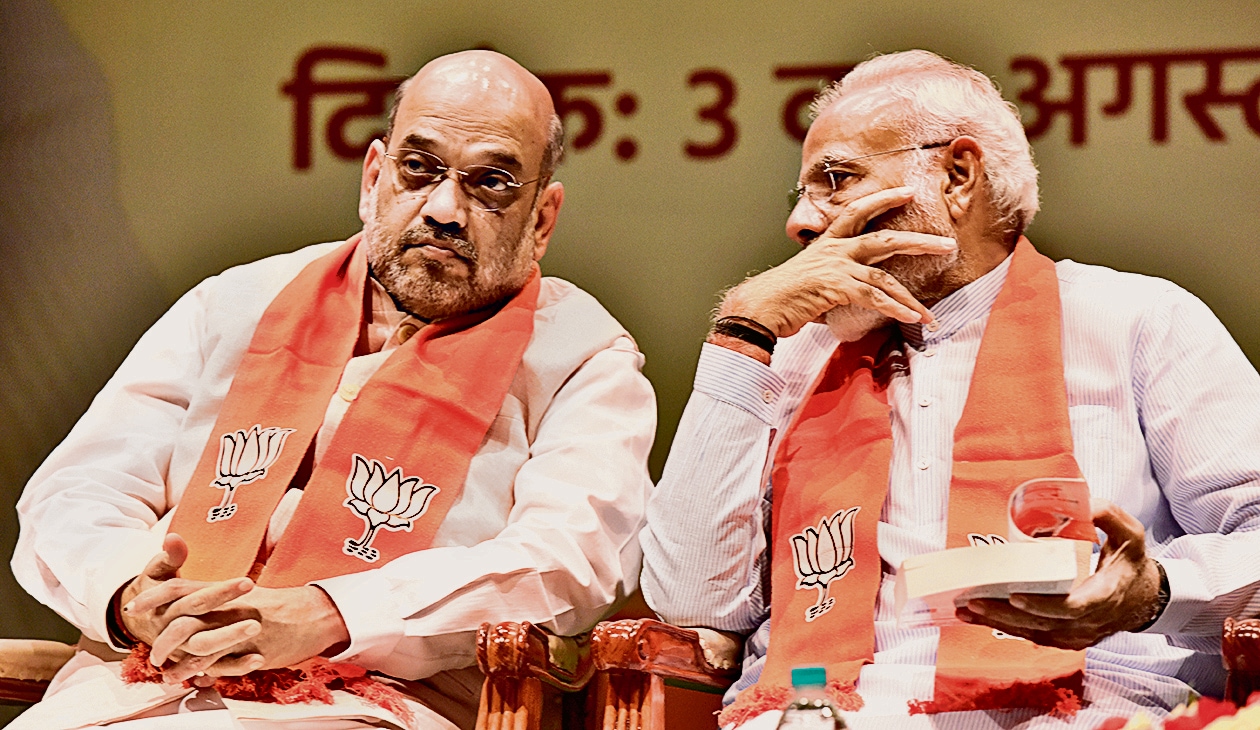
The rise of Narendra Modi enabled a majority BJP government to come to power both in 2014 and 2019. This marked the demise of the old-style politics of secularism, led to the emergence of a relatively consolidated Hindu vote in north and west India, a reconfiguration of the federal balance away from states towards the Centre, the growing salience of the politics of majoritarian nationalism, and deeper internal social cleaveages, particularly on the Hindu-Muslim axis.
Economically, India has made its welfare delivery systems more efficient but its growth story remains less than optimal, made worse by the pandemic. And in terms of strategic outlook, while Pakistan is an irritant, it is clear that China will remain India’s enduring strategic threat for the foreseeable future, enabling (and necessitating) an even closer relationship with the US.
As India celebrates its remarkable journey, it is a tribute to Indian politics that the country has made enormous strides. It is also, thus, the failure of Indian politics that the country has not yet realised — in some cases it has even reversed — the ideals of those who fought for India’s freedom.

 E-Paper