
 E-Paper



A look inside Gwalior royal family's palace featuring the world's largest pair of chandeliers, grand architecture

 Prefer HTon Google


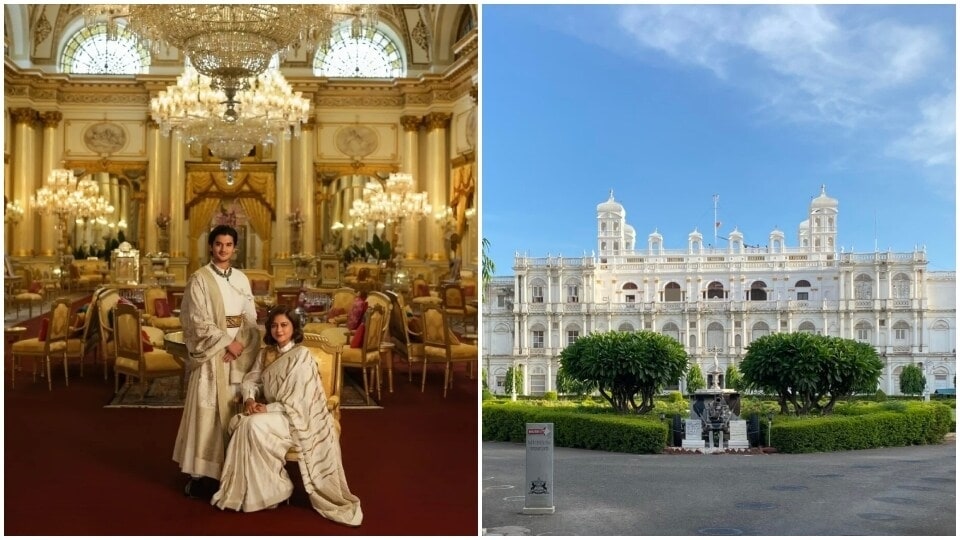
Jai Vilas Palace, built in 1874, combines European architectural styles and Indian heritage, and is home to the erstwhile royal family of Gwalior.
The Jai Vilas Palace, which has been home to one of India's most affluent princely families, blends European styles and the opulence of Indian heritage. Constructed in 1874 by Maharaja Jayajirao Scindia of the Maratha Scindia dynasty and the then-Maharaja of the Princely State of Gwalior, it boasts lush gardens, intricate frescoes, and historical artefacts.
Today, it is not only the private residence of the erstwhile royal family of Gwalior but also a museum. On July 31, Maharani Priyadarshini Raje Scindia and Yuvraj Mahanaaryaman Rao Scindia gave Outlook Luxe a grand tour of their abode. Let's take a look inside the palace:
Inside the Jai Vilas Palace in Gwalior
Constructed to welcome Prince George and Princess Mary of Wales, the Jai Vilas Palace is no ordinary residence and is an ode to maximalism. The three-storeyed palace was designed by Lieutenant Colonel Sir Michael Filose and combines three architectural styles: a Tuscan-style first storey, an Italian Doric second storey, and a Corinthian-style third storey.
Painted in brilliant white, the 19th-century palace was built of sandstone and features minimal Indo-Saracenic elements. It also does not incorporate many local motifs or regional iconography. It is, rather, an European masterpiece living in the heart of India, inspiring awe amongst visitors from across the world.
Unique details
Today, the Jai Vilas Palace is managed by nearly 400 staff members and spans close to 30 acres. It is also home to the world’s largest pair of chandeliers, which decorate the Durbar Hall. A few of the palace's stunning features include large, lush gardens, colourful frescoes on the walls, ornate gold carvings, paintings documenting the rich lineage of the Gwalior dynasty, vintage furniture, a stunning dining area, and luxurious carpets.
A museum open to all
According to the official website of Jai Vilas Palace, on December 12, 1964, Rajmata Vijaya Raje Scindia converted the Palace's West and South wings into a museum. It was done in the memory of her beloved husband, HH Maharaja Sir Jiwaji Rao Scindia, the last Maharaja of the Princely State of Gwalior.
The museum was inaugurated by the then-President of India, Dr Sarvapalli Radhakrishnan. Over the years, portions of the West wing of the Palace have also been added to the museum, allowing guests to glimpse art, culture, Maratha history, and the lifestyle of the Scindia Dynasty.
With about 40 galleries, the museum displays collections from the 18th to the 20th centuries, including the Kerman Masha’ir carpet in the Durbar Hall, royal carriages and royal textiles, decorative art, rosewood furniture, rare prints and manuscripts, and the palanquin of Shah Alam, among other artefacts.


