E-Paper



Abracadabra: The Victoria and Albert museum has opened its vaults

 Prefer HTon Google


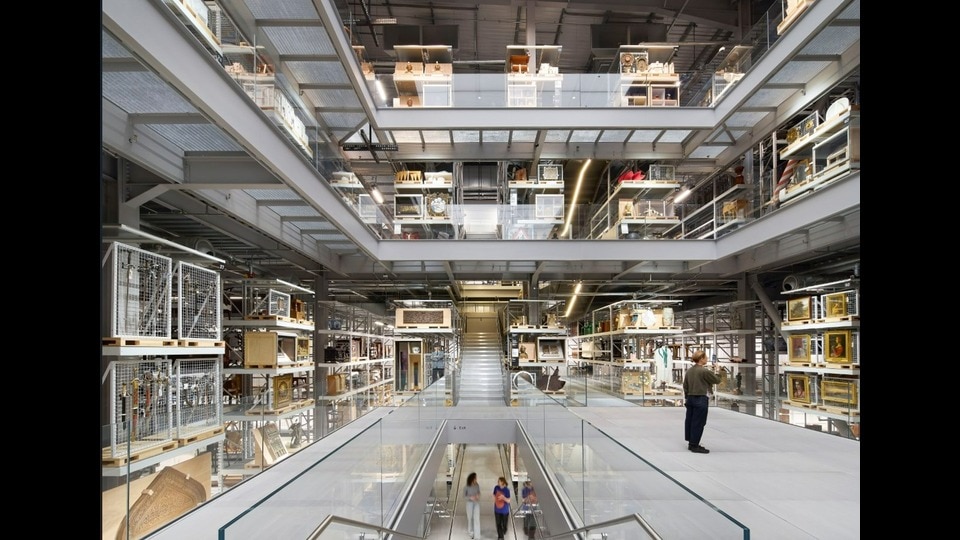
A storehouse in London that holds over 250,000 artefacts is inviting visitors into its new Ikea-like layout. Take a look.
It’s a bit like a department store, except it is about the size of 30 basketball courts.
And instead of groceries, there are slices of history on the shelves: a 16th-century Japanese suit of armour; 600-year-old ceramics; wedding dresses from the 1930s.
This is the newly opened V&A East Storehouse.
In an effort more than 10 years in the making, an old warehouse has been redesigned by the renowned American studio Diller Scofidio + Renfro. The Storehouse is now an array of vast, airy galleries, spread across three storeys, each level arranged around a striking 20-metre-high central atrium.
All the 250,000-plus artefacts stored here are visible to visitors, placed either within transparent wrapping or behind thin glass, often in partially dismantled crates, all lined up on long metal shelves.
The V&A wanted to reimagine what a museum could be, and give viewers a “backstage pass” to what really goes on inside one, Tim Reeve, deputy director and chief operating officer at the Victoria and Albert Museum, has said.
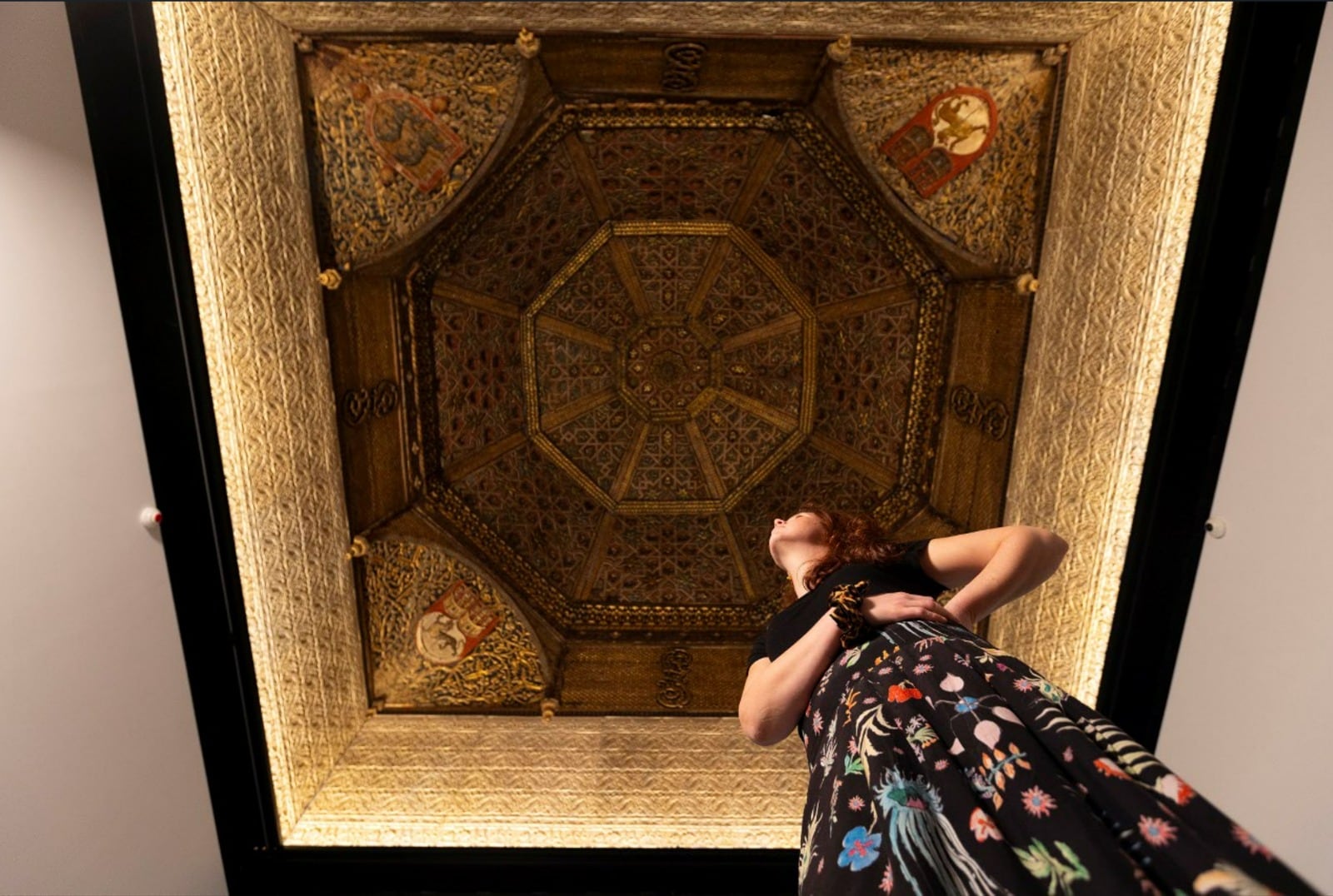
Many of the artefacts are so massive, they haven’t been exhibited in decades. These include: An exquisite 15th-century carved and gilded wooden ceiling from the now-lost Torrijos Palace near Toledo in Spain. A 1930s all-wood Kaufmann Office, designed by American architect Frank Lloyd Wright for Edgar J Kaufmann, a Pittsburgh-based department-store owner. A full-scale Frankfurt Kitchen designed by Austrian architect Margarete Schütte-Lihotzky, which transformed kitchen design in the 20th century.
Curated mini-exhibits sprinkled across the space, meanwhile, currently include swatches of fabric from across Africa, sculptural shoes by Zaha Hadid, a Piaggio scooter customised by Daniel Libeskind, and Jain sculptures in sandstone. These exhibits will change from time to time.
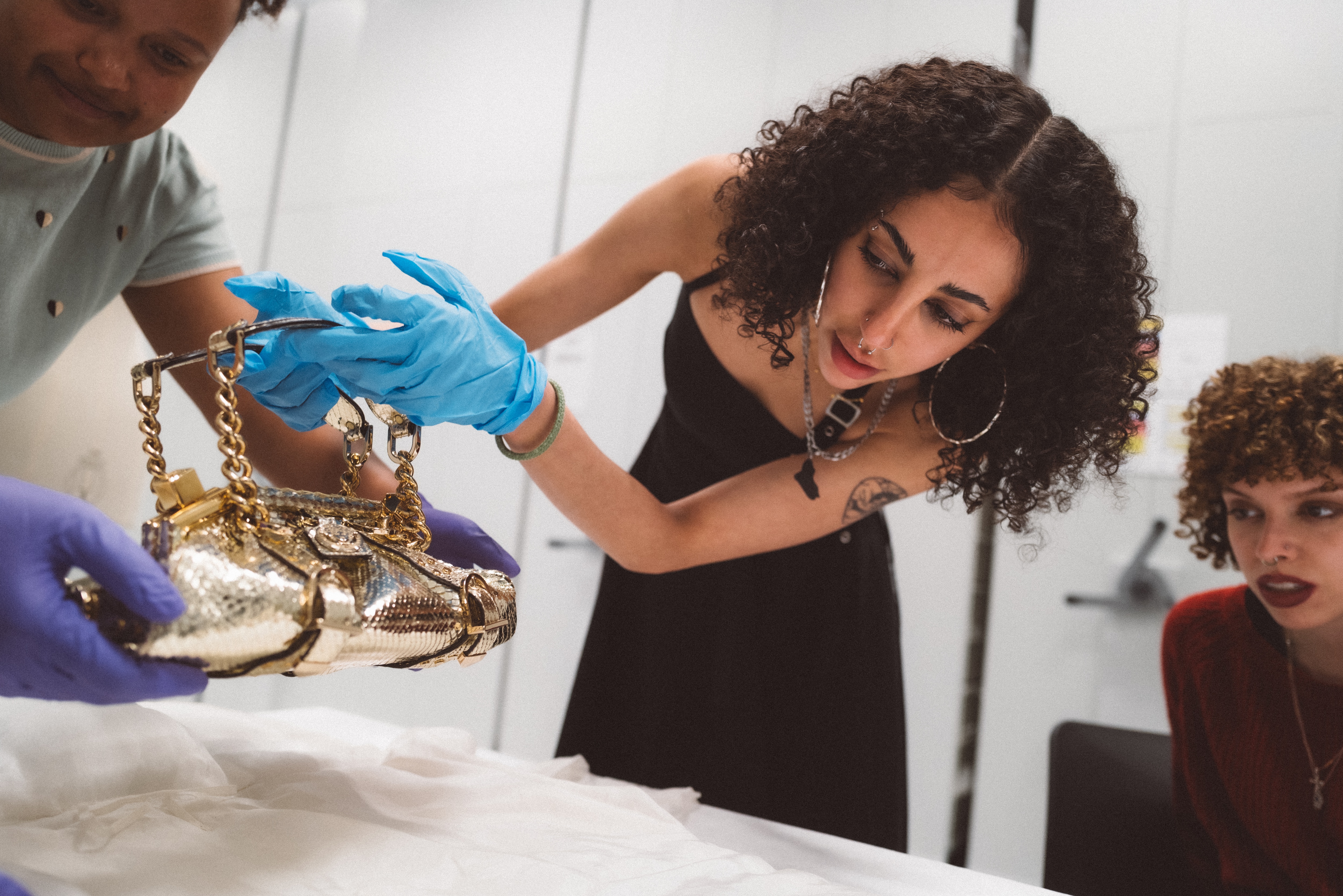
There’s more. As part of V&A’s Order an Object initiative, visitors can go online to pick from a list of artefacts, book a (free) appointment, and then turn up at the appointed time to have the object/s unpacked so they can look at them, touch them (in many cases), and learn more about them from museum staff.
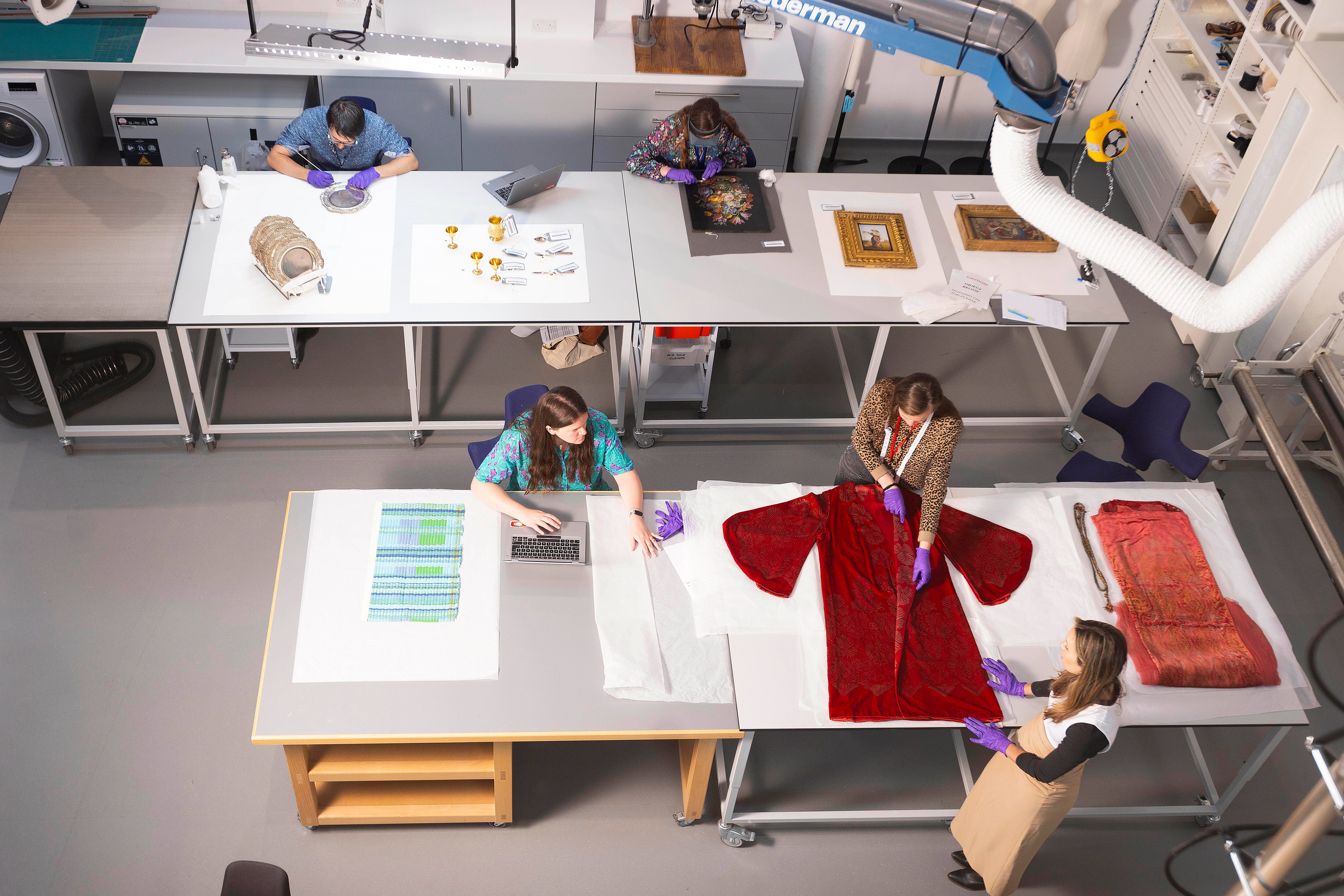
Even without such an appointment, the space offers plenty of inside access. In one of the galleries, for instance, visitors can watch the regular goings-on of such a repository, as technicians pack away newly acquired works, conservators unbox items to check on them and others work to restore artefacts.
Shelf life
What does it do to the artefact-viewer relationship, when an institution reinvents itself in this manner?
Museums are working to cater to new generations that have instant, digital access to diverse information, says Anupam Sah, director of the Anupam Heritage Lab and former head of art conservation, research and training at Mumbai’s Chhatrapati Shivaji Maharaj museum (CSMVS).
The result has been a host of virtual reality (VR) and augmented reality (AR) experiments; 3D reconstructions; interfaces inspired by videogames; even exhibits on youth icons such as Taylor Swift (the V&A and Museum of Arts and Design in New York have each had one).
The Storehouse is a particularly interesting approach because it meets the need for a dramatically new interface while staying true to the primary functions of a museum — the collection and care of artefacts, and outreach and education, Sah says.
It serves the purpose of generating curiosity and a sense of a niche experience, because these are objects that have rarely been displayed. The space is made less intimidating by its casual, Ikea-like design. And the idea that one can book an appointment and have someone unbox and explain an artefact places the visitor at par with a researcher, connoisseur or patron, completely reinventing this relationship.
To meet these goals so seamlessly, using only existing holdings, is quite a feat, Sah says.
Revised roadMAP
The idea of visible storage can be traced, incidentally, to the Canadian anthropologist Audrey Hawthorn and his work at the Museum of Anthropology at University of British Columbia, in the 1970s. Back then, the aim was to democratise access to national treasures. Now, it is to draw the public in and highlight the continued relevance of the museum as an institution.
Along these lines, the Metropolitan Museum of Art in New York, Boijmans Van Beuningen in Rotterdam, Smithsonian American Art Museum in Washington and Louvre-Lens in Lens, France, have all opened up parts of their storage to the public.
A similar effort is unfolding in India, at the Museum of Art and Photography (MAP) in Bengaluru. Two of its storage floors are open to visitors. One houses more than 340 objects ranging from textiles and horse jewellery to cigarette cards, while the other has more than 250 metal sculptures.
The periodic exhibitions held at the museum innovate with an eye on high levels of engagement too, says Arnika Ahldag, director of curation and exhibition at MAP. An ongoing exhibition on the Modernist Ram Kumar, for instance, includes the simple addition of a wooden desk. Here, visitors can flip through books about the artist, place handwritten letters by him on a lightbox in order to view them more clearly, and even write a letter to themselves or leave one behind for the next visitor.
“We always try to locate an immediate point of resonance with the visitor, so that the works feel accessible without compromising their complexity,” says Ahldag. The beauty of this is that, once you move away from the idea of objects in a glass case, the room for innovation is immense. “And that’s a good thing,” Ahldag adds. “We need different kinds of museums for different kinds of audiences.”
(Entry to both V&A East Storehouse and the MAP museum is free)