
 E-Paper



Amid astro-tourism plans, starry, starry nights at risk in India

 Prefer HTon Google


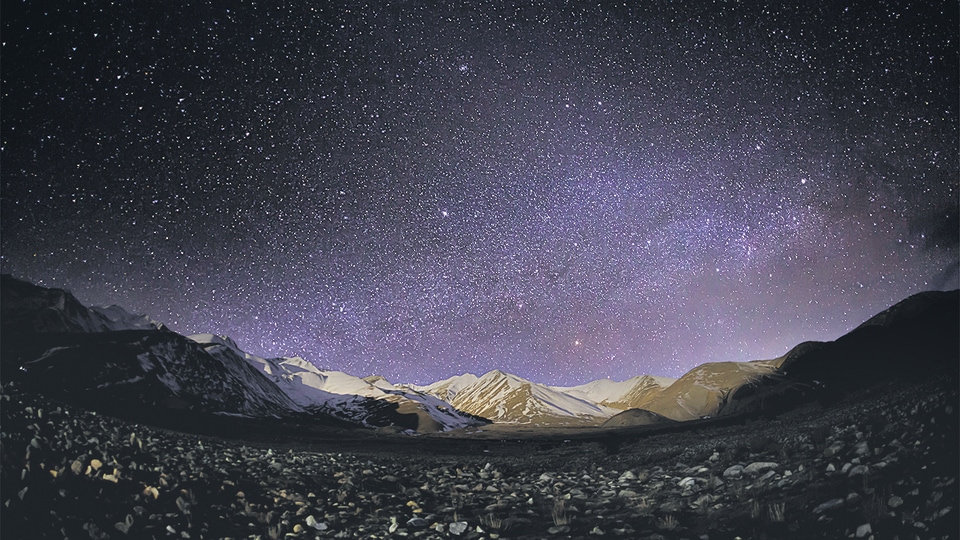
Proposals to turn remote mountain towns into astro-villages sound bright on paper. But perhaps that very brightness could obscure the view of the heavens.
One has to leave the city to really see the stars, and remote parts of India are planning to cash in on that bejewelled night sky by promoting themselves as destinations for astro-tourism.
In February 2021, during a series of webinars on domestic tourism, the union tourism ministry described astro-tourism as “the next frontier for nature-based tourism”. In the mountain state of Uttarakhand, work is underway to create an astro-village in Benital.
“The astro-village will stretch across approximately 8,200 sq m and include cottages, a restaurant, an observatory, parking space and nature trails,” says Brijendra Pandey, tourism development officer for Chamoli district.
What makes Benital ideal for stargazing is its high altitude (2,700 metres above sea level) and low levels of light pollution. The lush green landscape and panoramic views of the Himalayas are a bonus.
Benital is only the most recent announcement. In Uttarakhand alone there are plans to develop four regions as astro-tourism spots. Parts of Kashmir’s Ladakh region, particularly near the already popular Pangong Lake, are already being promoted as astro-stays. The remote village of Man Pangong has even been drawing traffic away from Spangmik, which was where most visitors to Pangong Lake stayed before.
Man Pangong is at a slightly higher altitude and so far has hardly any light pollution, which makes it ideal for star-gazing. But this is what environmentalists and astronomers fear most when it comes to astro-tourism: The more successful an astro-village is, the less suitable it becomes. Aside from the danger of corrupting and polluting pristine landscapes, there is the fear that more tourists will mean a pollution of the area’s dark skies.
Nainital is an example of all that can go wrong when there isn’t a stringent cap on the number of tourists allowed into a place, says Preeti Kanaujia, senior programme director at the NGO Centre for Environment Education, Uttarakhand. Roads within and leading up to the hill station are frequently clogged by traffic jams. In 2017, the city experienced a water scarcity for the first time on record, as levels at Naini Lake dipped, allegedly a result of overuse by restaurants, hotels and construction projects, and the loss of tree cover in the region.
“Involving locals in the planning process is often a great way to protect local biodiversity and natural resources, but there is often a gap between policy making and its implementation,” Kanaujia says.
Already, India has too few dark-sky places, adds Dipankar Banerjee, director of the Aryabhatta Research Institute of Observational Sciences (ARIES), an autonomous research institute under the Government of India’s department of science and technology. “A simple practice like attaching lampshades to outdoor light sources can curb light pollution,” Banerjee says. “But locals need to be informed about such practices, and provided with the equipment needed so that it’s easier for them to follow the rules.”
Around the world, countries are creating dark-sky parks, reserves and sanctuaries where responsible lighting policies are enforced. The state of Nevada recently launched a dark sky designation programme to promote and conserve iconic dark-sky areas. The International Dark-Sky Association works with citizens and governments around the world to combat and contain light pollution. In India, there is no such plan for the astro-villages.
“Right now, the footfall in Benital is low as not many tourists know about the village,” says Chamoli district magistrate Himanshu Khurana. “Going ahead, the plan is to involve locals in planning and running the astro-village so that problems that crop up due to urbanisation and development can be predicted and managed ahead.”


