
 E-Paper



Are you seeing what I’m seeing?: Deepanjana Pal writes on Homebound

 Prefer HTon Google


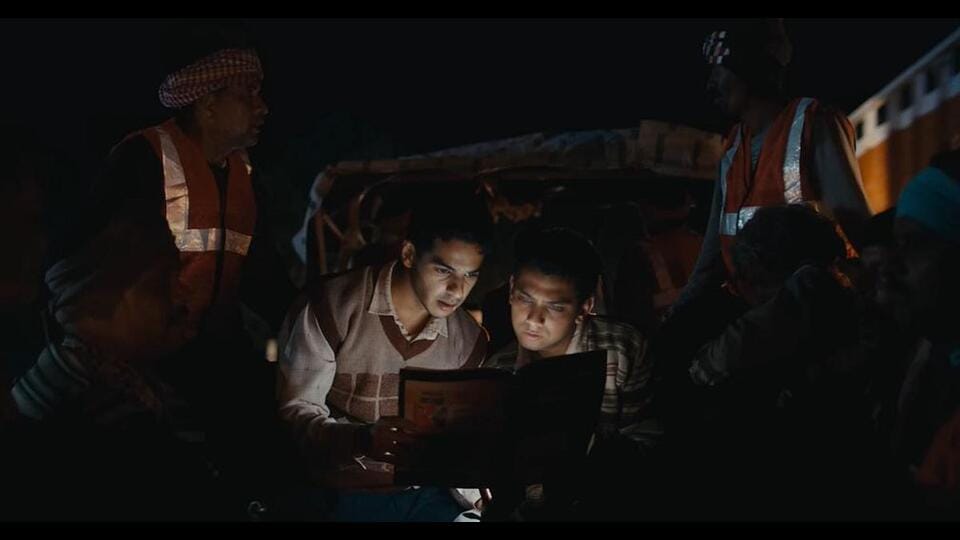
It's surprising that both our official Oscar entry and Kantara: Chapter 1 wallow in cliches of India, rather than reinventing them.
When Indiana Jones and the Temple of Doom (1984) was attacked for its depiction of India, director Steven Spielberg must have felt blindsided. Yes, he had depicted it as a place in need of a White saviour, and one where chilled monkey brains were considered fit for a banquet. But he was hardly the first filmmaker to exoticise India.
The late Amrish Puri, who played the villain Mola Ram in that film, stood by Spielberg’s creative choices. In his autobiography, The Act of Life (2006), Puri wrote: “I know we are sensitive about our cultural identity, but we do this to ourselves in our own films. It’s only when some foreign directors do it that we start cribbing.”
I was reminded of Puri’s assessment while watching Kantara: Chapter 1, written and directed by and starring Rishab Shetty. Set in a mythical past, it is lavishly produced and bursting with spectacle.
Yet, cliches abound in this prequel to the refreshingly inventive Kantara (2022). India is a land of tigers, magical animals and miracles. The king is stereotypically villainous. The forest-dwellers are primitive innocents. One tribal marvels at stitched clothing. The protagonist Berme (Shetty) feels like a reimagining of Rudyard Kipling’s Mowgli.
Despite Shetty belonging to the Tulu Nadu region where the legend of Kantara is set, his gaze in the prequel feels more like that of an outsider. How should we respond to an Indian perpetuating biases such as colourism, rewriting folklore to suit the dominant Hindu perspective, and othering local communities by exoticising them?
Mystic India isn’t the only cliché that haunts us.
When depicting modern India, the colonial Western gaze invariably associated the country with poverty, victimhood and squalor. When Indian filmmakers experimented with social realism, the poor and marginalised entered the spotlight, but at a cost. Such films sparked debate about whether they were capitalising on the suffering of the disenfranchised. The term “poverty porn”, coined in the ’80s to describe ad campaigns that exploited human tragedy, came to be attached to such films.
Neeraj Ghaywan’s Homebound (2025) feels, surprisingly, like an extension of such narratives. The filmmaker’s earnestness makes it easy to sympathise with his protagonists, long-time friends Shoaib Ali (Ishaan Khatter) and Chandan Kumar (Vishal Jethwa), but sadly this is no Masaan (2015; Ghaywan’s Cannes and National Award-winning tale of love in a prejudice-ridden India).
Shoaib is a patriotic Muslim who has refused a job in Dubai and hopes to make it into the police force. Chandan is a Dalit who checks off General Category when filling out application forms. Both are poor and want to be seen as more than their marginalised identities. Yet there is barely a moment when the audience, or the two men, are allowed to set aside these aspects of their identity.
The only character who manages this is Chandan’s mother Phool, thanks to a spellbinding performance by Shalini Vatsa. Even when the writing focuses on her caste and poverty, Vatsa emphasises Phool’s complexity rather than just her victimhood.
Homebound’s commitment to depicting the lived experience of India’s minorities is commendable. However, with its golden light, photogenic poverty and relentless misfortune, it also echoes uncomfortable stereotypes.
These cliches aren’t fiction, but they are half-truths. Neither Kantara: Chapter 1 nor Homebound is able to reclaim the constructs of exotic India and reinvent them. Instead, Shetty and Ghaywan end up adding credence to cliches that make India seem like less than the sum of its many and diverse parts.
From the directors of Kantara and Masaan, I expected more and better.
(To reach Deepanjana Pal with feedback, write to @dpanjana on Instagram. The views expressed are personal)


