
 E-Paper



Banishing acts: What is cancel-culture insurance and why does it exist?

 Prefer HTon Google


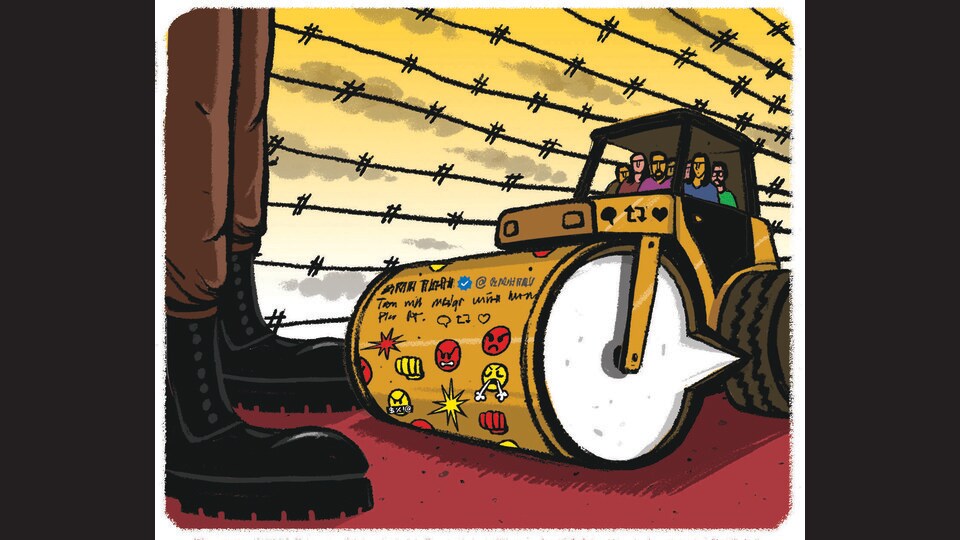
Packages even come with ‘reputation audits’ to catch a problem before someone else does. Is this a logical next step, or a sign of the victory of obfuscation?
In a revealing, if gimmicky, move, the UK-based insurance agency Samphire Risk has begun offering cancel-culture insurance.
The policy is called Preempt and includes 24x7 crisis communication management, pre-scandal “reputation audits”, and emergency damage control against “weaponized discourse”, in association with the London-based crisis communications group Borkowski PR.
What does it mean for us to have reached a point where the potential for backlash is viewed as something that can be commodified and underwritten? What does this say about the evolution of image management, and crisis communication?
The term “cancel culture”, traceable to the early 2000s, has gained momentum amid a growing culture of political correctness (and the backlash against it), and of course amid the #MeToo movement. “In that time, online outrage has become a force that can reshape reputations overnight,” says Evan Nierman, founder and head of the US-based crisis PR firm Red Banyan and author of The Cancel Culture Curse (2023). “What started as a moral reckoning has turned into a fast-moving public tribunal, where accusations carry more weight than facts and reputational damage can occur long before the truth is known.”
Public figures ranging from talk-show host Stephen Colbert and authors Neil Gaiman and JK Rowling to comedians Aziz Ansari and Dave Chappelle have had public appearances cancelled, have disappeared for a time and eventually made comebacks. Each name on that list still incites emotions ranging from rage to sympathy.
Could the kind of insurance offered by Borkowski PR and Samphire Risk since January help temper such storms? Preempt covers clients in case of misinformation, deepfakes, organised bot attacks, blackmail and “related family or legacy issues”. Borkowski clarifies that it does not cover cases of proven criminal wrongdoing.
“It is not a single event that pushed this policy into existence,” says Mark Borkowski, who founded the firm in 1987 and has represented celebrities such as Michael Jackson, Macaulay Culkin, Led Zeppelin and the organisations Cirque du Soleil, Oxfam and Cadbury. “It is an observed shift. Social platforms have made outrage instantaneous and often subjective. A misread tweet or an old post can spark a global reaction in minutes. Preempt was built because we see that volatility every day.”
CLAIM GAME
How did we get here?
“Crises have the potential to create more changes in systems and societies more quickly and completely than any other phenomenon,” professors of communication Timothy L Sellnow (of the University of Central Florida) and Matthew W Seeger (of Wayne State University, Michigan) note, in their book Theorising Crisis Communication (2021).
The majority of crises can be categorised as reputational or operational. The latter typically constitute a threat to public safety and stakeholder welfare; reputational crises are generally far smaller in scale and fallout.
The two can, of course, overlap. Crisis communication has helped brands recover from recalls of products that caused multiple deaths; helped companies recover from poorly-thought-out advertisements that sparked race rows, or appeared to make light of a national tragedy.
For individuals that constitute a brand, is cancel-culture insurance a logical next step, or a sign of the victory of obfuscation?
Does such insurance simply validate a broken system?
“These are critical points. Do you really want to insure against stupidity? What about defamation or hate speech? There need to be realistic expectations around which actions can be defended and which cannot or should not be,” says W Timothy Coombs, editor-in-chief of the peer-reviewed Journal of Contingencies and Crisis Management.
Even at its most effective, such insurance would have limited utility, he adds.
“It can help mitigate the effects, but it cannot ward off true rage,” Coombs says. “The idea that it can help to identify when a cancel effort might be developing is a useful service. But anything after the fact is simply damage control.”
Given how easy it is to flood the digital landscape with counter-messaging, drawing ethical lines around the nature of such action would be critical too, he adds.
Already, the need to manage one’s image has spawned an industry that didn’t exist until about the 1950s, when the rise of corporate America intersected with a boom in advertising to elevate one’s image above even one’s product or service.
Borkowski argues that policies like Preempt could spell the difference between permanent reputational damage and a temporary setback. “The key is preparation: pre-prepared messaging frameworks, rapid fact-checking, clear escalation protocols. When you’re prepared, you can respond quickly and intelligently,” he adds.
In that sense, it would be like having a lawyer speak on one’s behalf, except in the court of public opinion.
“Still, such an offering should not operate in isolation,” Nierman adds. “It must be part of a strategy focused on the larger goal of honest, responsible communication.”


