Onions can make any dish taste better. They’re a versatile vegetable, but a rather temperamental one too. Treat them wrong, and they can get truly bitter. What are some of the secrets to getting the most out of each bulb? Take a look.
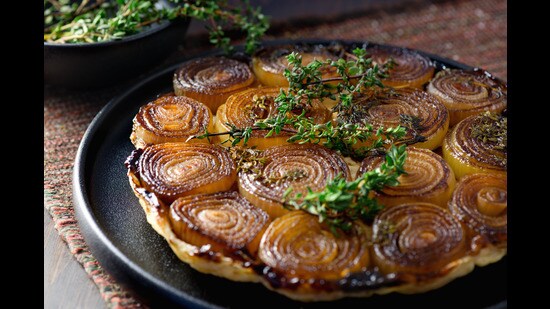
An onion tarte tatin. (Shutterstock)
* Why you must brown for such a long time: If you want caramelised onions, you know the drill. It takes 45 minutes or more. Even though the term is “caramelizing”, implying that it involves just sugars, there is both the Maillard browning and caramelisation of the sugars at play here. Both processes require high temperatures, with Maillard reactions accelerating at temperatures of 140 degrees Celsius or more.
Now, the reason it takes so long, and never turns out right if you don’t wait it out, is because of the high water content of the onion. The average bulb is about 90% water, which means taht the temperature in the pan cannot rise above 100 degrees Celsius until all the water is gone. This takes time. But by the time you get there, the sulphur notes that make the onion pungent (and make our eyes water when we chop) will have broken down too, leaving behind just the sweetness and rich flavour.
* Why you must saute in oil before adding water: Sauteeing onions converts the tear-producing sulphur compounds into a new one called 3-mercapto-2-methylpentan-1-ol (MMP), which tastes something like meat broth. But it takes a while for MMP to form, so sautee for a while before adding water. It’s always worth the effort. A German study of meat stews found that a sulphur compound from onions and leeks had more of an impact on the overall “gravy” aroma than the meat itself.
* Fry well to generate the most aroma compounds: Researchers have found that frying onions generates far more aroma compounds than sauteeing or slow-cooking – a total of 66 to be exact (including sulphur compounds, aldehydes and furanic compounds) – due to the effect of lipid oxidation.
* Puree with caution. Onions don’t want to be cut, much less pureed. They use enzymatic reactions to release sulphur chemicals that make the eyes water when they’re chopped, minced, ground up (or bitten). The finer one minces, the more chemicals are released. A cascade of reactions continues even after chopping, even at room temperature. Researchers have found that pureed onions developed a strong bitter taste within 30 minutes. So use pureed onions right away, ideally in a hot pan, because heat de-activates the enzyme. Fry them well to be rid of the excess sulphur, and for some delicious browning too.
* For a subtle background flavour, use pearl onions whole: These are less pungent than regular onions, because they have a lower sulphur content. Even so, there’s a reason they are used whole in sambars and stews. Used whole, there is none of the rupturing of cells that occurs when onions are chopped, and so the enzymatic reaction with sulphur isn’t kicked off.

 E-Paper