E-Paper



Have you made your own emojis yet?: AI has entered the chat

 Prefer HTon Google


Google, Apple, Canva and Telegram all now have DIY emoji tools. They certainly help. Could they also cloud the mission of a universal visual language?
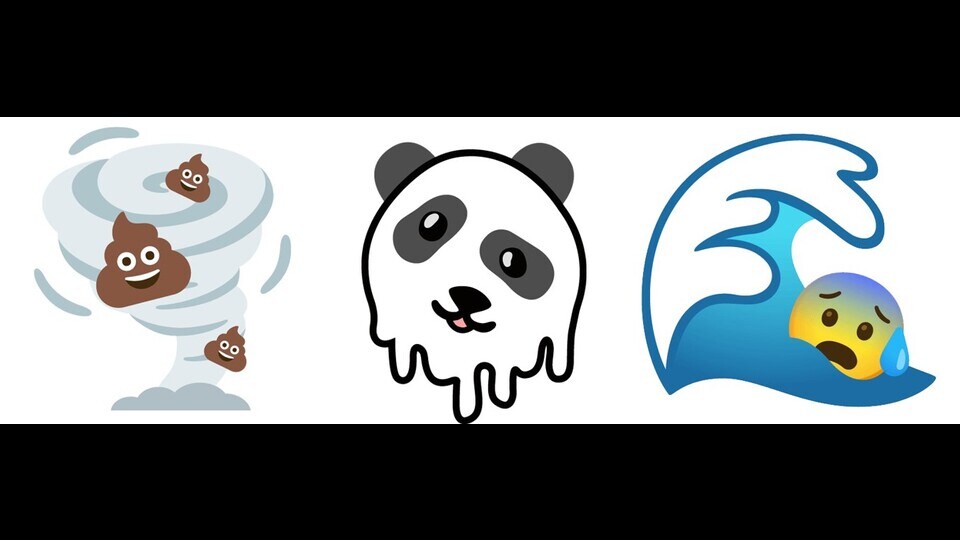
Last month, I oscillated between feeling like a shitstorm, a melting panda, and a stress ball tossed about by a giant wave.
I created tiny stickers to this effect, so I could send them to friends and family, to sum up my experience of house-hunting — the grief of leaving one and trying to find another — in Mumbai.
I made the little icons using a tool called Emoji Kitchen. Launched by Gboard, the Google virtual-keyboard app, in 2020, it allows users to mash emojis together to create new ones compatible with platforms such as WhatsApp, Snapchat and Telegram.
It has been more widely used since 2023, when it became available via Google search (without the need to download the app).
Another tech giant has now entered the space of customisable emojis.
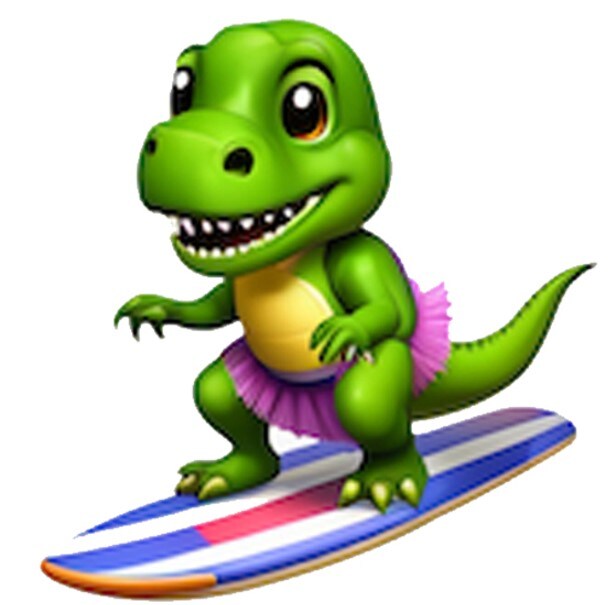
In December, Apple released Genmoji, which uses artificial intelligence (AI) to generate customised emojis across Apple devices. It’s as simple as typing the idea into the emoji option in iMessage. A public demonstration in June saw an Apple executive generate, in real time, a funky icon of a crocodile wearing a tutu on a surfboard.
The graphic-design platform Canva allows premium users to generate custom emojis using AI. Since 2022, Telegram has had a custom emoji feature in its premium offerings too.
Meanwhile, Unicode Consortium, the US-based non-profit that approves and standardises the world’s official, universal set, has been approving fewer and fewer new ones.
“The Unicode Emoji Subcommittee (ESC) has entered a new era where the primary way... to move forward is not merely to add more... but to consider how the ones added provide the most linguistic flexibility,” illustrator-designer Jennifer Daniel, who leads this effort, said on her blog, Did Someone Say Emoji?.
The focus, going forward, is to ensure that the emoji library doesn’t become a “junk drawer”, she added.
In 2024, then, just eight new ones have been approved: 1) face with bags under the eyes, 2) lifeless tree, 3) harp, 4) shovel, 5) fingerprint, 6) purple splatter (a mess, paint, ink, stain), 7) beetroot (for a vegetarian diet) and 8) the flag of Sark, a self-governing British dependency in the English Channel.
That’s a sharp drop from 31 new emojis in 2022 (including the long-requested pink heart), 112 in 2021 (including the disco ball and saluting face), 117 in 2020 and 230 in 2019.
Rather than new ones, recent updates to the emoji standard have focused on a greater representation of cultures, communities, genders and skin tones. In 2019, for instance, about 17 icons representing the differently abled were added.
***
With AI set to sprout a garden of emojis, and Unicode prepping to encode fewer of them, what does the future look like, for us and them?
The aim is to eventually have so wide an expression of events, possibilities and emotions that one may use  to express joy, or combine and
  to express quite the opposite.
AI could help in this mission as well as hurt, says cognitive scientist, comics theorist and emoji researcher Neil Cohn, who has worked with Daniel over the years to create emojis.
“AI-generated emojis may help people come up with interesting ways to express themselves visually, but I also think it might be too wide open. One of the advantages of the emoji is that they use a fairly small, fixed set of expressions. Because of this, people have internalised many, and their meanings are, by and large, clearly understood,” he says.
The ability to craft emojis in seconds could help bridge the gaps that exist in the current set, which is still quite West- and Japan-centric, adds Lieke Verheijen, assistant professor of language and communication at Radboud University in the Netherlands.
However, unless these emojis are standardised or freely accessible on a global scale, they cannot meaningfully impact the lack of representation. “Perhaps, with AI entering the picture,” Verheijen adds, “this would be a good time for Unicode to reassess who approves new emojis, and how.”