Aunties are ubiquitous. They’re everywhere. They live next door, they’re in the park, they’re out while you’re out running chores. They can be related to you or not. They know almost everything about the neighbourhood and don’t hesitate to wield that information to wheedle young people into match-making meets, or to police their nights out, clothes or waistlines.
But Aunties also build worlds that stay hidden from the patriarchal gaze of society, find collective joy and levity amid the crush of domesticity, can become refuges of kindness and protection for young people.
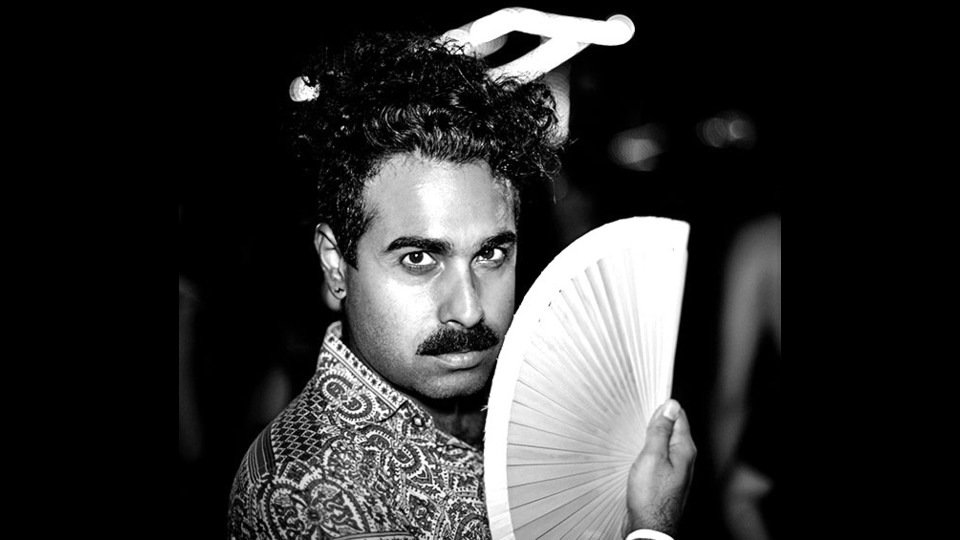
It is these multiple worlds that are at the centre of researcher and artist Kareem Khubchandani’s latest project, Critical Aunty Studies, a website of presentations from academics and activists around the world.
“The term ‘Aunty’ immediately connotes unattractive, older, abrasive, judgmental. But at the same time, Aunty can be beauty, safety, familiarity. I wanted to understand why we channel so much of our love and hate through the Aunty,” says Khubchandani, 38, a Mellon Bridge assistant professor of Theatre, Dance, and Performance Studies and Women’s, Gender, and Sexuality Studies at Tufts University, Boston.
A self-described Aunty, Khubchandani was initiated into their world early. Growing up in a largely-Sindhi neighbourhood in Ghana, he spent afternoons and evenings with his mother and her friends, doing homework in a corner while they gossiped, rehearsed songs or dance moves, exchanged recipes or cooked together. He helped drape and pin their saris for special events.
“I saw these older women have fun, complain, solve problems, share clothes. There was a lot of resource-building. They built a network and a world for themselves,” Khubchandani says. “My young effeminacy lent itself to being around them and listening to them. It was not only judgment but also softness and sweetness.”
The association grew more intimate when he moved to New York as a student in the 2000s. Here, Khubchandani met drag queens who performed to Bollywood songs such as Maar Dala (Devdas, 2002) and styled themselves on icons like Helen.
“I thought, how familiar is this! My Aunties danced to these songs. I did. Now these gender-queer, nonconforming, trans persons were doing it. It moved me as a young queer person.” Khubchandani’s own drag character, LaWhore Vagistan, drew on those early experiences. Using shimmery saris, an unfamiliar garment in the drag scene at the time, he started performing at nightclubs and fundraisers.
In Critical Aunty Studies, the figure of the Aunty is explored through diverse strands ranging from Caribbean literature to black queer scholarship, youngsters performing as African Aunties on TikTok, and the Indian fetish for the Aunty character in pornography.
Critical Aunty Studies encourages the audience to reimagine the Aunty and see its possibilities in unfamiliar worlds. Kenyan writer K’eguro Macharia talks about how the moniker returned names to women whose identity was “mother of” or “wife of”; “before I wanted to be anything in this world, I wanted to be a senora,” says queer Mexican immigrant educator and performer Jesús I Valles.
American academic Bimbola Akinbola examines how African women and girls embody and perform the African Auntie on TikTok, embracing the personal and cultural importance of their African Aunties but rejecting gendered surveillance, policing and shame.
In one memorable presentation, Indian academic Sneha Annavarapu talks about meeting Vennapusa Narayanamma, one of a handful of women autorickshaw drivers in Hyderabad. “Don’t call me Aunty. A lot of young women already call me that. Call me Auto Rani [Autorickshaw Queen],” Annavarapu recalls her saying.
An important aspect for Khubchandani was to show that the figure of the Aunty, usually thought to be an enemy of trans and queer people, supressing alternative identities through shaming and the policing of clothes and traits, can also be a way to facilitate queer and trans possibilities.
“I have queer politics because of my Aunties. I understand the perils of hetero-normativity and gender inequality because I have spent so many Saturday afternoons listening to them. They talked about meagre allowances... manipulative in-laws, affairs. Sometimes they just cried… I witnessed that too,” he writes in his 2017 essay Aunty Fever.
Khubchandani is now editing a special issue of Text and Performance Quarterly on Critical Aunty Studies, working a monograph on Aunties, a transnational mixed-media project called Auntologies, and a book titled Auntologies: Queer Aesthetics and South Asian Aunties.
“Thinking of Aunties differently can change your way of looking at the world. It is a thought process, an aesthetic, a way to navigate relationships, form ethics, working together,” he says. “We can learn so much about the Aunty life and Aunty world by listening and learning from other generations who we hold at a distance but who are always around us.” Aunties can be rigid emblems who enforce patriarchy and conformity. “There are problematic, toxic and unlikeable Aunties, yes,” Khubchandani says, “but we see how people can have fun playing them, inhabiting the Aunty aesthetic. There is a multiplicity of narratives.”

 E-Paper