
 E-Paper



Istanbul's historic trams to be preserved in museum as new models debut

 Prefer HTon Google


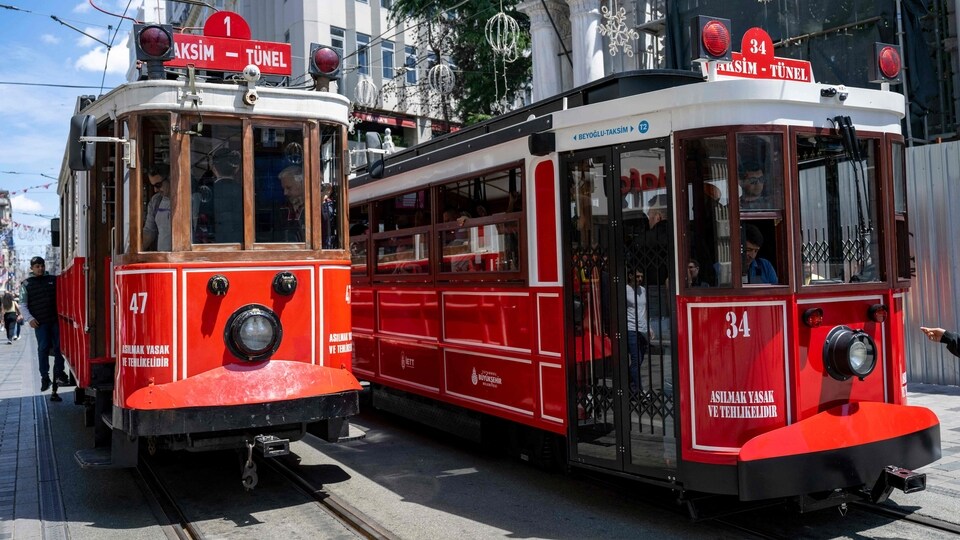
Istanbul modernizes iconic trams on Istiklal Avenue while preserving historical charm and reducing energy consumption.
Istanbul's emblematic red and white trams, built over 100 years ago and loved by both locals and tourists, are about to give way to a more modern streetcar. The tramway has become a symbol of Istanbul's most popular shopping street, Istiklal Avenue, which runs for 1.4 kilometres (0.9 miles) on the European side of the city. Put into service in 1914, the original streetcars have undergone regular touch-ups, without ever betraying their historical look.
The new battery-powered trams, from their wooden floor to their reversible seats, stay faithful to the look of their predecessors. Two cameras on either side of the vehicles replace the old rear-view mirrors, giving drivers better visibility and enabling them to drive seated. "It's a very good thing that they are modernising the tram. The new one hasn't changed the nostalgic aspect of the old one," said local Gonul Murtekin, who travels with her grandson.
Nostalgia and energy-saving
Istanbul's mayoral office says it plans to retire all the old trams and put them in a transport museum which is still in the planning stage. In the meantime, the newest streetcar will be co-habiting with its century-old ancestors while it undergoes testing. The city authorities hope to dismantle the overhead power lines on Istiklal Avenue within a year. Mayor Ekrem Imamoglu has committed to reduce energy consumption.
"With the battery system, we save a lot of energy," said Ali Tugrul Kucukalioglu, Istanbul's director of electric transport. He pointed out that a tram can "run for two days on a single battery". The batteries will enable the city to get rid of the trams' overhead power lines. "During national holidays, the tram had difficulty running because of the flags hanging from the lines," said Kucukalioglu.
More importantly, the streetcar has been stripped of its external sidebars, which passengers would cling on as it travelled up and down Istiklal Avenue. "It was a risk for them and for our drivers," Kucukalioglu said.
Clinging to the tram
Yusuf Deniz, a young roast chestnut seller, recalled seeing tourists fall off the streetcar and hurt themselves. "When tourists want to hold onto the tram, they do not manage like the Turks do," he said. “So the new tram is better.” Until the collapse of the Ottoman Empire in the 1920s, Istiklal Avenue, or the Grand Avenue of Pera as it was known then, was the heart of the city's cosmopolitan quarter.
The street remains popular for tourists who choose to travel to Taksim Square on the century-old trams. Not all locals, however, feel the same about the new streetcars. Ahmet Huseyin, 16, is sad that he can no longer make the journey clinging to the side of the tram and getting some fresh air. "It ruins the traditional side of Taksim as it used to be," he said.


