
 E-Paper



Walking around Helsinki with Miles Davis: Download Central by Sanjoy Narayan

 Prefer HTon Google


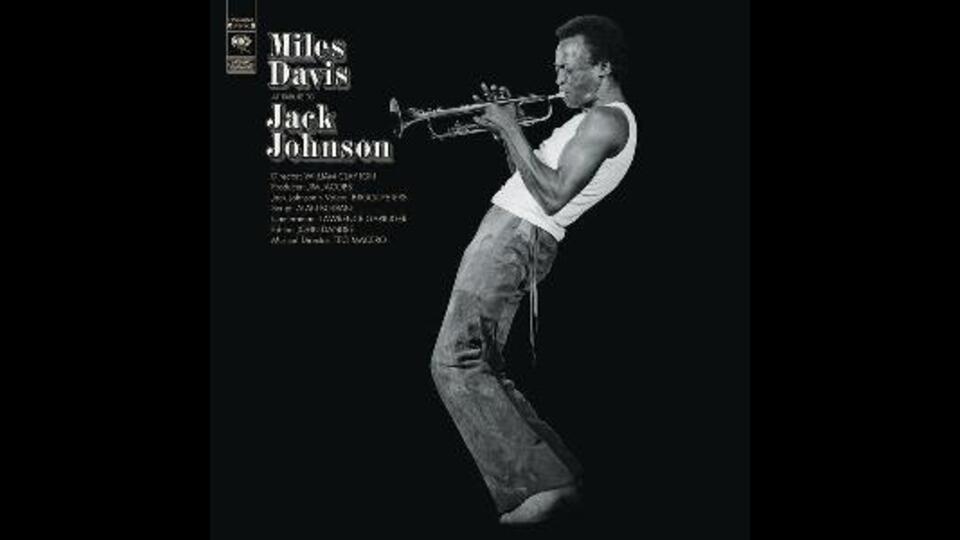
He’s been gone for 34 years, but his music lives on, in vinyl, in digital files, in the way it illuminates seasons and cities. What a legacy to leave behind.
There is a flurry of early-morning snow at Eerikinkatu. It is 7.45 am. I pull my beanie lower, adjust my headphones and press play on my phone.
Right Off, from the Miles Davis album A Tribute to Jack Johnson, kicks in. John McLaughlin’s guitar riff cuts through the white noise, Billy Cobham’s drums hit like boots on packed ice, and I move towards Helsinki Central railway station.
There are albums that become companions; sonic architectures that mirrors and magnifies the physical surroundings through which we move. This one was recorded in 1970 and released in 1971. For the past five years, I have listened to it in Helsinki. …Jack Johnson, which turns 55 in February, correlates perfectly with the flowing lines and organic motifs of this city’s architectural heart.
Miles was 44 when he recorded it, and already a shapeshifter. He had given the world Kind of Blue (1959) and the Second Great Quintet (Miles on trumpet, Wayne Shorter on tenor saxophone, Herbie Hancock on piano, Ron Carter on bass and Tony Williams on drums).
Having released In a Silent Way (1969) and Bitches Brew (1970), he was in the midst of his most radical transformation: the electric period that would scandalise purists. While Bitches Brew gets the accolades and hushed reverence, …Jack Johnson is the superior achievement. Phew! There. I’ve said it.
The album consists of two extended pieces: Right Off and Yesternow. The main line-up featured McLaughlin on guitar, Cobham on drums, Michael Henderson on electric bass, Herbie Hancock on organ, and Steve Grossman on soprano saxophone — a rock band that Miles was shaping into something else entirely.
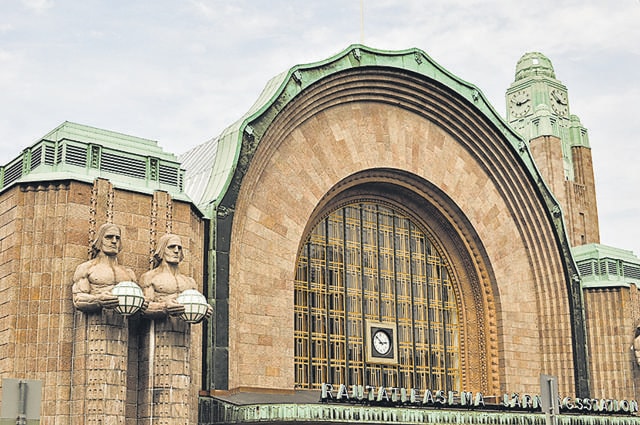
I cross the city’s main thoroughfare, Mannerheimintie, as Miles enters with what may be the most defiant trumpet solo of his career. Helsinki Central station looms ahead, Eliel Saarinen’s 1919 masterpiece with its massive Lantern Carriers standing on eternal watch. The station bridges Art Nouveau and Modernism with the same confidence that Miles was bringing to jazz-rock fusion: clean lines punctuated by moments of controlled ornamentation.
Where earlier Art Nouveau might have featured lavish decoration, Saarinen added restraint. It’s what Miles was doing: taking the dense complexity of Bitches Brew and boiling it down to something leaner, meaner and more direct.
By the time I reach Suomitalo, Right Off is approaching its climax. Designed by Armas Lindgren and built with red Kokar granite in 1911, this office building and events venue — a masterpiece of late Finnish National Romanticism — has a castle-like presence with organic, flowing details. When Miles’s solo peaks, the granite seems to pulse with the same energy as Cobham’s drums.
Across Aleksanterinkatu stands the Pohjola Insurance Building, completed in 1901 by Gesellius, Lindgren & Saarinen, the architecture firm founded in 1896. Its facade is a fever dream of National Romantic excess: strange creatures, bears, lynxes and botanical motifs carved into stone. This is Art Nouveau at its most fantastical, the architectural equivalent of the album’s producer Teo Macero’s approach to music: different takes, even different bands stitched together into a coherent statement.
What makes …Jack Johnson stand out is its clarity and space. It is fierce, aggressive and rock-hard, yet you can hear everything — Miles’s lines, McLaughlin’s guitar, the bass pulse. It doesn’t overwhelm; it invites. It is music one can walk to, think to, write to. And it works in every season.
Autumn in Helsinki arrives as a shock of orange, the leaves seeming to turn almost overnight and the light going amber and lying low. This is when Right Off reveals its full power, the track, inspired by Sly Stone’s funk, mirroring this season’s fiery violence.
Winter is when Yesternow comes into its own. Opening with a spaced-out feel, the track moves through multiple moods, featuring additional musicians: Bennie Maupin on bass clarinet, Chick Corea on piano, Jack DeJohnette on drums and Sonny Sharrock on guitar. As the snow comes by December and stays at least until March, a white silence transforms everything, and Yesternow sounds patient, deep and willing to wait.
Sometimes I walk through Old Church Park, also called the Plague Park, in this white silence. Over 1,000 plague victims from 1710 lie buried here. The 48 remaining gravestones lean in the snow, and Miles’s muted trumpet closing Yesternow becomes the sound of memory and loss.
Spring is brief but explosive; once can almost hear the ice breaking. Macero’s cut-and-paste approach mirrors its collage aesthetic. Patches of snow persist even as green shoots appear.
Summer is when the album becomes what it truly is: a celebration. Miles wrote about Jack Johnson’s “mastery as a boxer, his affinity for fast cars, jazz, clothes, and beautiful women, his unreconstructed blackness”. When Helsinki explodes in colour, when the light never really leaves and the cafes overflow onto the pavements, the album becomes a soundtrack of defiance and joy.
Its versatility comes from its fundamental design; from the way Miles wanted to “put together the greatest rock and roll band you ever heard”, and very nearly succeeded. Like the architects who took medieval Finnish traditions and Art Nouveau innovations to create something distinctly their own, Miles took bebop’s discipline, rock’s raw power and funk’s groove and forged them into something that hadn’t existed before.
Miles has been gone for 34 years, but the music remains, in the grooves of vinyl, in digital files, and in the way it illuminates things: architecture, seasons, cities, lives. What a legacy to leave, in a beautiful world.
(Write to sanjoy.narayan@gmail.com. The views expressed are personal)


