E-Paper



Wood you look at that?: Inside India’s lichen and gymnosperm gardens

 Prefer HTon Google


In a first for the country, the Uttarakhand forest department has developed two dedicated gardens that now house a total of 135 species across the two groups.
Two of Earth’s oldest survivors live on in the forests of Uttarakhand.
One group, the gymnosperms, typically reach for the skies, as pine trees, firs and conifers. The other, lichen, cling to rocks, bark and soil.
Gymnosperms is literally “naked seed”. These plants don’t bear flowers and fruit. They date to a period so long ago (over 300 million years) that there were no fruits or flowers yet. (Those features would evolve, in a different set of species, about 145 million years ago).
Lichen, a symbiotic hybrid of a fungus and either algae or cyanobacteria, goes even further back, with fossil evidence dating to at least 400 million years ago.
In Uttarakhand, both play an integral role, contributing to food chain and soil health, nutrient and water cycles, and the overall resilience of forests in these mountain ecosystems.
In a first for both families of flora in India, the Uttarakhand forest department has developed two dedicated gardens that now house a total of 135 species across the two groups.
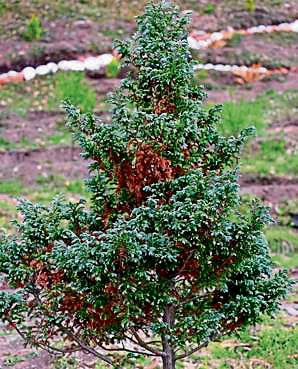
These spaces are meant to be more than repositories of unusual flora, says Ritu Budhori, a research associate with the Uttarakhand Forest Research Institute, Haldwani, and with the gymnosperm garden in Uttarakashi.
They are living collections designed to document, conserve and propagate species, “because these are becoming increasingly vulnerable to rising temperatures, deforestation, forest fires and other anthropogenic pressures,” she says.
Gymnosperms form vast alpine and temperate forests that act as carbon sinks, regulate the flow of water to rivers and cleanse the air. Some, like the Himalayan yew and chir pine, are also being studied for potential uses in cancer treatments, as well as in antibacterial and anti-inflammatory drugs.
Because many of these plants have a slow regeneration rate (germination alone can take a year), collection and conservation are a priority. “But the garden’s main aim is to spread awareness about the critical role they play in our ecology,” Budhori says.
LEAF THEM BE
Lichen, meanwhile, are called pioneer species because they are often the first to colonise bare, rocky ecosystems.
At Munsiyari’s lichen garden, there are now 96 key species creeping across the 1.5-acre landscape.
Lichen have been largely ignored in terms of research in India, says Yogesh Chandra Tripathi, a research associate with the Uttarakhand Forest Research Institute, Haldwani, and with the Munsiyari garden. They play a crucial role in soil formation by secreting acids and trapping dust, and are also a food source for wildlife.
But most importantly, they are a key indicator of pollution, he adds.
Their numbers plummet amid quarrying, construction and urbanisation. “Because they have a thin permeable outer surface and have no roots, they absorb water, nutrients and gases directly from the atmosphere. So, they need clean air to grow. Airborne pollutants disrupt their growth and this makes them excellent bioindicators,” Tripathi says.
Both gardens are free and open to all. In addition to hosting tourists, locals and school children, there are plans to develop research spaces where scientists can study a diverse range of species in one place.
Most people take both types of plants for granted; lichen is even somewhat disliked, for appearing where it wasn’t “invited”. The vital work they do remains invisible.
The hope is that the gardens will “offer a glimpse into the diversity of natural life that often goes unnoticed amid the Himalayas’ more conspicuous forests and flowering plants,” says Manoj Kumar Tiwari, Pithoragarh range officer with the Uttarakhand Forest Research Institute, Haldwani.
“It is crucial for people to understand that floral biodiversity isn’t just a few flowering plants, but also lichen, gymnosperms, different kinds of fungi and other less-talked-about organisms,” adds Tripathi. “And crucial for us to pass on this knowledge, and these beautifully complex and diverse ecosystems, to our successors.”