
 E-Paper



When the lens reveals excesses: Four photographers who made us see injustice and ask for better

 Prefer HTon Google


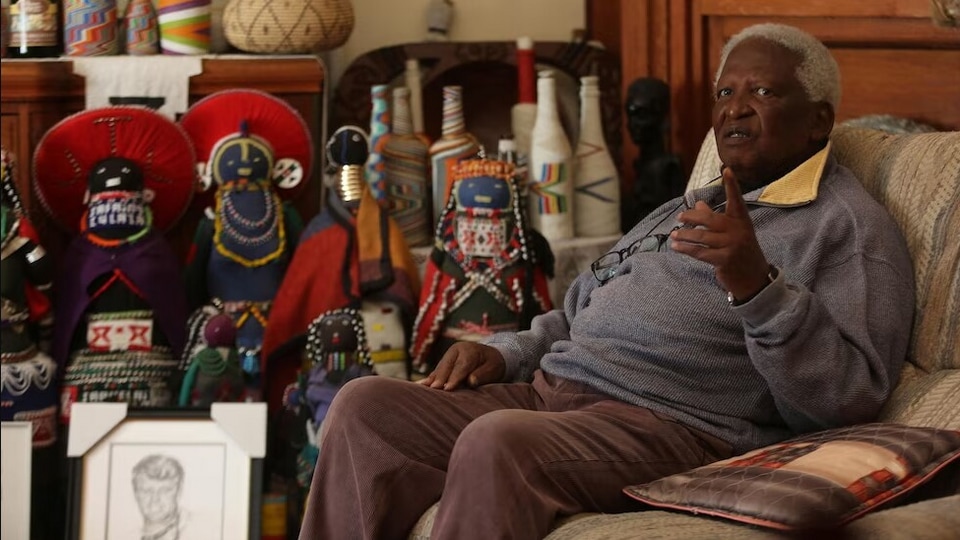
Peter Magubane, who died recently, was part of a legacy of photographers whose photographs helped uncover the suffering of people in undemocratic regimes
On January 1, photographers and human rights activists woke up to the news of Peter Magubane’s death at 91. Magubane turned his lens on the cruelty of apartheid in South Africa at its peak. His stark images of the racial divide led to him being punished and kept in solitary confinement for 586 days and for five years after, he was not allowed to meet more than one person at a time. In the wake of his death, here’s looking at some other photographers who chose to turn the lens on undemocratic regimes across the world.

Corrine Dufka
Corrine Dufka first picked up a camera during her stint as a social worker in El Salvador in the mid-eighties. From 1988-1999, she photographed extensively in Central America, Bosnia and Africa—most notably the genocide in Rwanda. Her book, This is War: Photographs From A Decade of Conflict, chronicles not just the conflict she covered, but also the toll it took on her. “But as the years passed, I became aware that, with each war, what I gained in stature as a photojournalist, I lost in human empathy,” Dufka writes in the book.
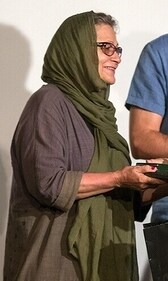
Hengameh Golestan
Born in Tehran in 1952, Hengameh Golestan began photographing in 1972, at a time when there were just a handful of women photographers in the country. In March 1979, just a day after the hijab law was enforced in Iran, Golestan took to the streets with 20 rolls of film and documented the mass protest against an oppressive regime that had most affected Iran’s women. One of her iconic images shows impassioned women defiantly braving the snow, protesting – without the hijab.
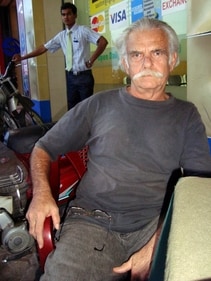
Al Rockoff
Al Rockoff, a photojournalist, took the stand at the Khmer Rouge Tribunal in 2013 and delivered a stark eyewitness account of the forced evacuation of Phnom Penh in April 1975, shortly after Pol Pot and the ultra-Maoists seized control of Vietnam’s capital. Rockoff and some other journalists stayed back in Phnom Penh after the city fell to the Communists. Their time there was portrayed on screen in the famous Oscar-nominated film, The Killing Fields. Rockoff’s images were criticised for being too macabre and for the way they were splashed all over the American media then. Since then, he has divided his time between Cambodia and America, working on a book of photographs from his time there.
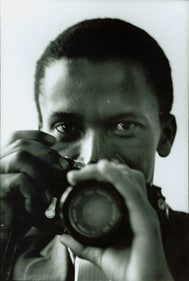
Ernest Cole
Ernest Cole was born in 1940, in a Black freehold township in Pretoria, South Africa. At 16, he decided to take up photography in the middle of a raging apartheid in the country. While Peter Magubane was shooting protests and on-the-spot violence, Cole was more focused on photographing people living on the margins of a society that was now more divisive than ever. He’s known to have gotten access to prisons by getting arrested himself. There’s an iconic image of his, of a line of black men outside doctors’ offices undergoing a medical examination in the nude, in South Africa. By 1966, it was getting hard for Cole to work in South Africa, and his seminal book House of Bondage was published in New York in 1967. It was an unapologetic, accusatory look at the atrocities of the apartheid. In 1990, Cole died in New York, after having sadly faded from the scene in the 1970s itself.


