Megha Kohli
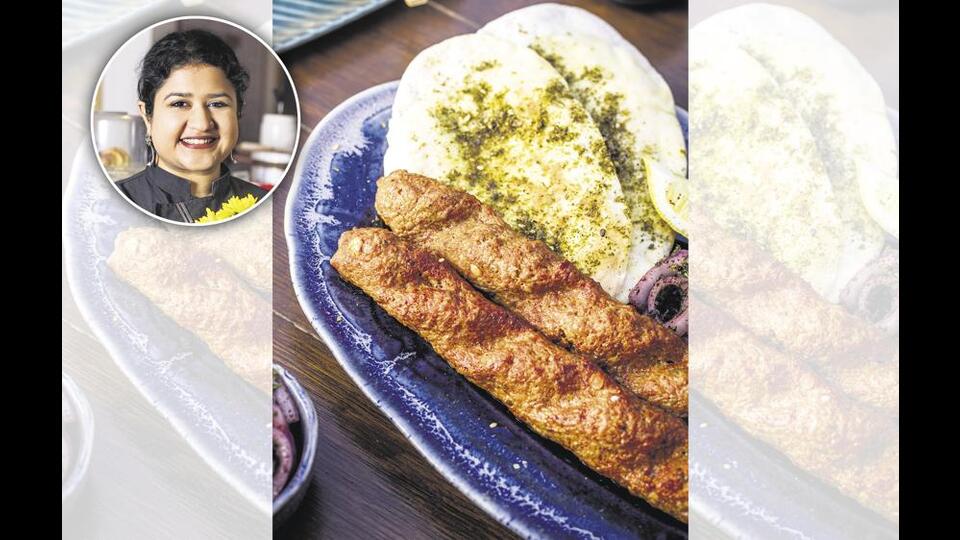
Megha Kohli, chef-partner at Delhi’s Mezze Mambo and executive chef at the Wine Company and Cafe Mez in the NCR and Mademoiselle in Goa, is known for her excellent tandoor skills. So, it comes as a surprise to learn that the worst dish she ever made was lamb seekh kebab – it was raw on the inside, burnt on the outside and had absolutely no flavour. It was the late 2000s. She was 18, cooking at a posh resort hotel in Udaipur. “I had not spent any time in an Indian kitchen until then,” says Kohli, now 33. “I remember being so embarrassed in front of the chefs, that I continuously worked on my tandoor skills. Today all my restaurants are known for their kebabs.”
The worst food mistakes are those that endanger diners. Kohli recalls a time, more than a decade ago, when she mistakenly served a prawn risotto to a VIP guest who was allergic to the shellfish and had requested chicken. His allergic reaction was soothed by medication. His mood needed more work. Kohli not only apologised in person, “I also sent him our entire dessert menu because I just didn’t know what to do”. It worked. He’s been a regular at her restaurants since.
How mistakes are fixed are lessons unto themselves. Kohli was 17, learning how to make lamb jus, when the chef asked her to strain the stock that had been cooking for hours. Kohli did – throwing away the precious liquid, and retaining the useless bones. “I will never ever forget the look on chef’s face. I thought he would kill me,” she says. “But he calmed down and found other bones in the freezer. We spent six hours remaking the jus from scratch. I think of him with so much respect and love when I make lamb jus today.”
Dhruv Oberoi
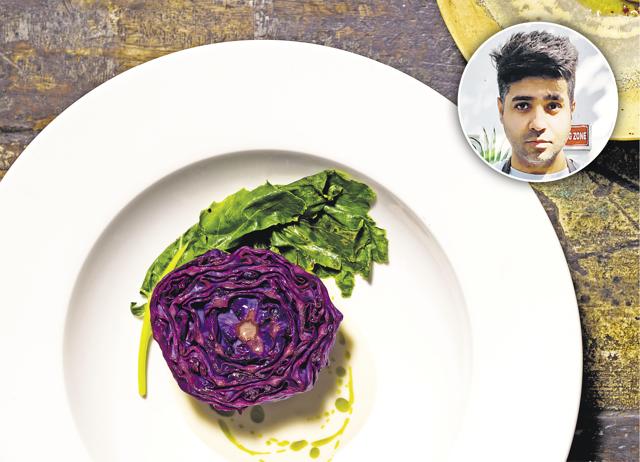
A few years ago, Dhruv Oberoi, 35, executive chef at Olive Delhi and The Grammar Room Delhi, attempted a dish called braised red cabbage. He had two references, a dish from Kerala and one from Germany. But what promised to be a mash-up just ended up an epic mishmash.
Weeks later, he attempted the same dish, taking more care and patience with the two culinary traditions. The result: A vadouvan-curry-laced cabbage au gratin with curried cabbage sauerkraut.
Oberoi admits to being a bit hot-headed as he started out. He was brimming with ideas, he wanted to experiment. His ambitious, complex experiments were invariably disastrous. “I learnt from my mistakes and started focusing on the simplicity of the ingredients and technical approaches,” he says. He also switched focus from sourcing ingredients from around the world, to discovering treasures thriving on Indian soil.
“I now believe that one should make mistakes,” he says. “This ensures that you’re willing to try something new and are not afraid of failure.” It’s the kind of wisdom he passes on to younger chefs. “I let them flounder, but I keep a close watch so that I can teach them how to rectify an error later.”
Radhika Khandelwal
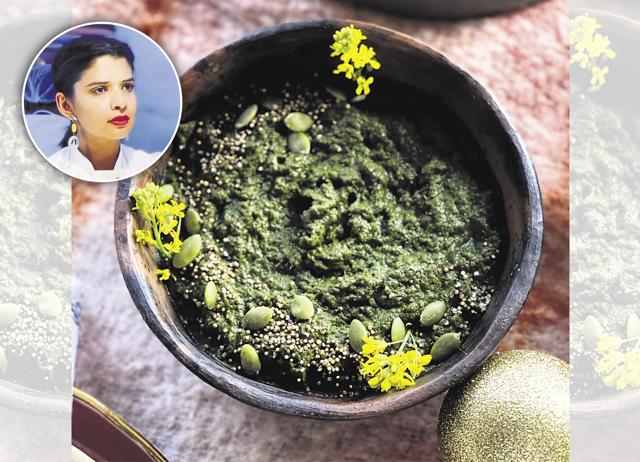
Even great ideas can end up as terrible mistakes. Radhika Khandelwal’s great idea, a few years ago, was to make a peanut-leaf hummus. Peanut leaves are edible, but they’re so fibrous, even skilled chefs find them tricky to handle. Khandelwal’s experiment ended up an inedible mess.
To save the dish, she blended her hummus down further, and strained it several times. Then, she added lemon juice and a pinch of cumin to balance the overpowering earthiness of the leaves. Finely chopped nuts and a drizzle of olive oil gave her hummus a more familiar texture. It wasn’t what she was hoping for, but she managed to create a dip with an intriguing twist.
“The effort required to salvage the dish showed me how important it is to plan my resources well,” says Khandelwal, 35, the chef-owner of Radish Hospitality in Goa. “While root-to-shoot cooking encourages the use of all parts of an ingredient, the peanut hummus taught me that overcommitting to a specific ingredient can be wasteful and counterproductive.”
It’s much the same in life too, she says. “I’ve realised that channelling excessive effort into a single project can sometimes lead to inefficiency and exhaustion.” And she’s learning that zero-waste means being mindful of her own energy and skills and avoiding unnecessary stress.
Sabyasachi Gorai
Mistakes do not have an expiry date. For consultant chef Sabyasachi Gorai aka Saby, 45, surprises can spring even after two decades in the food business. These days, his problems stem from doing pop-ups in a new location every month and not being familiar with the kitchen or the equipment.
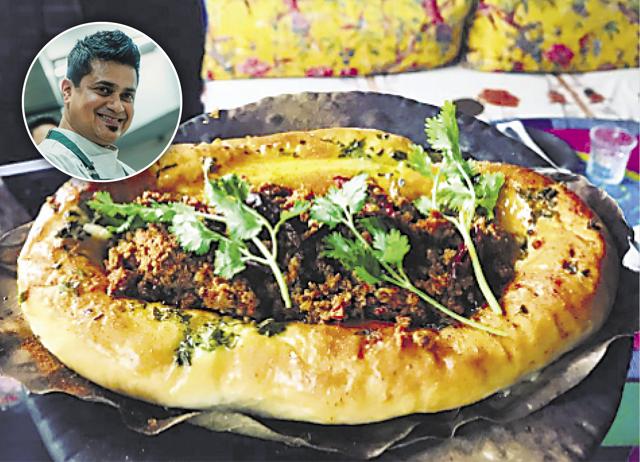
At one workshop in Chennai recently, he slid a pizza into the oven without checking the temperature. “We usually use a laser thermometer, but we didn’t carry ours and the kitchen didn’t have one,” he said. The oven was so hot, his pizza exploded into a fireball, with all the participants watching. At another event in a hotel in Nairobi, a lobster he was grilling went up in smoke. The charbroiler was faulty. “Cooking is like walking into a cricket match and having to judge the pitch immediately,” he says. It’s taught him to value quality checks and to be meticulous with details.
He’s also learnt the value of starting small. Early in his career, at one kitchen in Southern India, the recipe called for grinding masala in a stone grinder. But Gorai was doing several things at once and ended up adding tomatoes to grinder too. Tomato juice splattered everywhere, spinning out of the grinder and covering the entire kitchen. “I got a major dressing down from the chefs,” he says. “I also learnt that when you’re trying something new, start small. I could have just started with a small batch.”
Sarah Todd
Bungling is bad enough. Doing so on TV, on a top-rated cooking show, with family, friends and practically all of the civilised world watching, hits different.
Todd was a contestant on MasterChef Australia in 2014, 27 at the time, and pitted to win when she attempted a chicken roulade in a cook-off against two other contestants. It didn’t go as planned. The meat was so undercooked that the show’s judges refused to even taste it. “Sarah, your chicken was raw. I’m sorry, you’re going home.” And just like that Todd was out.
It was devastating, but for Todd, also a learning experience. She says it taught her the importance of building a strong base of knowledge and skills, in the kitchen and in life.
“I’ve had my share of kitchen mishaps,” says Todd, now 35, a restaurateur, entrepreneur, cookbook author, TV host. She’s added salt instead of sugar to cookies. She’s ruined meringues because she hadn’t cleaned her egg-white-mixing bowl properly. “It’s taught me the value of tasting as I go and being attentive to detail,” she says.
Mistakes are inevitable, she says. It’s how you push through a setback and learn from each misstep that really builds experience. “I used to stress about perfection, but I’ve realised that imperfections can often be embraced and cherished by others,” she says. “Striving for continuous improvement is essential, but aiming for absolute perfection can hinder progress, whether in culinary creations or life.”
And she has never served raw chicken again.

 E-Paper