
 E-Paper



Rude Food by Vir Sanghvi: A tour of the kingdom

 Prefer HTon Google


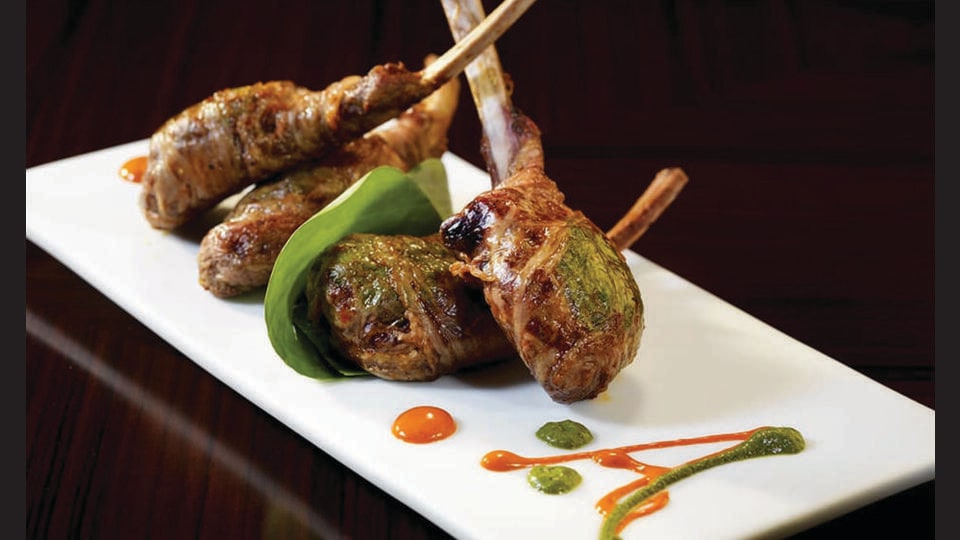
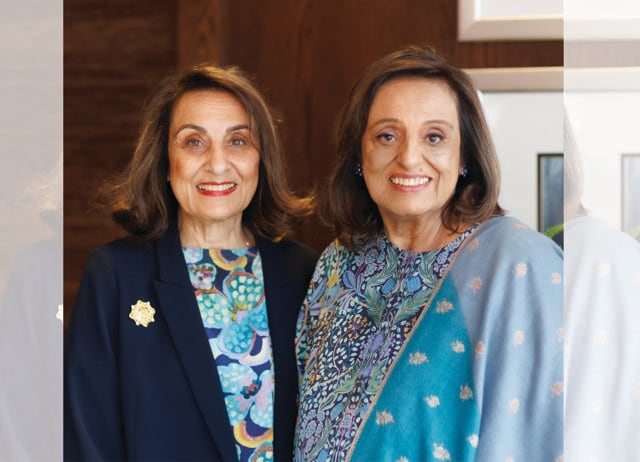
Ranjit Mathrani and Namita and Camellia Panjabi have a knack for running iconic restaurants in historic London locations. Can they save the OG Veeraswamy too?
There are, wrote F Scott Fitzgerald, no second acts in American lives. I was reminded of this and about how it clearly did not apply to Indian lives when I had lunch recently with Ranjit Mathrani at Amaya, one of the many successful restaurants he runs in London.
Mathrani has had many acts in his distinguished career. After he got his degree in Physics and Mechanical Engineering at Cambridge, he decided not to come back to India, joined the British civil service and then moved to the City of London, where he became the first person of Indian origin to become a director of a merchant bank.
That’s a distinguished resume to begin with. But everything changed when he met Namita Panjabi on a visit to Mumbai. They married and Namita moved to London, a city she already knew well. Namita was in fashion when they married (her background is also Cambridge, followed by management consulting before she went into international fashion) and continued with that in London until Ranjit had an idea.
They were both interested in food and Camellia, Namita’s sister, was already a legend at the Taj group in India. So, why not start a high-end Indian restaurant?
A British friend who was in the restaurant business advised them on how to begin. Other friends chipped in with suggestions. Namita wanted to call the restaurant Indian Summer, but the author Gita Mehta suggested Chutney Mary and the Mathranis liked the name.
For all that, says Ranjit now, they made many mistakes. One of them was choosing a site on the wrong side of the King’s Road. (“We heard King’s Road and thought that was it! We really knew nothing!” Ranjit laughs now.)
When Chutney Mary, with a menu that included Anglo-Indian dishes, opened, Namita was at the restaurant every day. But, with that location, and the British prejudice against paying relatively high prices for Indian food in the 1990s, the customers never came.
The Mathranis kept at it until, to their great surprise, Pat Chapman of the then extremely influential Curry Club, gave it an award for being the best Indian restaurant in London. After that, the critics arrived and the rave reviews came pouring in.
Chutney Mary was enough of a success for the Mathranis to take a chance on Veeraswamy.
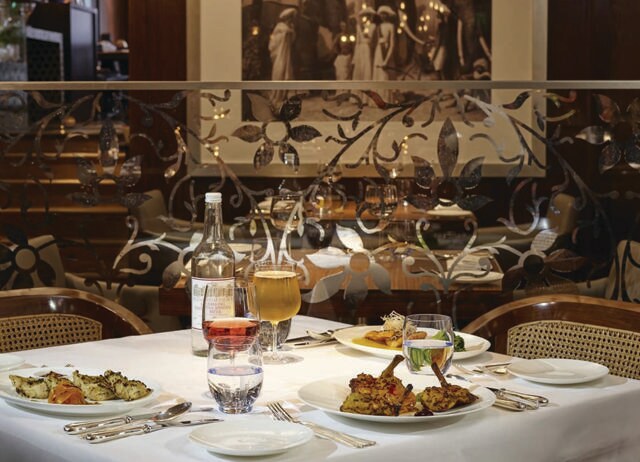
Despite being the oldest surviving Indian restaurant in the West, Veeraswamy had fallen on hard days. But the Mathranis sensed it could be revived and took it over.
Ranjit, with his engineering background, oversaw a complete renovation, installing a state-of-the-art exhaust system that ensured that food smells did not drift to the other floors of the historic building where it is located.
It was a gamble, especially as the lease had only seven years to run, but the Mathranis decided that it was all or nothing. And it was really Veeraswamy’s last chance. Had the Mathranis failed, the restaurant would probably have closed and been forgotten.
As we know now, Veeraswamy was successfully revived and went on to win a Michelin star. The Crown Estate, which owns the building, gratefully extended the lease when it ran out after seven years.
With two successful restaurants within the family, Camellia finally chucked up her job with the Taj, joined the business, and began dividing her time between London and Mumbai. “I thought I had retired,” she recalls, “and this was a nice retirement option.”
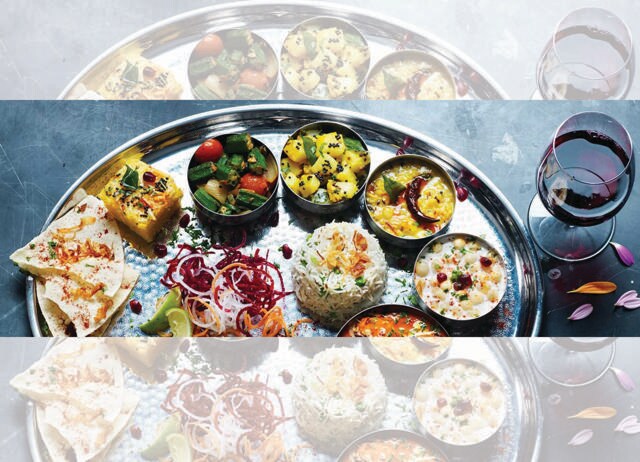
But none of the three has ever really retired. Their next project was the precedent-shattering Masala Zone. They had an unpromising location once again (it used to be a health-food restaurant called Cranks in an awkward zone between Regent Street and Soho) but the concept was brilliant. They served a mix of Indian home cooking and chaat at moderate prices. It was such a success that queues snaked around the block and it sparked a boom in fun-filled casual Indian dining. (Without Masala Zone there would never have been a Dishoom.)
The success of Masala Zone turned the trio into full-fledged restaurateurs; among the most successful in London. People forgot that they were essentially outsiders who had come to the restaurant business relatively late in life and in London, Camellia’s long career as one of India’s most influential hoteliers has been largely overshadowed by the success of the restaurants.
More Masala Zone restaurants followed, but what many see as their crowning achievement was still to come. Ranjit found a site in the upmarket Motcomb Street and gave Camellia and Namita only a few weeks to come up with a new concept.
They settled on innovative modern Indian food, with an emphasis on kababs, in a glamorous setting with a sleek open kitchen. When it opened two decades ago, Amaya was London’s chicest Indian restaurant (it probably still is) and when the inevitable Michelin star came, it was matched only by the glamorous nature of Amaya’s clientele.
It is still my favourite of the trio’s restaurants, but I suspect they are prouder of the new Chutney Mary. They finally moved the restaurant away from Chelsea to a historic spot in St. James’s, which was once the legendary Prunier fish restaurant. Since Prunier closed in 1976, however, every restaurant that opened on that site went belly up. Even Marco Pierre White failed here.
The Mathrani-Panjabis, on the other hand, have flourished. The new Chutney Mary must have among the highest revenues of any upmarket Indian restaurant in London. It has junked the old Anglo Indian concept and now serves some of the best Indian food in London.
The trio’s fascination with historic London continues. They took over The Criterion, which opened in 1873 and has one of London’s most beautiful rooms. This site also had a troubled reputation. Newer restaurants at the location had all failed - yes, Marco Pierre White flopped here too - but the Mathrani-Panjabis took a risk and turned it into a Masala Zone.
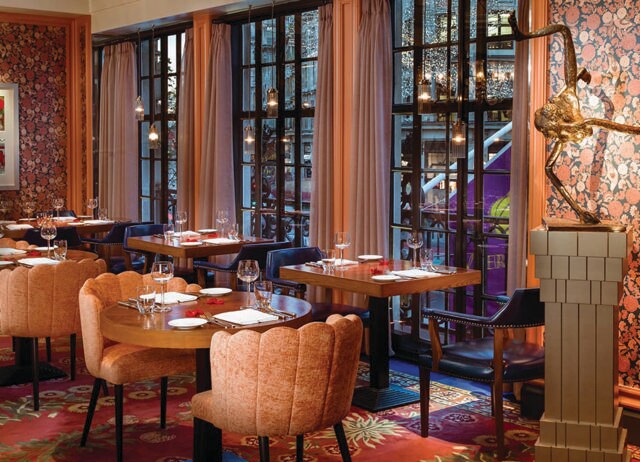
I had mixed feelings about an Indian restaurant taking over that historic site, but I guess there is no better symbol of the new world order than a plate of delicious bhelpuri served in the one time centre of the one time Empire. And sure enough, Masala Zone has broken the jinx on the site and is a huge success.
As you are probably already aware, the group is now trying to save Veeraswamy. The Crown Estate is refusing to renew the lease because it wants to create more offices in the building. There has been a massive uproar in the UK about this act of historical vandalism conducted in the name of the Crown and feelings run high in India too.

Ranjit doesn’t really need the site. They own the Veeraswamy name and could open at a new location and make lots of money. But for him, it’s a matter of preserving history. Veeraswamy was opened on this site in 1926 by Edward Palmer as a way of bridging the gap between the UK and India. For it to close would be to forget that historic milestone and all that it symbolises.
It would be ironic if the group, which has revived so many London sites including Prunier and The Criterion, loses the one location that marks the gastronomic connection between Britain and India.
And so despite all their success, Michelin stars, profits and fame, the Mathrani-Panjabis are fighting to save Veeraswamy. It’s not about the restaurant as much as it is about heritage. Having built a restaurant empire on the popularity of Indian food among the British people, they will fight to save the restaurant where it all began a century ago.
From HT Brunch, July 26, 2025
Follow us on www.instagram.com/htbrunch


