
 E-Paper



Rude Food by Vir Sanghvi: Source from farm and wide

 Prefer HTon Google


India’s super-rich vegetarians want more than paneer. So, high-end chefs now offer exotic mushrooms, creamy cheeses, hard-to-find veggies and more
India may have the world’s highest proportion of vegetarians as a percentage of the population. And though all Indian vegetarians are not economically better off than Indian non-vegetarians, a remarkably high proportion of rich people in India are vegetarians. I reckon that the majority of Indian multi-millionaires and billionaires are vegetarians.
And yet, when we talk about restaurant food in India, we speak in terms of butter chicken or chicken manchurian. In fact, a large proportion of people who eat out will eat neither dish. In Mumbai, restaurants have recognised that up to 60 to 70 % of guests may be vegetarians.
At restaurants that serve north Indian food, it is not difficult to cater to vegetarians even if the menus can be a little boring. Very few fresh vegetables are involved. Paneer is a great favourite. Gobi goes on kebab skewers. The cheapest vegetables in the market go into a Navratan korma.
But what about restaurants that serve other cuisines? How do they cope? Sometimes, they take the same route as north Indian restaurants: instead of chicken manchurian, they make gobi manchurian at Chinese restaurants. Or they take the Navratan korma approach. The cheapest vegetables are mashed up, deep fried, put in a thick gravy and served as Chinese food.
But as India gets richer, wealthy vegetarians do not want to feel like second-class diners eating sanitised versions of non-vegetarian dishes.They went an experience that rises above the meals offered to non-vegetarians or at the very least, one that is in the same league.
So, how can restaurants that serve European food cope? Usually, they go the so-called Italian route. Something like 95% of all Italian restaurants in India are pizzerias, with a basic pasta menu tagged on. But for others who have higher culinary aspirations, it can be more difficult.
Chefs have now identified certain ingredients that vegetarians will nearly always like. Cheese is one example. The trick is to avoid any cheese with character. Blue or smelly cheeses are out. Mild parmigiano, cheddar and gruyère usually work as flavours or salad ingredients, as does mozzarella.
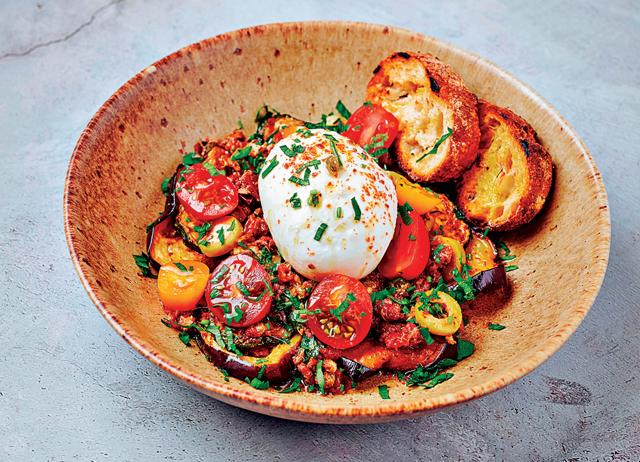
But a new favourite has emerged over the last few years: Burrata. This is not a traditional cheese and was invented in the 1920s as a by-product of mozzarella-making. Now, it is a globally popular fresh cheese and has a creamy taste that Indians love and has no fermented cheese flavour.
It is not a cheese with a long shelf-life so it has to be fresh. Fortunately, cheese makers all over India have worked out that there is more money in burrata than in, say, a ripe Camembert, so it is easily available and has become the favourite cheese for people who don’t really like cheese.
A second vegetarian favourite is asparagus. Indians have been familiar with a generic asparagus flavour for decades, thanks to packaged asparagus soup (which is often based on flavour molecules) and tinned asparagus.
But we are more in love with the idea of asparagus than with asparagus itself. Most Indian asparagus is usually too fibrous or too under-flavoured. But it is easy to import Thai or Chinese asparagus (via Thailand). This kind of asparagus is thin and best used in Oriental cuisines2, where the sauces give it a flavour boost, and it remains extremely popular in the Indian market.
In Europe, asparagus is a seasonal vegetable and in such countries as Germany, Australia and France it is prized for its flavour. In England, the asparagus season lasts for only a few weeks (around May-June) and chefs go crazy finding new ways to make the most of the highly flavoured stalks. But the asparagus we eat outside of Europe may be Peruvian. Peru is now the second-largest asparagus grower (China is number one). Its production is not seasonal and it costs less than half of seasonal European asparagus. Peruvian asparagus can be thick, so it looks like European asparagus, though it lacks the same deep flavour.
Put thick stalks of Peruvian asparagus on an Indian menu and vegetarians will head directly for it.
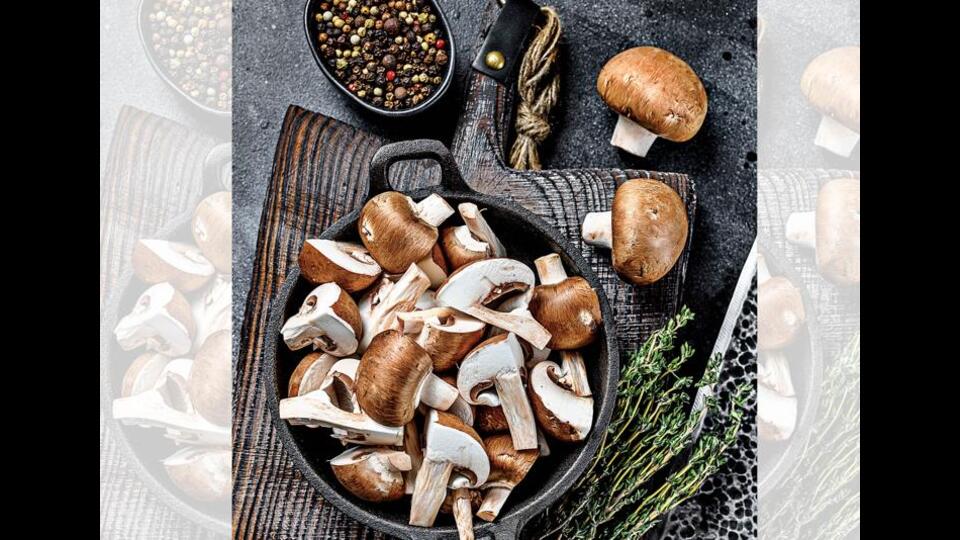
Traditionally, vegetarians have been suspicious of mushrooms. And even now, says Jatin Mallick, the chef-partner at Delhi’s highly rated Tres, there is resistance to mushrooms from old-style vegetarians. But there is a new generation that likes, say, Portobello mushrooms. Mallick thinks that he will soon be able to put more mushrooms on the menu.
Rich vegetarians all love one particular fungus, perhaps because they don’t necessarily think of it as a mushroom, and that is the truffle.
Long before Aditi Dugar became famous as the owner of Mumbai’s celebrated Masque restaurant, she founded Sage & Saffron, a boutique vegetarian catering operation that is a favourite of the rich. Dugar started putting truffles on her catering menus much before they became popular in India. She says they were a hit right from the start. The Italian white truffle can be absurdly expensive and has a short season but it is a favourite with the well-heeled. The black truffle, which is cheaper and has a larger season, remains a must at upmarket vegetarian parties and celebrations.
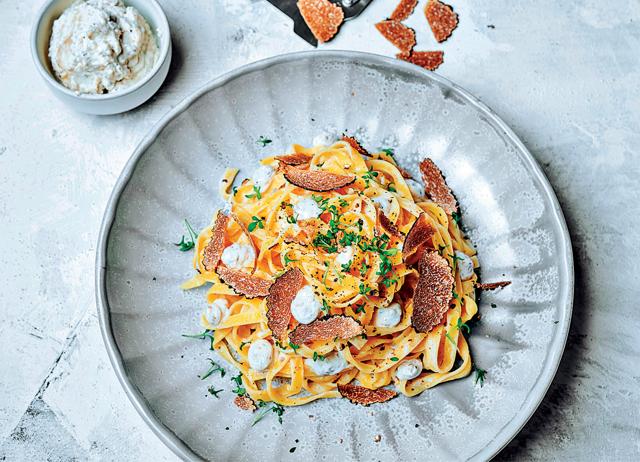
But fresh truffles are expensive and, says Mallick, people are often in love with the thought of truffles rather than truffles themselves. He has guests who ask for truffle oil by the side when they order a meat dish and others who want bottled black truffles shaved over their food. Bottled truffles usually have no taste and truffle oil is a nasty synthetic petroleum-derived product that has never been near a real truffle and doesn’t even taste of truffle. But its popularity grows in India by the day — not just with vegetarians but with non-vegetarians too.
Both Mallick and Dugar say that they have nothing against truffle oil (“It’s just a flavoured oil,” says Dugar) or its fans but of course, they much prefer real truffle.
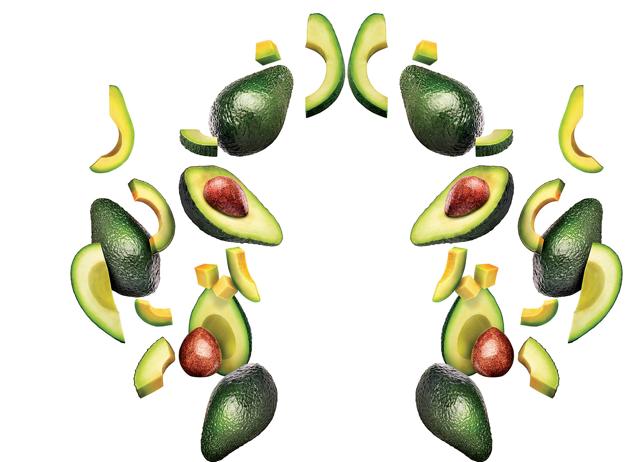
And then there is the avocado craze, which I wrote about here five years ago. I won’t repeat myself except to say that I suspect one reason why rich vegetarians love avocados is because they are buttery and creamy (ie, they have a high fat content). The same impulse that lead people to like burrata is probably at work here.
Burrata is now made in India but truffles, avocados and asparagus are usually imported. Don’t rich vegetarians like anything that is purely Indian?
Well, yes, they do. I spoke to Varun Tuli who (along with Ritu Dalmia) rules the upmarket wedding catering market. Varun says that the very rich have moved beyond asparagus and avocado. They want high quality Indian vegetables sourced from the best places. They want the sweet little peas that grow in Jaipur during a brief season. They want the best rajma, sourced from particular districts. Just to say ‘The rajma is from Jammu’ is not enough any longer. They want ponk (a sort of millet that is popular with Gujaratis). If it is the season, then there has to be fresh choliya on the menu.
They also want authenticity. If he is serving puchkas, Varun has to arrange for the best puchkawalla in Kolkata to be on hand to make them. So it is with Jhalmoori. (Many of India’s multimillionaires have a Kolkata connection though they are usually not Bengalis.)
Varun sent me one set of wedding banquet menus (all vegetarian) and I was stunned by the range of dishes on offer. Says Aditi Dugar, “People now want heirloom vegetables and the finest versions of the flavours they grew up with.”
So perhaps tastes are changing. And F Scott Fitzgerald was right. The rich are different from us.
They have better vegetables.


