
 E-Paper



Rude Food by Vir Sanghvi: Why does airline food taste so plane?

 Prefer HTon Google


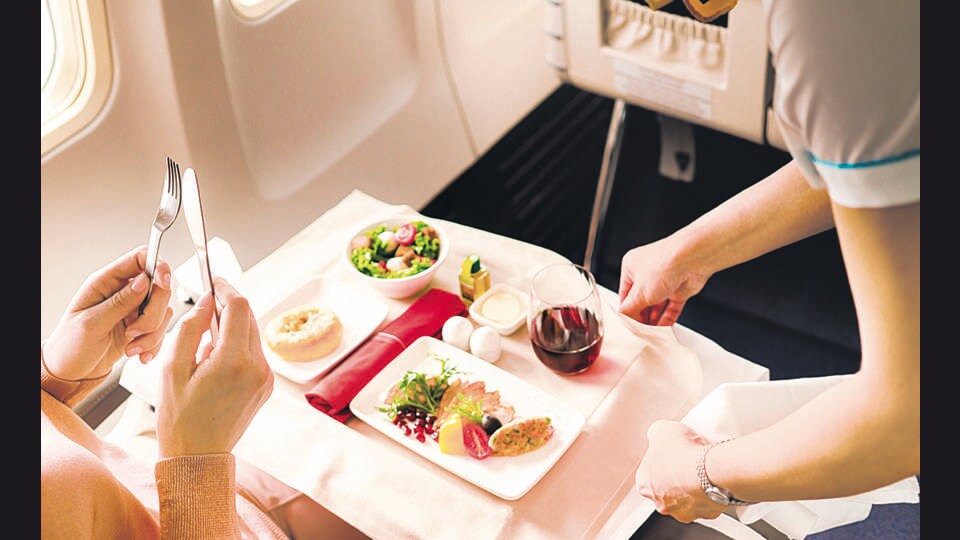
With in-flight meals, most airlines are just winging it. Our palates change on a flight. But our chefs are only just catching up
I have been watching, with interest, the attention being paid to Air India and Vistara’s attempts to improve the food on board their flights. I am no expert on the subject of inflight catering. But I do know a little bit about it, because not only have I spent a large part of my life on planes, but I have also attended food tastings for both Air India and Jet Airways over the years. And I have sometimes been asked by Air India to help select the wine. (All in a completely honorary, advisory capacity, I hasten to add.)
Seeing flight kitchens up close, you realise many things that are not necessarily apparent when you are enjoying (or, more likely, not enjoying) your inflight meal.
First, there are only a handful of flight kitchens in each city. Each kitchen services several airlines. So, though we may like to compare the food on say, Vistara with the food on Singapore Airlines, the chances are that both the meals in question were cooked by the same chefs at the same kitchen.
Why does the food taste better on some airlines than on others? Three basic reasons. The menus, which are compiled in consultation with the airline catering team, matter. The attention paid by the airline to quality is important. Some airlines select the menus and then leave it to the kitchens. And three, and most important: The cost. All airlines do not pay the same amount per meal. If you pay more, you get better food. That, at least, is the theory.
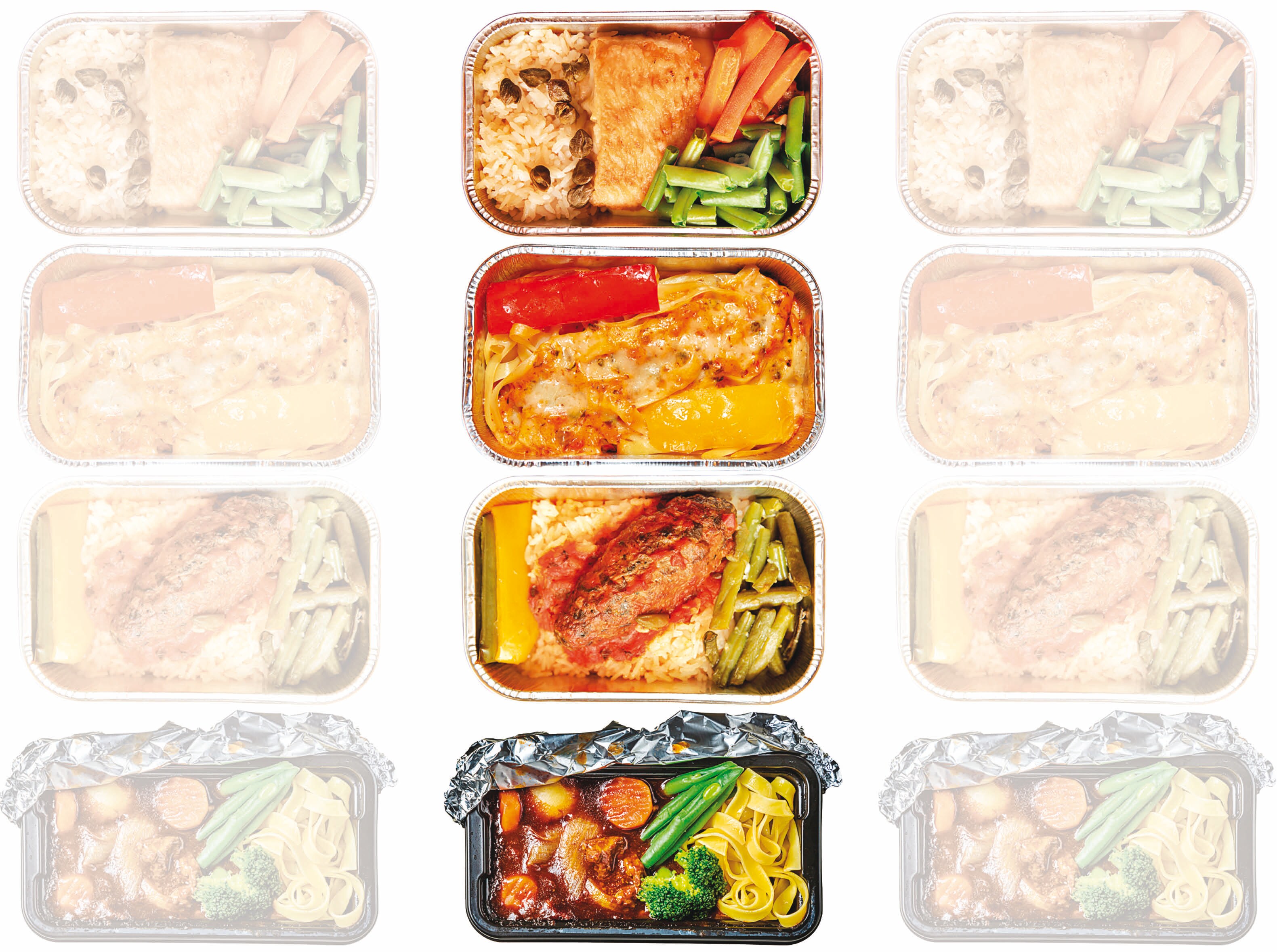
These may seem like small things, but they are crucial. One reason Kingfisher and Vistara had better food than Air India in the old days was because they paid more for the meals. The choice of menu is also the key to the experience. All too often, airlines mindlessly accept what the flight kitchen suggests.
For supervision by the airline, let’s take a current example. There is almost zero consistency in the Air India catering. Some flights will carry diet colas. Some won’t. Some Indian meals will come with pickles. Sometimes they won’t. Most shameful: There is no consistency even over the napkins. Some flights will have linen napkins (in the front of the aircraft). Some won’t. This is not rocket science — Vistara always gets it right — so I imagine that no one at Air India is carefully monitoring the uplift.
There are more basic problems with all airline food. Nobody who loves cooking says, “When I grow up, I want to work in a flight kitchen and make 200 omelettes in two hours, which guests can eat 12 hours after I have cooked them”. Good chefs don’t usually work in flight kitchens. And most knowledgeable chefs who are familiar with flight catering will reluctantly eat aeroplane food only if they are very hungry. Gordon Ramsay makes it a point to say that he does not ever eat on planes. So do many others.
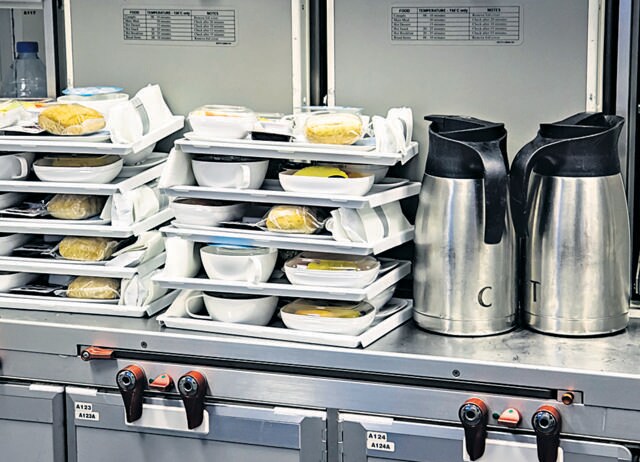
Then, there is the problem of the aircraft galley. It is too small for the crew to be able to do very much to the food except for reheating it. And even then, the reheating remains a problem because the ovens are basic with only two or three settings.
Nor can you expect the overworked cabin crew to do very much to the food. On one flight, I was served a chicken sandwich without any chicken. Later, the hostess came and gave me the chicken saying that she had not understood that she was supposed to put it in the bread. On another flight, the shawarma in a shawarma sandwich was served without the bread.
As our airlines expand and grow, there will be lots of new cabin crew who will continue to get things wrong. Any menu that expects the crew to put the food together will face difficulties.
But the key problem, I discovered, when I did my tastings for Jet and Air India a decade ago, is that nobody understood that the food we got at our tasting would be nothing like the food that was served to passengers.
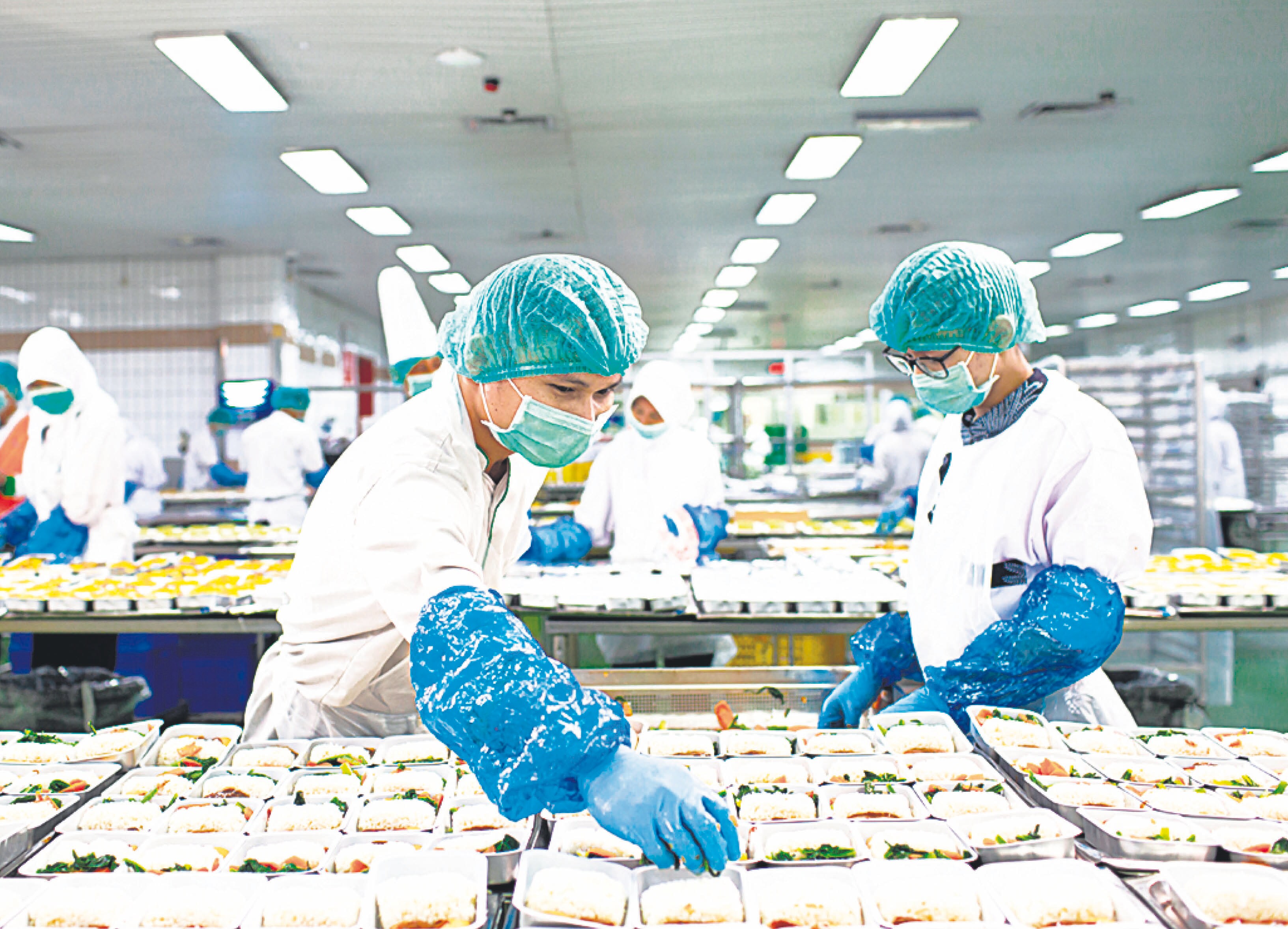
For a start, all the food we tasted was made fresh by the Executive Chef for a group of about ten people. Of course, it tasted fine. But once we approved the menu, the Executive Chef would return to his office and the food would be made by journeyman cooks on an industrial scale for at least a thousand people. It would then be chilled and kept for many hours and would eventually be reheated in primitive ovens by harassed cabin crew.
I tried some of the dishes we had approved at our tastings once they went on the inflight menu. They bore no relation to what we had been served at the tasting.
I tried, when I was at the tasting, to apply my own inflight rules to the whole menu. I do my best not to order anything fried. (You try reheating a pakora, 12 hours after it has been made and then stored in a very cold fridge and you will know what I mean.)
I never order steak, fish or anything Western if possible, because it will be dried out in the reheating. I order gravy dishes because it will be harder for the airplane oven to dry them out. If there is a curry, I order it without thinking twice.
I said at the tastings that if they had to serve chicken, they should try something like a coq au vin for Western food or a korma for Indian food. Thai cuisine can work well but you need to always slightly undercook the protein so that it does not dry out in the reheating oven. (Current domestic inflight menus include Thai prawn curry. I do not mind that the curry is about as authentically Thai as Campbell Wilson, but the prawns are so tough, you could use them as bullets.)
The flight kitchen chefs laughed pityingly at my amateur suggestions. Nothing much changed.
If air catering chefs do not realise that reheating can destroy their food and ruin its texture, do you seriously expect them to understand that everything tastes different at 35,000 feet?
A decade ago, the great British chef, Heston Blumenthal, did a TV show, in which he tried to improve the food on British Airways. He ran into the same problems: Primitive airline ovens, tiny galleys, overworked crew, etc. But his biggest problem was that the Executive Chef of Gate Gourmet, who did the food for British Airlines, refused to believe that food tasted different in the air than it did on the ground.
So, Blumenthal took him up in a plane with a device that measured the humidity and proved to him that the air in an aircraft cabin is as dry as the Sahara desert. This affects our taste buds and our sense of smell.
The chef was forced to accept that it was drier, but still maintained that this had no effect on taste. So, Blumenthal blindfolded him and made him try various solutions of sweet, salty and umami liquid at high altitudes. It quickly became clear that the chef could not even tell sweet from salty unless the concentration was very high. At which stage, he finally conceded the point.
But there was one breakthrough: The chef could tell umami flavours immediately at any altitude.
This suggested that umami was the key to making airline food delicious. Heston taught the Gate Gourmet chefs how to make an umami-spiked shepherd’s pie (add mushroom and seaweed to the mince) and it was a great hit on board.
After that, alas, the story gets complicated. Heston owned the IP for the umami shepherd’s pie, so BA could not put that version on the menu. But they did try and increase the umami content of their food, an enterprise that failed largely because the flight kitchen chefs did not seem to understand what umami was.
But there are lessons in that experience for us. India is now in love with umami flavours. The Indian-Chinese boom, the pizza-pasta craze and even favourites like butter chicken, are based on umami flavours: Tomato, black mushrooms, cheese, soya sauce, etc. But our chefs just don’t get it. I tried a so-called Manchurian dish on a flight the other day: The soya-umami flavour was missing. Even the tomato-cheese flavour that Indians love hardly appears on inflight menus.
At an intuitive level, most frequent travellers recognise that eating up in the air is different. Why do we like to add pickles to Indian food on flights? It is because our palates are dulled and we need strong flavours to wake them up. The only people who don’t seem to have worked this out, alas, are the guys who make the menu and run the flight kitchens and who refuse to amp up their flavours.
This is a global malaise, not just an Indian one. And so, like Heston who abandoned his efforts to improve airline food, I have more or less given up all hope of eating well in aeroplanes.


