
 E-Paper



Travel: A weekend in Ranthambore

 Prefer HTon Google


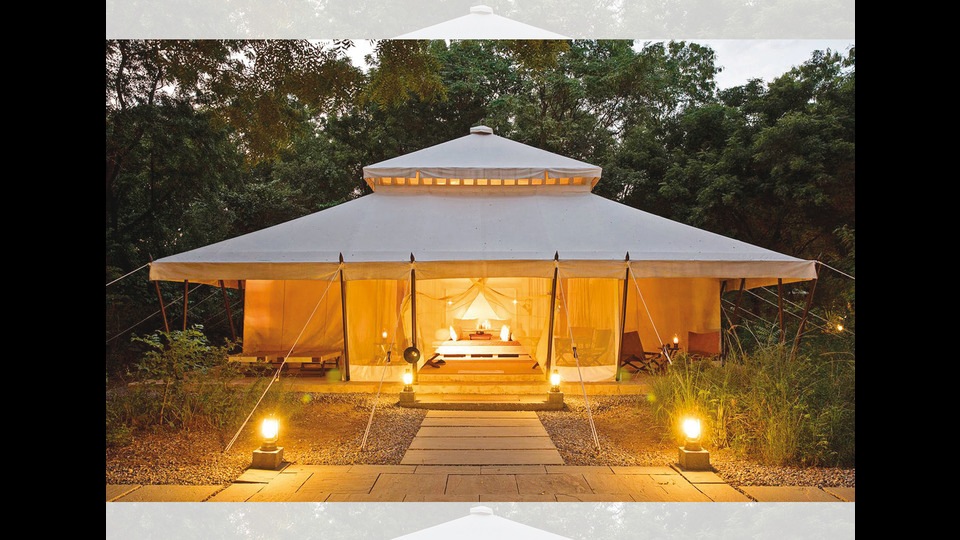
Just two days spent in and around the lap of nature in the jungle can be an education in sensory seduction, whether it’s food or culture
While the road for a certain Mr Gehlot has, from a political perspective, been rather rocky in recent times, the stretch from Jaipur airport to Ranthambore is as smooth as a Casamigos Reposado. The highway is dotted with an acne of dhabas, but Jagdish, the gent assigned to drive me down, gently pressed the brakes at Shri Shyam Pavitra Bhojanalaya. I was instructed to sample the tea, which was quite splendid. Curiosity drove me to open the pans of food that lined the counter. And I just could not resist the aloo matar sabzi. The peas were fresh, the potatoes firm and the spice levels stratospheric. It was served with a trikon parantha which I studiously avoided. Accompanying it all were some fierce green chillies that had just stepped out of a shower of mustard that immediately formed a chilling connection with the cortex.
With the head suitably jolted, we headed towards the Aman-i-Khas in Ranthambore.
Platter of roses
I have been fortunate to have visited Ranthambore several times in the past, and sighted tigers there almost always.
But my sons were rather effusive about all aspects of the Aman-i-Khas, and I was keen to learn whether the apple had indeed fallen close to the tree.
The rose lemonade provided on arrival is just wonderful. I like how hotels are putting immense effort into their welcome drinks, and that the unimaginative watermelon juice is swiftly and deservedly dying.
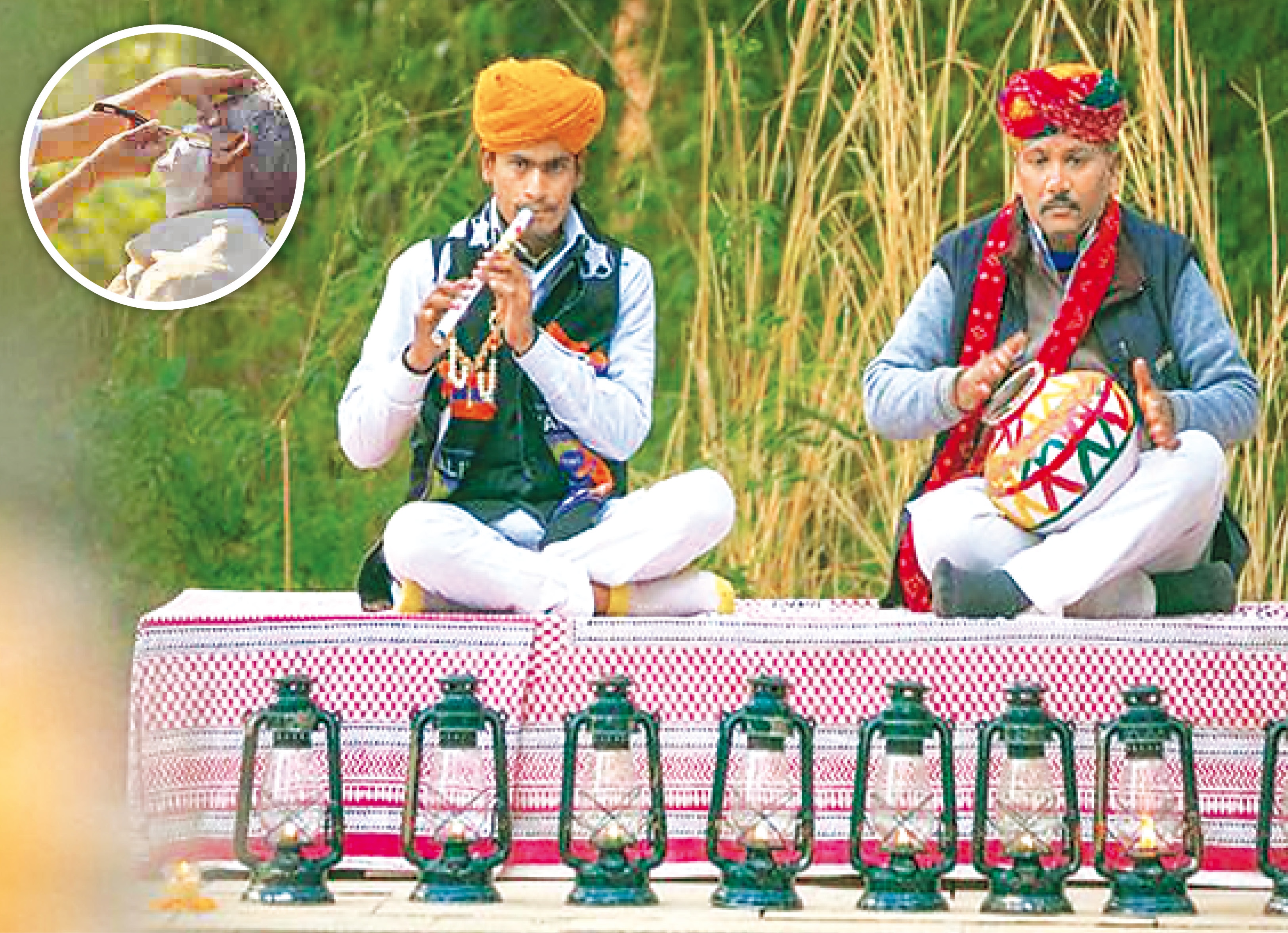
It was later that I discovered that the Aman has its own rose garden from where the roses are summoned. Excess harvest finds its way into the hotel’s handmade gulkand. But I am no fan of that.
The other welcome ritual that is indeed welcome is a nice foot massage administered by the lovely Seema from the spa.
With the soles suitably calmed, it was time to focus on what I think is the soul of the Aman-i-Khas—its food.
Chef Santosh Yadav had a carriage of great reputation preceding him and he lived up to it with consistent brilliance.
I detest lal maas. It is overrated, like most Booker shortlists. Besides, I think putting a pillow of chilli powder on the face of good meat is just so predictable, and mildly rude. I am more a fan of junglee maas where the atmosphere is minimal and the cut and succulence of the meat comes through beautifully.
It is no exaggeration when I say that one must visit the Aman-i-Khas only for Chef Yadav’s junglee maas. Anand Shekhawat, the general manager there, tells me that the meat is procured by the chef and that he selects the beast himself.
But there was more to the thali. Ranthamore is perhaps more famous for its guavas than its wildlife. So, an amrod ki sabzi was expected. There was also baingan masala, haldi ki sabzi, bathua kadi, mirch ke tapore and a lahsun chutney for which Chef Yadav deserves a Michelin star.
Burning bright
While the three-hour journey from Jaipur is hardly back-breaking, one can do with the back being kneaded by some competent hands. The signature massage at the Aman-i-Khas was the perfect full stop to a meal dotted with delicious commas. Seema is the lady to submit to. Do not expect some languid, musical, feather-touch treatment. Hers are hard hands that are cross with all knots.
I like my evenings to myself. And the tents at the Aman-i-Khas (just 10 of them) are ample and cosy. In fact, they can be viciously warm. On my first night, I heard strange noises outside my tent. I believe animals are frequent visitors to the camp and a family of nilgais has been audacious enough to permanently camp at the Aman.
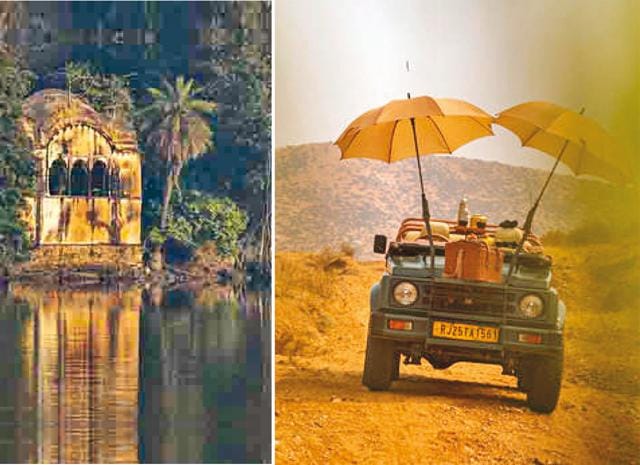
The next morning at 6.45 am sharp, Pankaj Vyas, the resident naturalist, and driver Jitendra set the engine of our jeep purring and we were off to bell the cats. The Aman makes the cold mornings of Ranthambore a pure delight. You are given a reassuringly warm poncho, a hot bag for your back and a blanket for your feet.
Zone 1 of the park had been shut for 21 days before we entered it because Noorie, the park’s star tigress, had given birth to cubs and wanted some time for herself and the kids, away from the throngs that descend upon Ranthambore.
Ranthambore is the largest stretch of the dhok forest in India. The dhok tree comes with several virtues: it holds together a fragile ecosystem, sustains livestock and produces timber of the highest quality. It is also home to 40 species of mammals, 320 species of birds, 40 species of reptiles, and over 300 floral species.
That morning, the calls from the monkeys were menacingly misleading. Our jeep crisscrossed the various ends of the park. We bumped into sambhars, spotted deer and nilgais. But the tigers eluded us. It was also Black Monday on Dalal Street and I was desperate to leave the park before the markets opened.
Just when we’d given up hope, we turned the jeep and spotted Noorie sprawled out on the road. We froze. She thawed. We spent the next 20 minutes waiting for her to get up. She did not. We gently backed the jeep. The safari was closed. The markets had opened.
Town and chulha
For breakfast, the Aman had chosen a guava orchard as a setting. I chose to go to the hotel where an outstanding breakfast of fresh methi paranthas along with a dill and green chilli chutney had been assembled by Chef Yadav.
It was a close shave at the markets that morning as far as I was concerned, but the shave at the poolside under a century-old tree by the resident barber, Roop, was far more comforting.
I decided to skip lunch at the hotel. Instead, I chose to discover the wildlife in the old city of Ranthambore, complete with gems such as a vintage silversmith, an attar manufacturer and some impeccable street food. While there, do try the dal vadas from Bhagwan Sharma. He makes them on a wood-fired stove so as to enhance the flavour. And he refuses to bastardise their taste with a chutney.
Girij Nama’s kachoris were magnificent, pregnant with heaps of fresh masala. Finally, do visit Pachu Halwai for his rich rabri.
With the taste of fine food still lingering, we then went to get a taste of Ranthambore’s great textile tradition at Dastkaar, where I picked up two gorgeous dresses for my niece.
It was an exhausting day. But at the end of it, if Anand Shekhawat invites you for a drink, you do not say no. Anand regaled me with stories ranging from the legendary Daulat Singh to the bunga mushroom, the graceful eating habits of the tigers and how the camp manipulates the minds of snakes. It was an education.
The next morning it was time to head home.
We pelted towards Jaipur. Gulped downed a brilliant lassi at Lassiwala in Jaipur, and had the amazing Air Fry toast at Jaipur airport.
It had been a packed two days. But every bit of me had been touched by those two days. It was multi-sensorial seduction at its very best.
As someone famously said, “Dil mein mere meri jaan tere liye sheron ka shor hai. Kehte hain ye duniyawale, yeh dil nahi humara, yeh Ranthambore hai.” (”In my heart, for you my love, is the roar of the tigers. People of this world say this heart is not ours, this is Ranthambore.”)

Swapan Seth is the Founder of This Content, a content and conversation management firm.
From HT Brunch, December 19, 2021
Follow us on twitter.com/HTBrunch
Connect with us on facebook.com/hindustantimesbrunch


