
 E-Paper



Navratri 2022 Day 2: Who is Maa Brahmacharini? Find all about significance, puja vidhi, muhurat, samagri, mantra, colour

 Prefer HTon Google


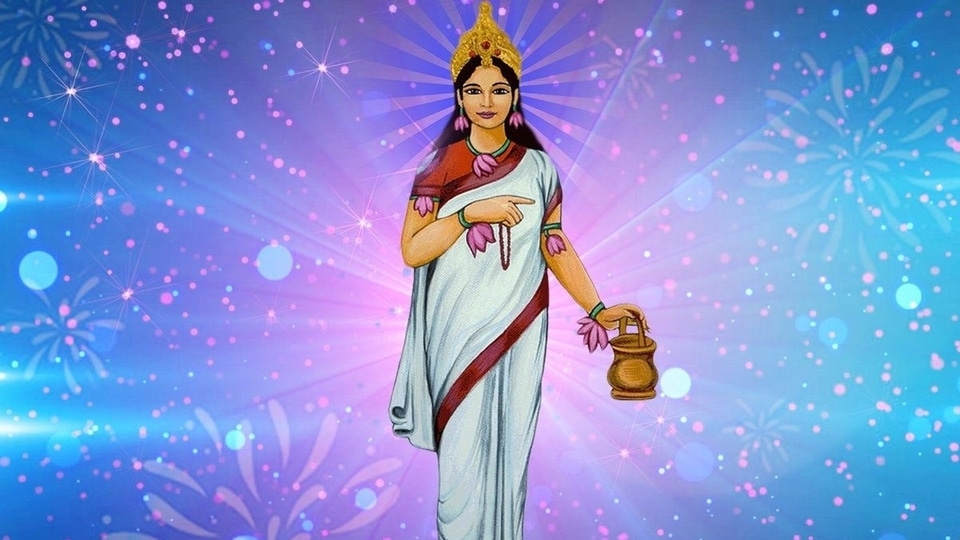
Navratri 2022 Day 2: On the second day of Navratri, devotees of Maa Durga worship Maa Brahmacharini - a great Sati and Goddess Parvati's unmarried form. Know all the details like significance, colour, shubh muhurat, puja vidhi, samagri, puja mantra, prarthana and stotra for day 2 inside.
This year, the auspicious nine-day Hindu festival of Navratri began on September 26. In total, nine avatars of Maa Durga (Navdurgas) - Maa Shailputri, Maa Brahmcharini, Maa Chandraghanta, Maa Kushmanda, Maa Skandmata, Maa Katyayani, Maa Kaalratri, Maa Mahagauri and Maa Siddhidatri - are worshipped on each day of the festival. After worshipping Maa Shailputri on Day 1, devotees of Maa Durga are preparing to honour Maa Brahmacharini on Day 2 (September 27) of Navratri. Maa Brahmacharini was a great Sati, and her form is symbolic of the severe penance carried out by Goddess Parvati.
Who is Maa Brahmacharini?
Goddess Parvati's unmarried form is worshipped as Maa Brahmacharini. She walks barefoot, wears white garb, and carries a Jap Mala (a Rudraksh rosary) in her right hand and Kamandal (a water utensil) in her left. While the Rudraksh symbolizes her penance to attain Lord Shiva as her husband during her forest life, the utensil symbolizes how she only had water and nothing else during the final years of her penance.
As legends go, Goddess Parvati took birth at the home of Daksha Prajapati as Goddess Brahmacharini. In this form, Goddess Parvati was a great Sati, and she decided to undergo penance to win Lord Shiva's heart. Her tapasya went on for thousands of years, and severe weather conditions like scorching summers, harsh winters and stormy rains couldn't shake her firm resolve. During this time, the Goddess survived 1,000 years on a diet of flowers and fruits, another 100 years on leafy vegetables, and 3,000 years on Bilva leaves while sleeping on the floor. Later, she stopped eating Bilva leaves and continued her penance without food and water. Seeing her intense resolve, Lord Brahma gave her a blessing, and she became Lord Shiva's consort.
(Also Read | Navratri 2022: History, significance, celebrations and all you need to know about this 9-day festival)
However, when her father disrespected Lord Shiva, Maa Brahmacharini immolated herself by wishing to get a father in her next birth who respects her husband.
Navratri 2022 Day 2 Significance:
It is believed Maa Brahmacharini governs Lord Mangal, the provider of all fortunes. Additionally, the lotuses attached to her body symbolize knowledge, and the white saree represents purity. By worshipping her, virtues such as penance, renunciation, dispassion and restraint improve inherently. One can also enhance their ethical conduct. Additionally, one can achieve all of their goals by praying to the Goddess.
Navratri 2022 Day 2 Colour:
The colour for the second day of Navratri is red. It symbolizes passion and love.
Navratri 2022 Day 2 Puja Vidhi, Samagri and Shubh Muhurat:
According to the Drik Panchang, the Dwitiya Tithi will begin at 3:08 am on September 27 and end at 2:28 am on September 28. The Brahma Muhurat will be from 4:36 am to 5:24 am, and the Abhijit Muhurat will last from 11:48 am to 12:36 pm.
Devotees worship Maa Brahmacharini along with Lord Shiva and observe fast. Jasmine flowers, rice, and sandalwood are offered in a kalash to the Goddess. The deity is also given abhishek with milk, curd and honey. Aarti and mantra chanting are performed, and prasad is offered to her. A special bhog of sugar is also offered to the Goddess during Navratri.
Maa Brahmacharini Mantra, Prarthana and Stotra:
1) Om Devi Brahmacharinyai Namah
2) Dadhana Kara Padmabhyamakshamala Kamandalu
Devi Prasidatu Mayi Brahmacharinyanuttama
3) Tapashcharini Tvamhi Tapatraya Nivaranim
Brahmarupadhara Brahmacharini Pranamamyaham
Shankarapriya Tvamhi Bhukti-Mukti Dayini
Shantida Jnanada Brahmacharini Pranamamyaham


