
 E-Paper



8 healthy babies born in UK after successful IVF experiment using DNA from 3 people to avoid genetic disease
Doctors in the UK have announced the birth of eight healthy babies after using a groundbreaking procedure to create IVF embryos with DNA from three people.


Eight healthy babies were born in Britain with the help of an experimental technique that uses DNA from three people to help mothers avoid passing devastating rare diseases to their children, researchers reported Wednesday. Also read | Pregnancy at what cost? IVF expert warns against risks of multiple embryo transfers
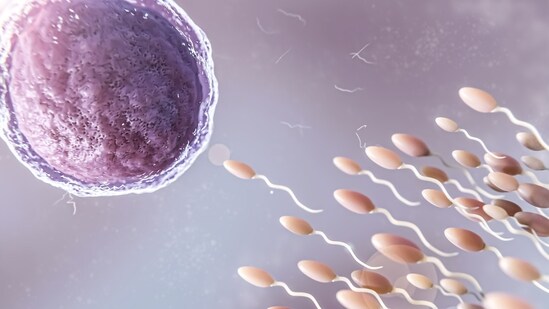
Why the technique was used
Most DNA is found in the nucleus of our cells, and it's that genetic material — some inherited from mom, some from dad — that makes us who we are. But there's also some DNA outside of the cell's nucleus, in structures called mitochondria. Dangerous mutations there can cause a range of diseases in children that can lead to muscle weakness, seizures, developmental delays, major organ failure and death.
Testing during the in vitro fertilization process can usually identify whether these mutations are present. But in rare cases, it's not clear. In vitro fertilisation is a type of fertility treatment where eggs are fertilised with sperm outside the body in a lab. The resulting embryo is then transferred into the uterus to help achieve pregnancy.
Researchers have been developing a technique that tries to avoid the problem by using the healthy mitochondria from a donor egg. They reported in 2023 that the first babies had been born using this method, where scientists take genetic material from the mother's egg or embryo, which is then transferred into a donor egg or embryo that has healthy mitochondria but the rest of its key DNA removed.
Significance of the procedure
The latest research “marks an important milestone,” said Dr. Zev Williams, who directs the Columbia University Fertility Center and was not involved in the work. “Expanding the range of reproductive options … will empower more couples to pursue safe and healthy pregnancies.”
Using this method means the embryo has DNA from three people — from the mother's egg, the father's sperm and the donor's mitochondria — and it required a 2016 UK law change to approve it. It is also allowed in Australia but not in many other countries, including the US.
Experts at Britain’s Newcastle University and Monash University in Australia reported in the New England Journal of Medicine Wednesday that they performed the new technique in fertilized embryos from 22 patients, which resulted in eight babies that appear to be free of mitochondrial diseases. One woman is still pregnant.

More about the new UK case
One of the eight babies born had slightly higher than expected levels of abnormal mitochondria, said Robin Lovell-Badge, a stem cell and developmental genetics scientist at the Francis Crick Institute who was not involved in the research. He said it was still not considered a high enough level to cause disease, but should be monitored as the baby develops.
Dr. Andy Greenfield, a reproductive health expert at the University of Oxford, called the work “a triumph of scientific innovation,” and said the method of exchanging mitochondria would only be used for a small number of women for whom other ways of avoiding passing on genetic diseases, like testing embryos at an early stage, was not effective.
Lovell-Badge said the amount of DNA from the donor is insignificant, noting that any resulting child would have no traits from the woman who donated the healthy mitochondria. The genetic material from the donated egg makes up less than 1 percent of the baby born after this technique.
“If you had a bone marrow transplant from a donor… you will have much more DNA from another person,” he said.
In the UK, every couple seeking a baby born through donated mitochondria must be approved by the country’s fertility regulator. As of this month, 35 patients have been authorized to undergo the technique.
Critics have previously raised concerns, warning that it's impossible to know the impact these sorts of novel techniques might have on future generations.
“Currently, pronuclear transfer is not permitted for clinical use in the US, largely due to regulatory restrictions on techniques that result in heritable changes to the embryo," Williams, of Columbia, said in an email. ”Whether that will change remains uncertain and will depend on evolving scientific, ethical, and policy discussions."
For about a decade, Congress has included provisions in annual funding bills banning the Food and Drug Administration from accepting applications for clinical research involving techniques, “in which a human embryo is intentionally created or modified to include a heritable genetic modification.”
But in countries where the technique is allowed, advocates say it could provide a promising alternative for some families.
Prevention of transmission of mitochondrial diseases
Liz Curtis, whose daughter Lily died of a mitochondrial disease in 2006, now works with other families affected by them. She said it was devastating to be told there was no treatment for her eight-month-old baby and that death was inevitable.
She said the diagnosis “turned our world upside down, and yet nobody could tell us very much about it, what it was or how it was going to affect Lily.” Curtis later founded the Lily Foundation in her daughter’s name to raise awareness and support research into the disease, including the latest work done at Newcastle University.
“It’s super exciting for families that don’t have much hope in their lives,” Curtis said.
Note to readers: This article is for informational purposes only and not a substitute for professional medical advice. Always seek the advice of your doctor with any questions about a medical condition.


Catch your daily dose of Fashion, Taylor Swift, Health, Festivals, Travel, Relationship, Recipe and all the other Latest Lifestyle News on Hindustan Times Website and APPs.


