
 E-Paper



Danish Viking fortress amazes tourists with UNESCO recognition

 Prefer HTon Google


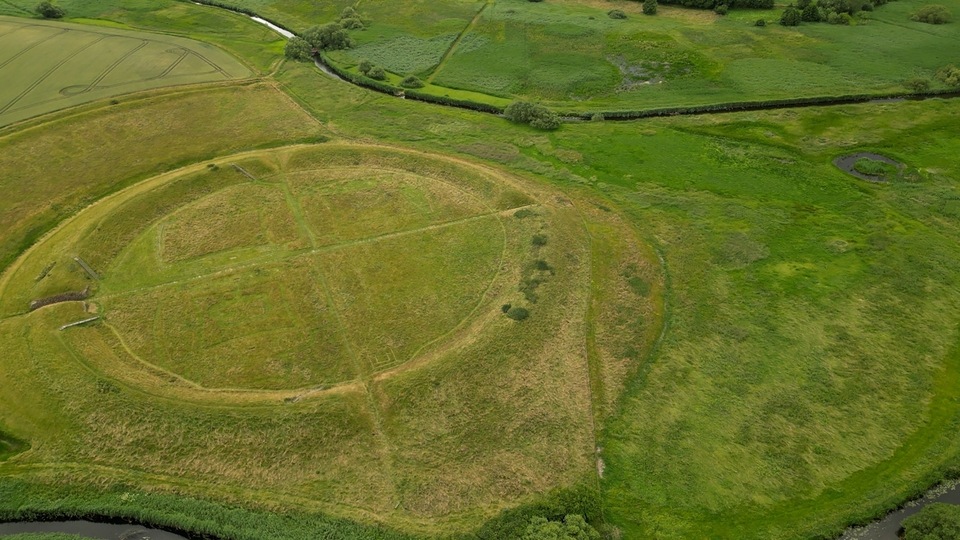
Exploring the ancient allure of Denmark's Viking legacy, Trelleborg fortress stands as a testament to Norse engineering prowess and historical intrigue.
A millennium-old Danish Viking fortress is wowing tourists by offering visitors a broader view of Scandinavia's famed marauders. Along with Denmark's four other known ring fortresses, Trelleborg in the country's east was recognised as a UNESCO World Heritage site in 2023 -- putting it in the same category as Egypt's pyramids or the Great Wall of China. The fort, experts say, is evidence that the seafaring Norsemen were fine architects capable of elaborate constructions belying their fearsome yet unrefined reputation.
"The Vikings are supposed to be primitive marauders and this doesn't seem like primitive marauders," archaeologist Soren Sindbaek said. Famed Viking monarch Harald Bluetooth built Trelleborg as a symmetrical ringed fortress for his warriors and a sign of his power. King Bluetooth, who the Bluetooth wireless technology is named after, is credited with having converted the loosely demarcated Scandinavian kingdom to Christianity in the late 10th century.
More than 1,000 years later, his 136-metre (450-foot) diameter fortification is wowing visitors. "It's just wonderful to be here and think that people have been living and fighting and working here for so many years," said Norwegian Inger Steen, a 57-year-old history buff who stopped at the site. Walking along the fortification's ramparts, Malte Seils, a 45-year-old German holidaying with his wife and teenage daughters, was similarly taken.
"You can walk into the fortress and mark the places where the houses were, so you can imagine how it might have looked 1,000 years ago," Seils said. Trelleborg originally held 31 longhouses -- the Vikings' communal living quarters -- where the warriors and their families slept. "We can learn how the people in the past lived and how their everyday life looked... Sometimes, what is still here today is connecting us," Seils said.
Miniatures and illustrations are available for those who might struggle to imagine what the fort may have looked like before it fell into centuries-long obscurity. Denmark's national museum, which manages the site, plans to restore one of the ramparts and three of the longhouses, in a bid to recreate some of the atmosphere from the Viking Age.
Viking mania
As reconstructions of historic Viking sites grow in popularity, the number of visitors to Trelleborg has shot up -- from 29,000 to 75,000 per year over a decade. "We became a UNESCO World Heritage Site in September 2023. Within the first month, we saw a 65 percent increase in the number of visitors," site director Anne-Christine Larsen told AFP. The Jelling Viking site in central Denmark has seen a similar increase, with the number of visitors doubling between 2014 and 2023 to reach to 400,000.
TV series and popular culture have boosted public interest in the Norse warriors of yore. "I'm sure that 'Vikings' and 'Game of Thrones' have played a very important role," Larsen added. Yet the site was nearly lost for ever. It was only excavated after the Danish national museum intervened to stop a local motorcycle club building a racing track on the site in the 1930s.
"It's completely geometrically built, it's strategically placed in the landscape," Larsen said. For her, the Trelleborg fort was a symbol of the process of forming the early Scandinavian state -- and of the Norse king's growing power. For Larsen, "it's also an attempt for Harald Bluetooth to collect the whole country" to his cause. The fortress was hastily erected around 975 AD by the Vikings to protect themselves from an attack by the Holy Roman Empire.
But 20 years later the ring fortresses were abandoned, after the threat of invasion had passed. "This is what happens to a lot of military installations over time," the Aarhus University researcher Sindbaek said. At the time, they may seem like “a good idea and perhaps even an urgent necessity at one point.” But "then things change, and suddenly they are no use at all".


