
 E-Paper



Water guns are in full blast to mark Thai New Year festivities despite worries about heat wave

 Prefer HTon Google


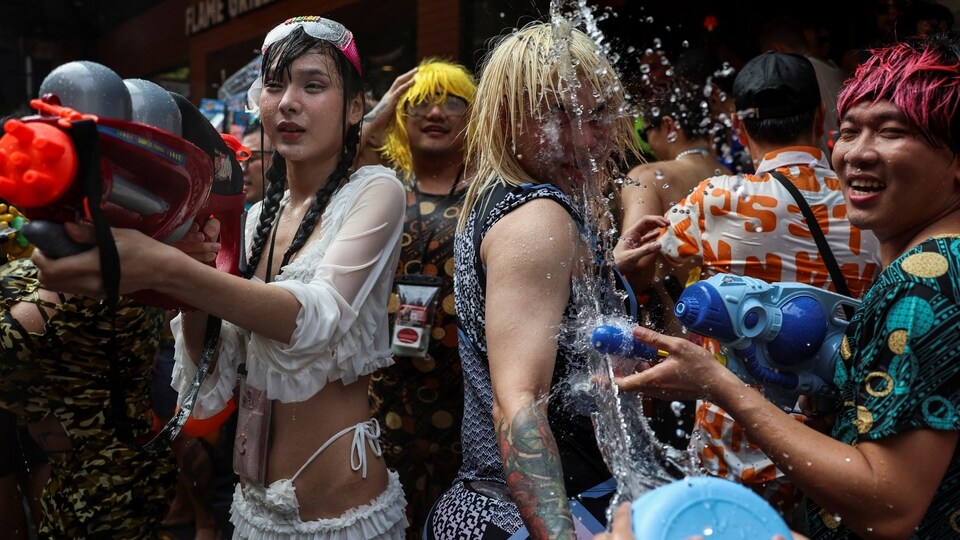
The festival, known as Songkran, is a three-day shindig that started Saturday and informally extends for a week. It usually falls at the hottest time of year
It's water festival time in Thailand where many are marking the country's traditional New Year, splashing each other with colourful water guns and buckets in an often raucous celebration that draws thousands of people, even as this year the Southeast Asian nation marks record-high temperatures causing concern. (Also Read | Iran, Thailand allow visa-free entry to Indian passport holders; list of places to travel without visa in holiday season)
The festival, known as Songkran in Thailand, is a three-day shindig that started Saturday and informally extends for a whole week, allowing people to travel for family celebrations. The holiday is also celebrated under different names in neighbouring Myanmar, Cambodia and Laos, which like Thailand have populations that are predominantly Theravada Buddhist.
Songkran is immensely popular — predicted this year to attract more than 500,000 foreign tourists and generate more than 24 billion baht ($655 million) in revenue, according to the state tourism agency. Past Thai governments have been reluctant to call for dialling down the fun even during crises such as droughts and the pandemic
Though the festival originated as a way to pray for a rainy season that helped crops and included activities such as cleansing images of the Buddha and washing the hands and feet of elders, Songkran these days is now often associated with public drunkenness, sexual assault in the guise of merrymaking, and a spike in traffic fatalities, noticeable to the point that the extended holiday has been dubbed the “seven dangerous days.”
The festival usually falls at the hottest time of the year when temperatures can creep above 40 degrees Celsius (104 Fahrenheit).
But this year, the unusual heat wave, with expected record temperatures for the next few months, has triggered apprehension. The United Nations Children’s Fund warned Thursday the sweltering weather could put millions of children's lives at risk, asking caregivers to take extra precautions.
The UNICEF statement said in the Asia-Pacific region, “around 243 million children are exposed to hotter and longer heatwaves, putting them at risk of a multitude of heat-related illnesses, and even death.”
Heat waves can be lethal as they affect the ability to breathe, making the old and young particularly vulnerable.
Benjamin Horton, director of the Earth Observatory of Singapore where natural phenomena such as climate change are studied, said three factors determine heat waves; El Nino, a natural, temporary and occasional warming of part of the Pacific, an increase in global temperatures and human-induced climate change.
The poor are particularly vulnerable to heat waves, exacerbated in many Southeast Asian cities where concrete buildings make the weather more stifling and few trees provide shade, he said.
Horton added that the past year saw record-high global average temperatures and the heat waves in Southeast Asia were mirroring that trend, adding that “it is only going to get worse.”
The entirety of the Mekong Delta, which includes Vietnam as well as Myanmar, Laos, Thailand and Cambodia, saw extreme heat, with parts of Laos and Thailand seeing temperatures that were 5-7 degrees Celsius (41-44.6 degrees Fahrenheit) more than the average between April 3-9, according to the Mekong Dam Monitor program of the Stimson Center in Washington D.C.
This extreme heat also means less water for hydropower dams to produce energy.
“Heat waves put a significant strain on power systems, from surging energy demand to compromising grid capacity. Hydropower generation is particularly impacted” when heat results in drought over multiple years, according to Dimitri Pescia, director for Southeast Asia at the German-based thinktank Agora Energiewende.
“The cumulative effects, amplified by climate change, cause great distress to society and ecosystems,” he said.
Singapore's Horton said earth-warming carbon emissions needed a drastic cutting down as people learned to adapt to the new climate which included learning the dangers of overly hot weather and for authorities to create an emergency response to warn people about high temperatures beforehand and provide them with areas to cool down when needed.
Last week, the Philippines suspended classes in more than 5,800 public schools and shifted to home-based and online learning to protect millions of students from the scorching heat.
Schools in several cities, including the congested capital Manila, shifted classes to early morning to avoid sweltering noontime and afternoon temperatures. Also, tens of thousands of students in grade and high schools were allowed to alternate between going to school and online classes every other day, officials said.
Manila Mayor Honey Lacuna-Pangan, a medical doctor, said they have limited outdoor activities especially if the heat index rises to an extreme level. “If people don’t have urgent tasks outside, the best precaution really is to stay indoors.”


